
Athanasius the Resurrected
Our Venerable Father Athanasius the Recluse, "the Resurrected One," of the Kiev Caves
Venerable · d. c. 1176
Commemorated 2 December
Athanasius, called "the Resurrected One," was a monk of the Near (Antonian) Caves of Kiev in the twelfth century. After a long and grievous illness he died, and was prepared for burial; but on the third day, when the abbot came to bury him, the brethren found him alive, sitting up and weeping. To all their questions he would say only that they must seek salvation, obey the abbot, repent every hour, and pray without ceasing — and then he shut himself into a cave, where for twelve more years he lived in total silence, in tears and the strictest fasting, before reposing in peace about the year 1176. He is venerated among the wonderworking fathers of the Kiev Caves, at whose relics healings were worked.
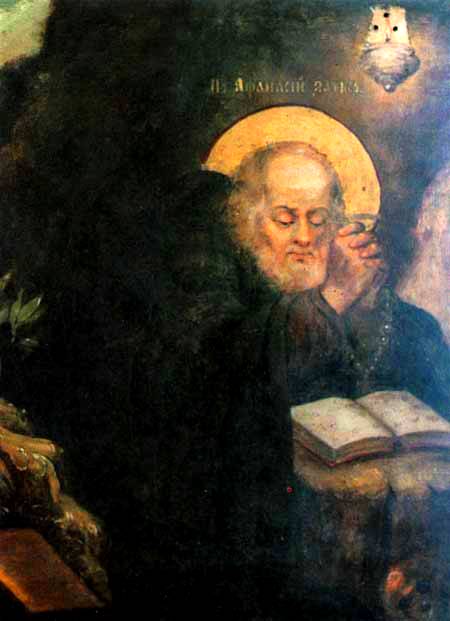

Athanasius lived in the Monastery of the Caves at Kiev in the twelfth century, a contemporary of the archimandrite Polycarp (commemorated July 24). He fell grievously ill and suffered for a long time; and at length he died. The brethren washed and prepared his body for burial, but for two days it was left unburied, and it was only on the third day that the abbot came to lay him in the grave. Then, to the astonishment of all, they found the dead man alive — sitting upright and weeping. When they pressed him with questions — how he had returned, what he had seen — he would answer them nothing except this: "Seek salvation; obey the abbot in all things; repent every hour, and pray to the Lord Jesus Christ, to his All-Pure Mother, and to Saints Anthony and Theodosius, that you may be granted to end your life here. Ask me nothing more, for I must pray." (The chroniclers of the Caves compared his silence to that of the monk Hesychius, told in the sixth step of the Ladder of Saint John Climacus, who after a like return from the gates of death would speak of nothing but the remembrance of it.)
Having said this, Athanasius withdrew into a cave, walled himself in as a recluse, and there lived for twelve years more. In all that time he spoke not a single word to anyone. He wept day and night, and took only a little bread and water, and that but every other day. When his end at last drew near, he called the brethren together, repeated to them the same counsel he had given at his rising, and then departed peacefully to the Lord, about the year 1176. He was buried in the cave of Saint Anthony, among the fathers of the Near Caves.
The reality of his sanctity was confirmed by a healing. A monk named Babylas, who had suffered for many years from illness and an infirmity of the legs, was cured at the relics of Athanasius. As he lay crying out in his pain, he related, Saint Athanasius appeared to him and said, "Come to me, and I will heal you"; and when the monk, believing, asked to be carried to the relics, he was made whole.
Feast and commemoration
Athanasius is commemorated on December 2 (Old Calendar civil December 15), within the Nativity Fast, chiefly in the Russian and Ukrainian tradition and in the Orthodox Church in America. His memory is kept also with the Synaxis of the Venerable Fathers of the Near Caves (September 28) and on the Second Sunday of Great Lent, when the whole company of the Kiev-Caves saints is commemorated. He is to be distinguished from the other Athanasius of the same monastery, the recluse of the Far Caves, who is also remembered on this day in the Caves synaxaria.
Iconography
Athanasius is depicted as an aged monk-recluse in the dark habit and mantle of the Caves, often shown within his cave bent over an open book, in token of the twelve silent years of prayer and repentance that followed his rising from death. The stored image is an anonymous Ukrainian icon (nineteenth century or earlier), inscribed in Slavonic "Ven. Athanasius the Recluse," showing him in the gloom of the cave with a book before him and his hand raised toward his face.