
Auxibius of Soli
Our Father among the Saints Auxibius, Bishop of Soli in Cyprus
Bishop · d. 1st century
Commemorated 17 February — Repose as bishop of Soli
Auxibius (first century) was an apostolic-age bishop of Soli (Soloi), a city on the northern coast of Cyprus. Born at Rome of a distinguished and wealthy pagan family and well-educated, he fled the marriage his parents had arranged and took ship for the East; coming to Cyprus, he met at Soli the Apostle and Evangelist Mark, who was passing through the island, and was by him baptized and consecrated bishop of the city. Hiding his office at first among the pagans, he won them gradually from the worship of idols, and — assisted by Heraclidius, bishop of Tamassos — established the Church of Soli, which he governed for about fifty years. He ordained a successor and reposed in peace in the first century. He is honoured especially in the Church of Cyprus, commemorated on February 17.
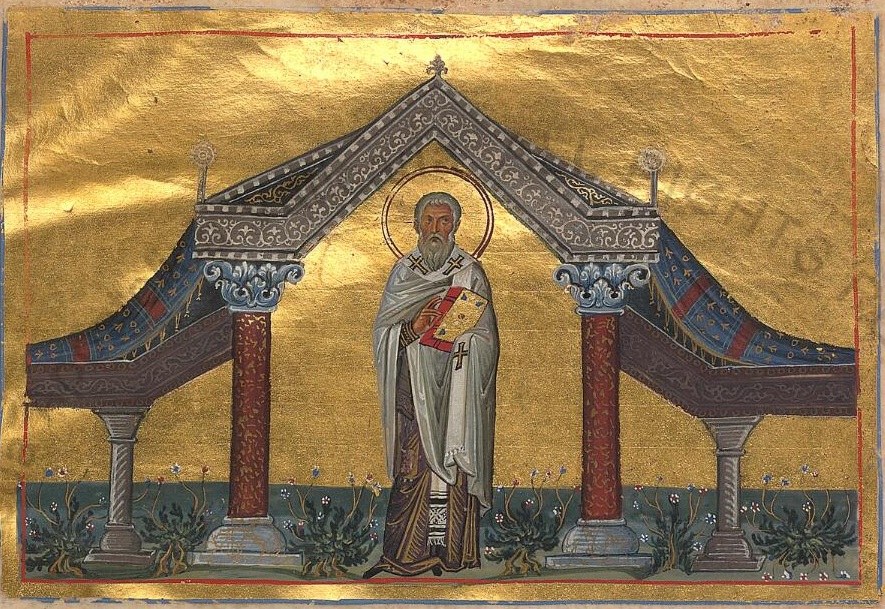

Auxibius belongs to the first generation of Cypriot Christianity, the age when the island — the homeland of the Apostle Barnabas — was among the earliest of the Gentile lands to receive the Gospel. The tradition, transmitted in a Greek Life, makes him a Roman by birth, the son of a rich and noble pagan house, and gives him a good education in the learning of his day. Unwilling to enter the marriage his parents had arranged for him, and drawn — though not yet a Christian — toward a different life, he left Rome secretly and sailed for the East, and his voyage brought him to Cyprus, to the city of Soli on the island's northern shore.
There, the tradition holds, he encountered the Apostle and Evangelist Mark — John Mark, the companion of Paul and Barnabas — who was travelling through Cyprus (in the years after the martyrdom of Barnabas at Salamis). Mark instructed Auxibius in the faith, baptized him, and, recognising his gifts, ordained him bishop of Soli before continuing on his way. Auxibius, newly made a Christian bishop in a wholly pagan city, at first kept his baptism and his office hidden, living quietly and drawing men to himself by his wisdom and virtue, until the moment was ripe to preach openly. When he did, he turned the people of Soli from the worship of Zeus and the idols to Christ, overthrowing the old cult and building up a Christian community where none had been.
In this labour he was helped by Heraclidius, the bishop of Tamassos — himself ordained by Paul and Barnabas, and a chief figure of the apostolic Church of Cyprus — who came to Soli, confirmed Auxibius in his ministry, and assisted in the ordering of the new church; the two are remembered together as fathers of Cypriot Christianity. Auxibius governed the Church of Soli, the tradition says, for some fifty years, baptizing, teaching, and establishing the faith firmly in that region. In his old age he ordained a successor — another Auxibius, his kinsman or disciple, whom some accounts distinguish as a second bishop of the name — and, having finished his course, reposed in peace in the first century.
Feast and commemoration
Auxibius is commemorated on February 17 (church date; New Calendar civil February 17, Old Calendar civil March 2). His veneration belongs especially to the Church of Cyprus, whose apostolic foundation he shares with Barnabas, Heraclidius of Tamassos, and Lazarus of Kition; the Greek Menaion and synaxaria keep his notice on this day. Some Cypriot usages also remember an Auxibius on February 19, reflecting the tradition of the two bishops of the name.
Hymns
Troparion — Tone 4
O God of our fathers, who ever dealest with us according to Thy gentleness: take not Thy mercy from us, but through the prayers of Thy hierarch Auxibius, guide our life in peace.
Original translation from the Greek
Iconography
Auxibius is depicted as a bishop of the apostolic age — vested in the phelonion and omophorion, holding or blessing over the Gospel-book, with the greying hair and beard of a hierarch. The stored image is the miniature of the Menologion of Basil II (Constantinople, 985), which gives exactly this type: the bishop of Soli stands beneath the gabled canopy of a shrine, grey-bearded, in phelonion and omophorion, the Gospel-book held against his breast.