
Eugene, Candidus, Valerian and Aquila
The Holy Martyrs Eugene, Candidus, Valerian and Aquila of Trebizond
Martyr · d. c. 303–305, at Trebizond
Commemorated 21 January — Martyrdom at Trebizond under Diocletian
Eugene, Candidus, Valerian and Aquila were four Christians of Trebizond on the Black Sea coast of Pontus, martyred in the persecution of Diocletian about the year 303–305. Hiding from the persecutors in the hills near the city, Candidus, Valerian and Aquila were seized first and, after cruel scourging, imprisoned; Eugene, coming forward to confess Christ and — the tradition says — overthrowing the idol of Mithras that the pagans of Trebizond revered, was arrested and joined to them, and all four were tortured and at last beheaded. Of the four, Eugene became the great patron saint of Trebizond, honoured by the city and, in later centuries, by the emperors of the Grand Komnenoi, whose coins bore his image; a church was raised over his relics, and his memory is kept on January 21.
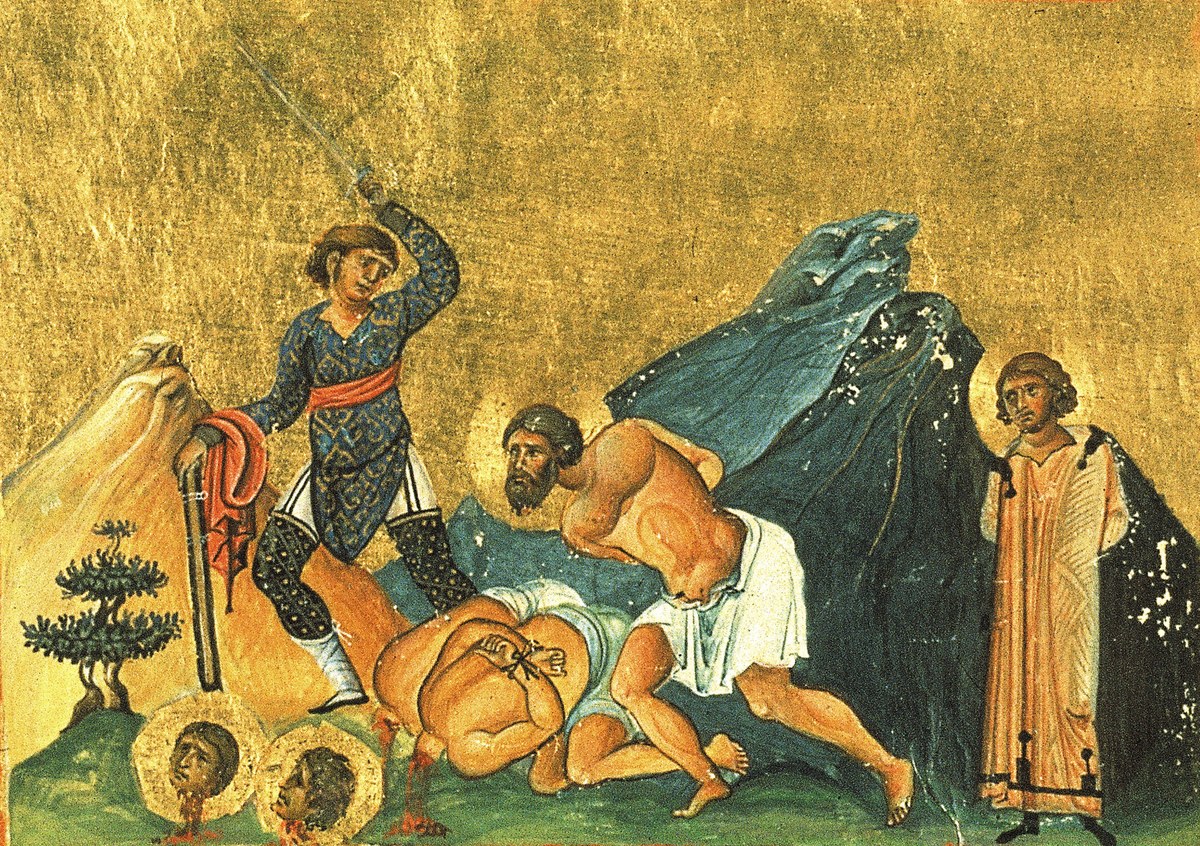

The four were natives, or inhabitants, of Trebizond (Trapezous), the chief Greek city of Pontus on the south-eastern shore of the Black Sea, in the time of the Great Persecution under Diocletian (284–305) and Maximian, when the local commander named in the tradition as Lycius (or Lysias) was hunting down the Christians of the region. Three of them — Candidus, Valerian and Aquila — withdrew to hide in the mountains near the city, but were tracked down, arrested, and brought before the magistrate; refusing to sacrifice to the idols, they were savagely scourged and thrown into prison to await death.
Eugene, the fourth and the most celebrated, was a Christian of the city who had long laboured, secretly and openly, to turn its people from the worship of idols. The tradition tells that he cast down and shattered the idol of Mithras, the god the pagans of Trebizond chiefly revered, by his prayer; brought before Lycius, he confessed Christ boldly, and was subjected to the same tortures as his three companions — beating, the rack, and every cruelty — under which, the accounts say, he was preserved by the power of God, the idols falling and the tormentors confounded at his prayers. When neither torture nor threat could shake any of the four, the magistrate condemned them, and all were beheaded together, receiving the martyr's crown about the year 303–305.
The cultus of Eugene at Trebizond
Of the four, Eugene of Trebizond grew into one of the great patronal saints of the Christian East. His relics were enshrined at Trebizond, and a monastery and church of St Eugenios rose over them; the city kept him as its heavenly protector, ascribing to his intercession its deliverances from siege and calamity. When, after 1204, Trebizond became the seat of the independent Empire of the Grand Komnenoi, Eugene became the patron of the dynasty and the state: his image was struck on the silver aspers of the Trapezuntine emperors, his feast kept with high solemnity, and his miracles gathered and sung (the fourteenth-century scholar-monks of Trebizond, among them John-Joseph Lazaropoulos, composed offices and accounts of his wonders). His three companions are commemorated with him, but it is Eugene whose name the calendars lead with, and whose cultus carried the memory of the four through the centuries.
Feast and commemoration
January 21 (church date; Old Calendar civil February 3), on which the Greek Menaia and the calendars keep the martyrs of Trebizond, together with Maximus the Confessor and the other commemorations of the day. The feast is Pontic and Greek in origin and was of the first rank at Trebizond itself; Eugene has also been commemorated on other days in the local Trapezuntine synaxaria for the translations and miracles of his relics. (These four are the martyrs of Trebizond — not to be confused with any homonymous martyrs of other cities of the Roman East.)
Hymns
Troparion — Tone 4 (common of martyrs)
Thy martyrs, O Lord, in their contests received incorruptible crowns from thee, our God; for possessing thy strength, they cast down the tyrants and broke the feeble insolence of the demons. By their prayers, O Christ God, save our souls.
Original translation from the Greek
Iconography
Eugene of Trebizond is depicted as a young martyr — beardless or lightly bearded, in the martyr's tunic and mantle, holding the cross — and, in the art of the Empire of Trebizond, as the crowned patron of the city, sometimes on horseback; his image on the Trapezuntine coinage is among the most familiar of Byzantine numismatic types. His three companions are shown with him as a group of martyrs. The stored image is the miniature of the Menologion of Basil II (Constantinople, 985): the beheading of the company outside Trebizond, the executioner's sword raised over the kneeling martyr while the severed, haloed heads of those already slain lie on the hillside — the manuscript's scene for their January commemoration.