
Joasaph of Belgorod
Our Father among the Saints Joasaph (Gorlenko), Bishop of Belgorod and Oboyan
Bishop · Wonderworker · b. 1705 — d. 1754
Commemorated 4 September — Uncovering of the relics and glorification (1911), 10 December — Repose at Grayvoron
Joasaph of Belgorod (1705–1754), born Joachim Gorlenko of a noble Ukrainian family, was a monk and bishop of the Russian Church renowned for the austerity of his personal life and the strictness of his pastoral zeal. Formed at the Kiev Academy and tonsured young, he rose through the monastic offices to be igumen of the Mgarsk monastery and vicar of the Trinity–Sergius Lavra before his consecration as Bishop of Belgorod and Oboyan in 1748. In six years of ascetic and exacting episcopate he laboured for the moral reform of his clergy and people. His body was found incorrupt after his repose, and he was glorified in 1911; he is commemorated on December 10, the day of his death.
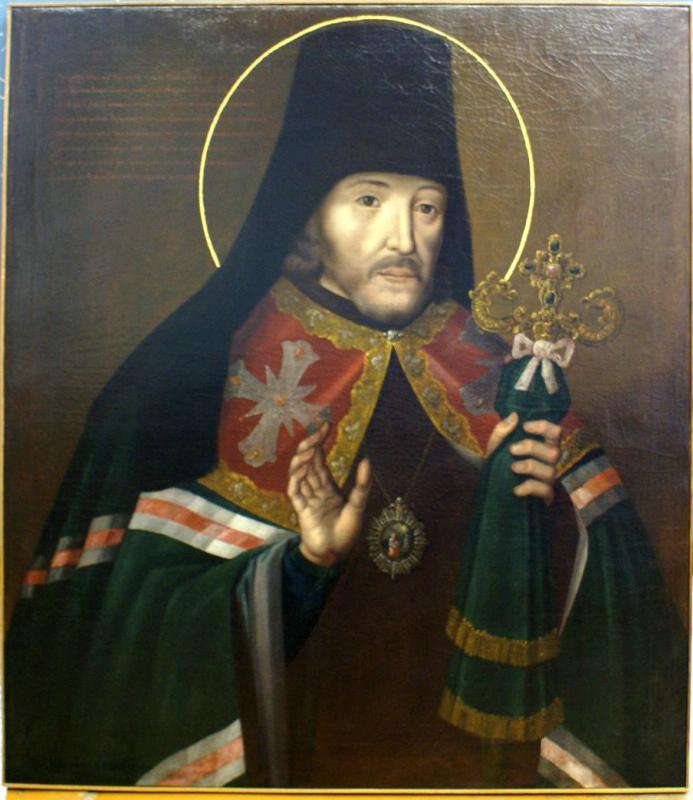
,_Bishop_of_Belgorod_and_Oboyan.jpg)
Origins and monastic beginnings
He was born on September 8, 1705 — the feast of the Nativity of the Theotokos — at Priluki (Proluka) in the Poltava region of what was then called Little Russia (Ukraine), of the old and honourable noble line of the Gorlenkovi, and at baptism was named Joachim. In 1712 his father enrolled the seven-year-old boy in the Kiev Spiritual Academy, and within its walls he felt himself drawn to the monastic life. He studied and pondered the matter for years, and at length told his parents his intention; long they pleaded with their first-born son not to take the tonsure. In 1725, without their knowledge, he was received as a rasophore novice with the name Hilarion at the Kiev–Mezhigorsk monastery, and on November 21, 1727 he was tonsured to the mantle with the name Joasaph at the Kievo–Bratsk monastery, in the same year that he completed his academic course.
Ascent through the offices of the Church
His gifts were noticed by Archbishop Raphael Zaborovsky of Kiev, who took him into greater service and made him an examiner of the archdiocese. In November 1734 Raphael ordained him hieromonk and moved him from the Bratsk monastery school to the archbishop's house at Kiev–Sophia, appointing him a member of the diocesan consistory. In the office of examiner Joasaph laboured hard at the correction of the morals of the parish clergy, coming to know intimately both the strengths and the failings of the diocese; and his administrative gift grew together with his interior ascetic effort, of which his treatise The Conflict of the Seven Venerable Virtues with the Seven Deadly Sins is a monument. On June 24, 1737 he was made head of the Holy Transfiguration monastery of Mgarsk, near Lubny, and raised to the rank of igumen; there he set the house — an old bastion of Orthodoxy against the Unia — in good order, and in its church, which held the relics of Saint Athanasius, Patriarch of Constantinople and Wonderworker of Lubny, Athanasius is said to have appeared to him several times as a sign of his protection. In 1744 he was elevated archimandrite, called to Moscow, and appointed by the Holy Synod vicar of the Trinity–Sergius Lavra, where he bore the burden of rebuilding the monastery after a fire.
Bishop of Belgorod
On June 2, 1748, in the cathedral of Saints Peter and Paul at Saint Petersburg, Archimandrite Joasaph was consecrated Bishop of Belgorod and Oboyan. As bishop he gave himself without stint and without regard for his failing health to the good order of the churches, the seemly celebration of the divine services, and above all the moral state of his flock; he was especially attentive to the education of the clergy and the right keeping of the Church's traditions, and travelled his large and poor diocese in person, unsparing of himself and severe with negligence. The many stories of his hidden charity — carrying firewood by night to the houses of the poor, relieving debtors in secret — belong to the memory of a bishop whose outward strictness covered a great tenderness.
Repose and relics
Foreseeing his end, he set his affairs and his diocese in order, and among several prophecies to those about him — to one cell-attendant that he would be a deacon but never a priest, to another an untimely death should he disobey — he took leave of his see. He reposed on December 10, 1754, at Grayvoron, on his way back from a last visitation. His body, brought to Belgorod, remained unburied for some weeks and was seen to be incorrupt, and it lay for more than a century and a half in the cathedral crypt as a place of pilgrimage and healing. On September 4, 1911 he was solemnly glorified and his relics uncovered, in one of the last great canonisations of imperial Russia. In the years of persecution that followed the relics were seized (1920) and carried off, and were long displayed as a museum exhibit — latterly in the Museum of the History of Religion in Leningrad — until they were rediscovered and, in 1991, returned in procession to Belgorod, where they rest again in the cathedral.
Feast and commemoration
His principal feast is December 10 (church date; Old Calendar civil December 23), the day of his repose, within the Nativity Fast. A second commemoration on September 4 (Old Calendar civil September 17) keeps the uncovering of his relics and his glorification of 1911. The feast is kept in the Russian Orthodox Church and by the Orthodox Church in America; it is not part of the universal calendar.
Hymns
Troparion — Tone 3
O hierarch beloved of Christ God, thou wast a rule of faith and an image of mercy to the people; by vigil, fasting and prayer thou didst shine as a most radiant lamp, and wast shown forth glorified by God. Reposing incorrupt in body, yet standing in spirit before the throne of God, thou dost pour forth wondrous miracles. Entreat Christ God that He confirm us in Orthodoxy and godliness, and save our souls.
Original translation from the Slavonic
Kontakion — Tone 8
Who can recount the manifold struggles of thy life, or number the manifold mercies of God made manifest through thee? Knowing well thy boldness before the most pure Theotokos and the all-bountiful God, in compunction of heart we cry to thee: deprive not us also of thy help and protection, O hierarch of Christ and wonderworker Joasaph.
Original translation from the Slavonic
Iconography
Joasaph is depicted as a bishop in full vesture — sakkos, omophorion and mitre — blessing with his right hand and holding the Gospel, with the features preserved in the portraits taken from life: a lean, ascetic face. The stored image is an eighteenth-century portrait of the saint. In icons written since his glorification he is often shown against the cathedral of Belgorod or with his incorrupt relics.