
Juventinus and Maximus
The Holy Martyrs Juventinus and Maximus, Soldiers, at Antioch
Martyr · d. c. 363
Commemorated 5 September — Martyred at Antioch under Julian the Apostate
Juventinus and Maximus were soldiers of the imperial guard of Julian the Apostate, martyred at Antioch about the year 363. When Julian, wintering at Antioch before his Persian campaign, set about defiling the city's food and wells with idolatrous sprinklings, the two guardsmen lamented his apostasy at table; denounced to the emperor, they refused to retract or to sacrifice, and after imprisonment and beatings were put to death by night. Their veneration at Antioch is attested within a generation by John Chrysostom, who preached a homily in their honour at their tomb. They are commemorated on September 5.
.jpg)
The martyrs are known from two fourth-century Antiochene witnesses: the church historian Theodoret of Cyrrhus (Ecclesiastical History 3.15) and John Chrysostom, whose panegyric on the pair (delivered at Antioch on their feast, within some thirty years of their death) is the fullest source; Chrysostom calls them Juventinus and Maximinus, the calendars Juventinus and Maximus.
Both men served in the corps of imperial guards — Theodoret makes them shield-bearers of high standing — and accompanied the court when Julian the Apostate wintered at Antioch in 362–363, preparing his Persian expedition. In those months Julian, unable to move openly against so Christian a city, worked by contamination: he had the meats of the marketplace, and the wells and springs, sprinkled with the blood and libations of the sacrifices, so that Christians must either starve or be defiled — a stratagem both witnesses describe with disgust, likening the city's plight to Israel in Babylon. At a banquet, Juventinus and Maximus echoed the Three Youths: lamenting that they had been delivered to an apostate ruler, they were overheard — a fellow guest informed the emperor. Summoned, they did not soften their words but confessed Christ and denounced the apostasy to Julian's face. Julian, wishing no public martyrs — his settled policy was persecution without the name — stripped them of rank and property and had them imprisoned, then tried by flattery and promises; when they stood firm, they were beheaded in prison by night, on a pretended charge of treasonous speech rather than of religion, about January of 363 (the Antiochene tradition kept their memory in that season; the Byzantine calendar commemorates them on September 5).
The Christians of Antioch recovered the bodies and buried them with honour, and the cult was immediate: Chrysostom's homily shows their shrine a place of annual festival, and he holds them up as proof that the rank of soldier is no bar to the crown of confession. Their graves were among the martyr-shrines that ringed fourth-century Antioch.
Feast and commemoration
September 5 (church date; Old Calendar civil September 18). No proper service is appointed; the common of martyrs serves where their memory is kept liturgically. As martyrs of Antioch praised by the greatest preacher of the Antiochian church, they hold a particular place in the Antiochian heritage.
Hymns
Troparion — Tone 4 (from the common of martyrs)
Thy martyrs, O Lord, in their contest received incorruptible crowns from Thee, our God; for possessing Thy strength they cast down the tyrants and shattered the feeble insolence of the demons. By their intercessions save our souls.
Original translation from the Greek
Iconography
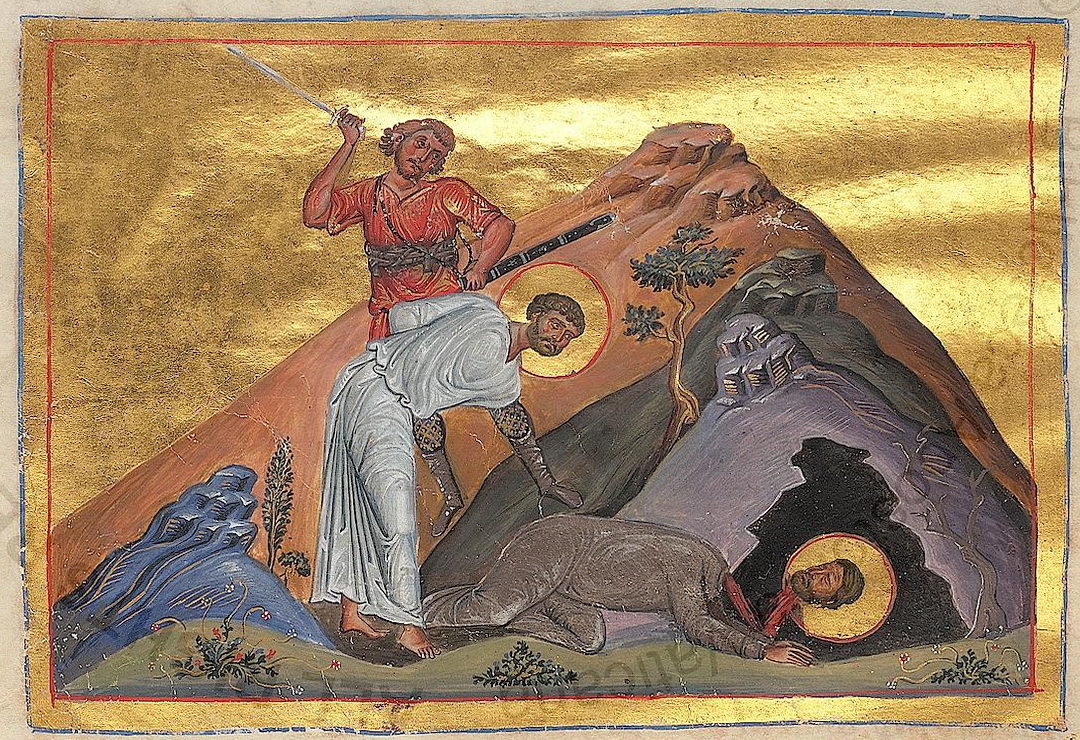
The stored image is the miniature of the two martyrs from the Menologion of Basil II (Constantinople, c. 985), which depicts the pair as young soldiers at their execution. In later iconography they would appear as military martyrs with crosses, in the manner of the warrior saints.
Disputed questions
- Names. Chrysostom: Juventinus and Maximinus; the synaxaria and Slavic calendars: Juventinus and Maximus. The same pair is meant; both forms are recorded.
- Day of commemoration. The Antiochene feast attested by Chrysostom fell in winter, and the Roman Martyrology keeps January 25; the Byzantine synaxaria commemorate them on September 5, and the Menologion of Basil II carries their miniature in its autumn course. The divergence is of calendar tradition only.