
Nestor of Magydos
The Holy Hieromartyr Nestor, Bishop of Magydos in Pamphylia
Hieromartyr · Bishop · d. c. 250, at Perga in Pamphylia
Commemorated 28 February — Martyrdom under Decius
Nestor (†c. 250) was bishop of Magydos, a city of Pamphylia on the southern coast of Asia Minor, and a hieromartyr of the persecution under the emperor Decius. When the imperial edict of sacrifice went out and the Christians of his region were hunted, Nestor, a good shepherd, gave himself to prayer for his flock and did not flee; he was arrested while praying in his own house, brought before the governor, and — steadfastly refusing to sacrifice to the idols and confessing Christ before the tribunal — was tortured and at last crucified, sharing by his death the manner of his Lord's Passion. The Church keeps his memory on February 28.
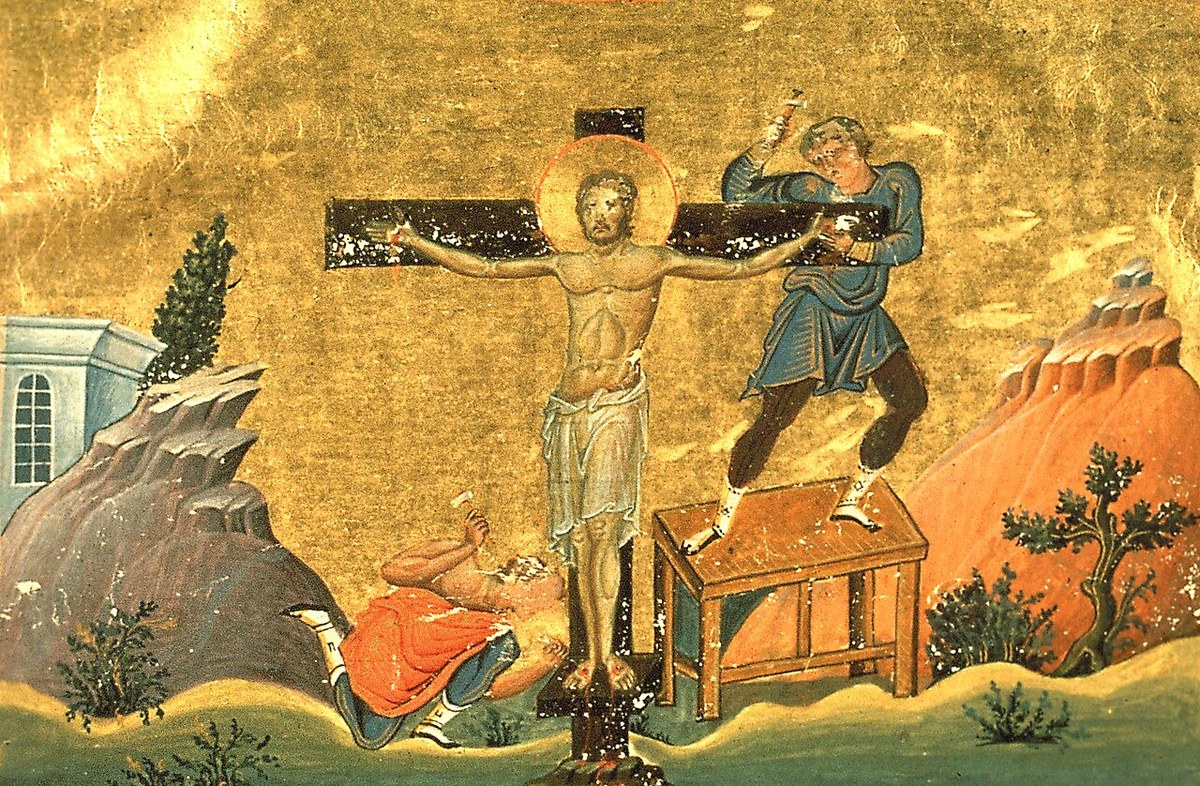
.jpg)
Nestor governed the church of Magydos (Magydus), a town of the province of Pamphylia, in the middle of the third century — the age of the first empire-wide persecutions. His martyrdom fell in the reign of the emperor Decius (249–251), whose edict of 250 required every subject to offer public sacrifice to the gods and to obtain a certificate of having done so, and which fell with special weight upon the bishops as the leaders and pillars of the Christian communities.
The good shepherd
When the persecution reached Pamphylia and the Christians were seized on every side, Nestor, the tradition relates, did not save himself by flight but remained at his post, spending himself in prayer for his people that they might stand firm in the trial. Warned that the officers were coming for him, he continued in prayer in his own house, and there he was arrested, calmly awaiting them, that his capture might turn the fury of the persecutors upon himself and spare, so far as it could, the flock committed to him.
Confession and martyrdom
Nestor was brought before the governor of the province (the tradition names the magistrate before whom he stood, and the proceedings at Perga, the provincial capital, and at Magydos). Questioned and commanded to sacrifice to the idols, the bishop refused with unshaken constancy, confessing openly that he worshipped the one true God and the Lord Jesus Christ and would offer to no other. Neither threats nor the tortures that followed could move him from his confession. Condemned at last, he was put to death by crucifixion, and so, hanging upon the cross as his Saviour had hung, he gave up his soul to God, about the year 250, and received the crown of a hieromartyr.
Feast and commemoration
Nestor is commemorated on February 28 (church date; New Calendar civil February 28; Old Calendar civil March 13). His feast is universal; the Greek and Slavic calendars agree on the day, and his memory is among those illustrated in the tenth-century Menologion of Basil II, a witness to the antiquity of his cultus.
Not to be confused
This Nestor — the third-century bishop of Magydos and hieromartyr — is distinct from Nestor of Thessalonica, the young martyr and disciple of the Great-Martyr Demetrius who overthrew the gladiator Lyaeus (kept October 27), and from the other saints named Nestor of the calendar.
Hymns
Troparion — Tone 4
As one who shared in the ways of the Apostles and succeeded to their thrones, thou didst find in thy labours, O God-inspired one, an ascent to divine vision; wherefore, rightly dividing the word of truth, thou didst contend for the faith even unto blood, O Hieromartyr Nestor. Intercede with Christ our God that our souls may be saved.
Original translation from the Greek
Iconography
Nestor is depicted as a bishop — vested in the phelonion and omophorion and holding the Gospel-book — and, as a martyr, often shown in the scene of his death upon the cross. The stored image is the miniature for his commemoration from the Menologion of Basil II (Constantinople, c. 985; Vatican, Vat. gr. 1613), depicting Nestor, bishop of Magydos in Pamphylia (source, public domain, pd-old-work).