
Zephaniah the Prophet
The Holy Prophet Zephaniah
Prophet
Commemorated 3 December — Commemoration among the Twelve Prophets
Zephaniah (in the Greek of the Septuagint and the Byzantine service books, "Sophonias") was the ninth of the Twelve Minor Prophets, active in the kingdom of Judah in the later seventh century before Christ, during the reign of the reforming King Josiah and as a contemporary of Jeremiah and the prophetess Huldah. His short book is the great prophecy of the Day of the Lord — "the great day of the Lord is near, near and hastening fast" — a searching oracle of judgment on Judah and the nations that turns at its close into one of the most radiant songs of joy in all the prophets: "Sing, O daughter of Zion… the Lord thy God is in the midst of thee." He is commemorated on December 3.
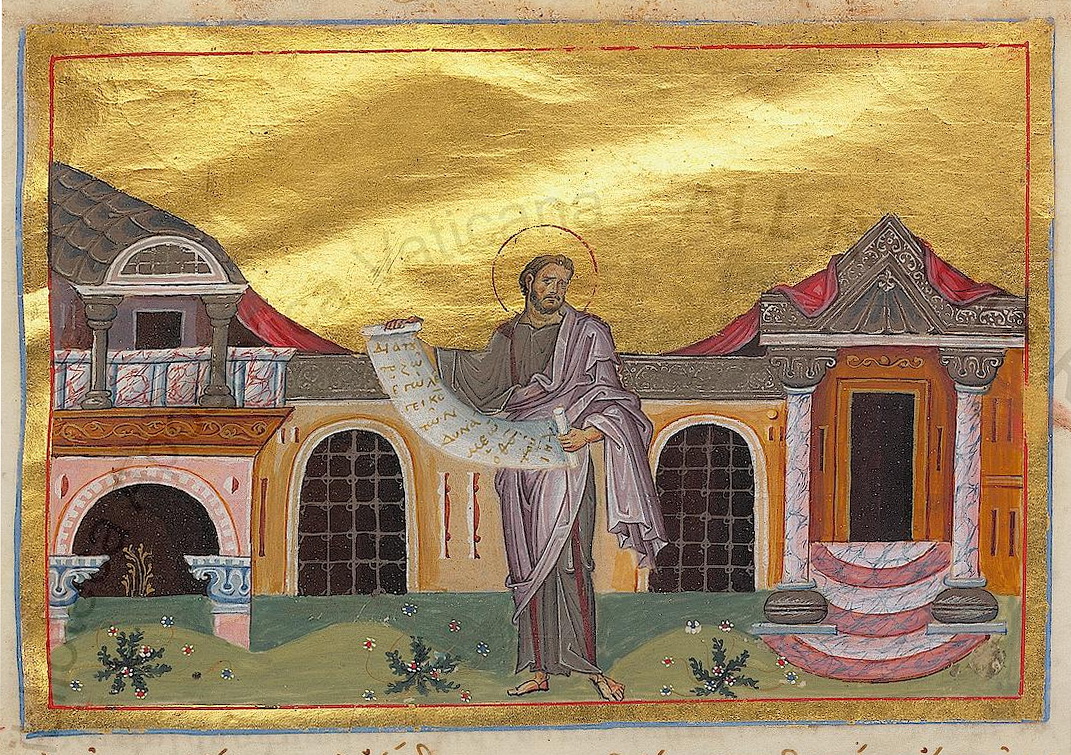
.jpg)
Name, descent, and date
The prophet names himself and his ancestry in the first verse of his book with unusual fullness: "The word of the Lord which came unto Zephaniah the son of Cushi, the son of Gedaliah, the son of Amariah, the son of Hezekiah, in the days of Josiah the son of Amon, king of Judah" (Zephaniah 1:1). No other of the Twelve traces his line back four generations, and the terminal name Hezekiah has long been read as the God-fearing king of that name (reigned c. 715–687 BC), which would make Zephaniah a prophet of royal blood and account for the ease with which he moves in his oracles among the princes, the king's sons, and the officials of the court. The Byzantine synaxaria, following an older tradition, assign him rather to the tribe of Simeon; the two accounts are not easily reconciled, and the entry records both without forcing a choice. His Hebrew name, Tsephanyah, means "the Lord has hidden" or "the Lord has treasured up" — a fitting name for the prophet who promised that a hidden remnant would be sheltered "in the day of the Lord's anger" (2:3).
The heading fixes his time precisely: the days of Josiah (reigned 640–609 BC), the last godly king of Judah, whose reign saw the finding of the book of the Law in the Temple and the great purge of idolatry. Zephaniah is thus a prophet of the later seventh century, an elder contemporary of Jeremiah, of the prophetess Huldah (whom the service books name Oldama), and of Nahum. The tradition preserved by the Church holds that he lived at the royal court, where he preached repentance and lent the weight of his prophecy to Josiah's reforming zeal against the worship of Baal, of "the host of heaven," and of the Ammonite Milcom.
The Day of the Lord
The burden of Zephaniah's preaching is the yom YHWH, the Day of the Lord — no longer, as the people fondly imagined, a day of vindication for Israel, but "a day of wrath, a day of trouble and distress, a day of wasteness and desolation, a day of darkness and gloominess, a day of clouds and thick darkness" (1:15). It is these Latin verses, in the mediaeval rendering Dies irae, dies illa, that gave the West its most famous sequence for the dead; but the prophet's own horizon is the whole created order. He opens with a sweeping threat of a universal un-creation — "I will utterly consume all things from off the land, saith the Lord; I will consume man and beast… and the stumbling-blocks with the wicked" (1:2–3) — before narrowing the indictment to Judah and Jerusalem for their syncretism: those who bow to the Lord and swear by Milcom alike, the princes clothed in "strange apparel," and the complacent men "settled on their lees" who say in their hearts, "The Lord will not do good, neither will he do evil" (1:12).
From Jerusalem the oracles turn outward against the nations, a compass-sweep of judgment on the peoples around Judah: Philistia to the west (Gaza, Ashkelon, Ashdod and Ekron, with the "nation of the Cherethites," which the Greek and the Church's tradition read as Crete); Moab and Ammon to the east, whose pride is likened to Sodom and Gomorrah; Cush (Ethiopia) to the south; and, climactically, Assyria and its capital Nineveh to the north, "the rejoicing city that dwelt carelessly," to be left "a desolation, a place for beasts to lie down in" (2:13–15). It is a striking prophecy: within a few years of Josiah's reign Nineveh did indeed fall (612 BC) and vanish so completely that later ages doubted it had ever stood.
The remnant and the song of Zion
Yet Zephaniah is not a prophet of unrelieved doom. Through the darkness runs the thread of the remnant — the "meek of the earth" who seek righteousness and humility and may "be hid in the day of the Lord's anger" (2:3). The Lord will purge from the midst of his people "them that rejoice in thy pride," and "leave in the midst of thee an afflicted and poor people, and they shall trust in the name of the Lord" (3:12). The book then breaks, without transition, into a psalm of pure exultation that the Church has never ceased to read as a prophecy of the Incarnation and of the Theotokos: "Sing, O daughter of Zion; shout, O Israel; be glad and rejoice with all the heart, O daughter of Jerusalem… The Lord thy God in the midst of thee is mighty… he will rejoice over thee with joy; he will rest in his love, he will joy over thee with singing" (3:14–17). The Byzantine kontakion of the prophet takes up these very words — "Rejoice greatly, O daughter of Zion… behold, thy King cometh, bringing salvation" — and sets the whole book, like so much of the prophets, under the sign of the coming of Christ.
Repose
Of the prophet's death nothing certain is transmitted. The tradition gathered in the pseudo-Epiphanian Lives of the Prophets, and repeated in the synaxaria, holds simply that he died in peace and was buried in his own field, in the land of Judah. As with most of the Twelve, no grave can be verified; the Church keeps his memory not for the circumstances of his death but for the word of the Lord entrusted to him.
Feast and commemoration
Zephaniah is commemorated on December 3 in both the Greek and the Slavic service books (Old Calendar civil December 16), his one universal feast, kept within the Nativity Fast. The Greek Menaion appoints him a full festal service — stichera, an apolytikion, and a canon by Theophanes the Branded whose acrostic spells the prophet's praise — and this service, rather than any commemoration of the other saints of the day, is the one the Greek books lead with. His prophecy of the rejoicing daughter of Zion (Zephaniah 3) is read by the Church among the Old Testament witnesses to the Mother of God.
Hymns
Troparion — Tone 2
As we celebrate the memory of thy prophet Zephaniah, O Lord, through him we entreat thee: save our souls.
Original translation from the Greek
Kontakion — Tone 4
Made radiant by the divine Spirit, O prophet Zephaniah, thou didst proclaim the coming of God, crying aloud: Rejoice greatly, O daughter of Zion of Jerusalem; preach the good tidings — behold, thy King cometh, bringing salvation.
Original translation from the Slavonic
Iconography
Zephaniah is depicted in the traditional manner of the minor prophets: an elderly, bearded figure in the mantle and tunic of an Old Testament sage, holding a scroll of his prophecy — often opened to the words of the coming judgment or the song of Zion. He appears in the prophet-rows of Byzantine and Russian iconostases (as in the Pammakaristos mosaics at Constantinople) and in the illuminated prophet-books. The stored image is the miniature of the Menologion of Basil II (Constantinople, c. 985): the prophet stands before a colonnaded court, unrolling his scroll, against the manuscript's characteristic ground of gold.