
Capitolina and Eroteis of Cappadocia
The Holy Martyrs Capitolina and Eroteis of Cappadocia
Martyr · d. c. 304
Commemorated 27 October — Martyrdom in Cappadocia
Capitolina and Eroteis (Eroteida) were a Cappadocian mistress and her servant martyred about the year 304, in the persecution of Diocletian. Capitolina, a noblewoman of wealth who despised riches, freed her slaves and gave her substance to the poor before her arrest; brought before the magistrate Zilikinthios and confessing Christ, she was imprisoned and beheaded the next day. Her servant Eroteis, in grief and indignation, hurled stones at the magistrate; beaten and, the tradition says, kept unharmed by grace, she was at last beheaded by the sword — so that mistress and servant died the same death and won the same crown. They are commemorated together on 27 October.
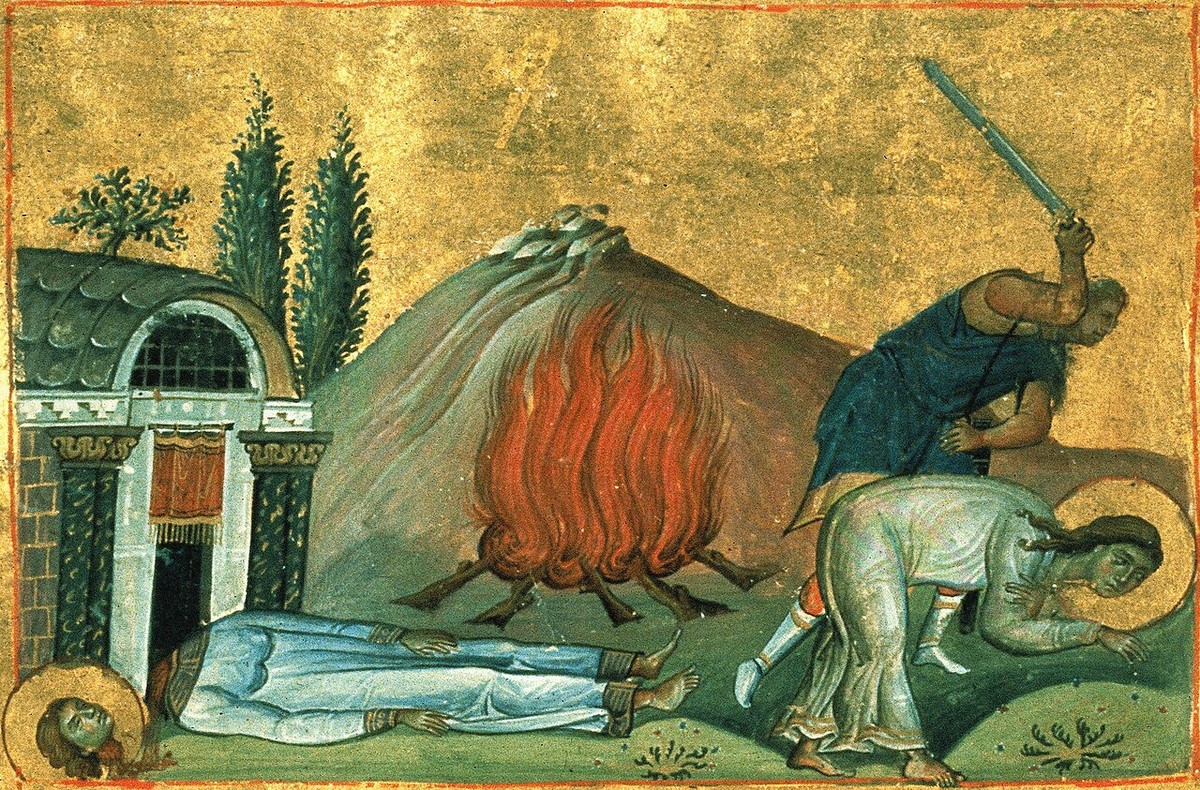
.jpg)
The account transmitted by the synaxaria is brief and of one piece. Capitolina (Καπιτωλίνη) was a woman of Cappadocia, noble and rich, but holding riches of no account: having come to Christ, she settled her affairs by dividing her whole property among the poor and giving her slaves their freedom. Arrested as a Christian in the reign of Diocletian — the notices set it about the year 304, when a magistrate named Zilikinthios (Ζιλικίνθιος) governed Cappadocia — she was brought to trial and confessed her faith without flinching. The magistrate ordered her shut up in a prison near at hand, and on the following day she was beheaded.
Her servant Eroteis (Ἐρωτηΐς; in Slavic lists Eroteida), who had been at her mistress's side, could not bear the injustice: she took up stones and flung them at Zilikinthios. Enraged, he had her beaten mercilessly with rods, but — the tradition holds — by the grace of Christ she remained unhurt; whereupon he commanded that she too be put to the sword. So both of them, the lady and her maidservant, died by beheading and received together, in the words of the synaxarion, imperishable crowns from Christ. Beyond these bare facts — the freeing of the slaves, the confession, the stoning of the judge, the two beheadings — nothing further of their lives is transmitted; per the honesty this repository owes its readers, nothing further is asserted.
Feast and commemoration
27 October (church date; Old Calendar civil 9 November). The pair are kept on this day in the Byzantine synaxaria — they are among the martyrs illustrated in the Menologion of Basil II — and appear on the Greek, Russian and OCA calendars for the day. No proper service is transmitted; the common of two martyrs (or of women martyrs) serves where their memory is kept liturgically. Their principal day everywhere is 27 October.
Hymns
Troparion — Tone 4 (from the common of martyrs)
Thy martyrs, O Lord, in their courageous contest for Thee received as a prize the crowns of incorruption and life from Thee, our immortal God. For since they possessed Thy strength, they cast down the tyrants and wholly destroyed the demons' strengthless presumption. By their intercessions, O Christ our God, save our souls.
Original translation from the Greek
Iconography
No proper portrait type is fixed for the two martyrs beyond the general image of women martyrs bearing crosses. The one early depiction is the miniature of the Menologion of Basil II (c. 1000, Vatican), which shows the two together under the notice of their martyrdom — the stored image of this entry; Capitolina as the elder, noble figure and Eroteis her younger servant, both as martyrs.
Disputed questions
- Not to be confused with Eroteis of Cappadocia, a separate virgin martyr of the same name-form kept in the Greek synaxaria on 6 October, who was put to death by fire and is known from a single synaxarion distich with no companion. That Eroteis and the servant Eroteis of this pair share the name and the "of Cappadocia" styling but are distinguished by the Church as two commemorations, on different days, with different manners of death (fire on 6 October; the sword, with Capitolina, on 27 October); the present entry treats the mistress-and-servant pair of 27 October, and the 6 October entry the lone virgin martyr by fire.