
Memnon of Ephesus
Our Father among the Saints Memnon, Archbishop of Ephesus
Bishop · d. c. 440
Commemorated 16 December
Memnon (†c. 440) was archbishop (metropolitan) of Ephesus at the time of the Third Ecumenical Council, which met in his city in 431 to condemn the heresy of Nestorius. As host and one of the leaders of the Council, he stood with Cyril of Alexandria in the defence of the Theotokos and the unity of Christ, and for it he shared Cyril's deposition and imprisonment at the hands of the emperor Theodosius II, before both were vindicated and restored. He reposed in peace, and the Church honours him among the confessing hierarchs on December 16.
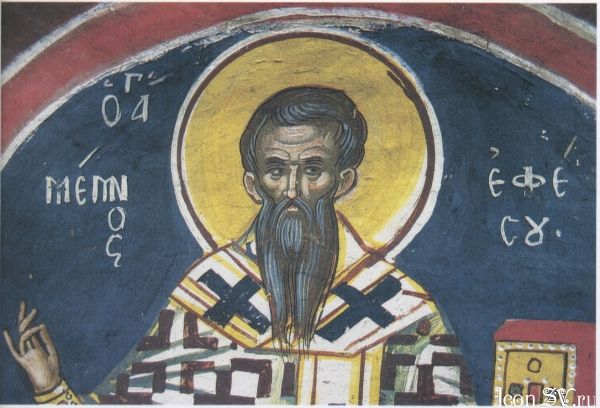

Memnon governed the great see of Ephesus in Asia — the city of the Apostle John and of the Council of 431 — in the years of the Nestorian controversy. When Nestorius, archbishop of Constantinople, taught that the Virgin should be called "Christ-bearer" (Christotokos) rather than "God-bearer" (Theotokos), dividing the one Christ, the emperor Theodosius II summoned a general council to Ephesus, and it was Memnon who received it and in whose episcopal city and churches it sat.
At the Council Memnon threw the weight of his see behind Cyril of Alexandria and the Orthodox confession. With the Egyptian and Asian bishops gathered, and before the arrival of John of Antioch and the Syrian party, the Council opened under Cyril's presidency, deposed Nestorius, and proclaimed the Theotokos. John of Antioch, arriving to find the business done, convened a rival assembly that in turn "deposed" Cyril on doctrinal charges and Memnon for his part in pressing the proceedings and for the tumults that attended them. The emperor, receiving these contradictory verdicts, at first ordered all three — Nestorius, Cyril and Memnon — arrested and confined, and for a time Cyril and Memnon were held in close custody. But when Theodosius was at length persuaded of the rightness of the Council that Cyril and Memnon had led, he confirmed its acts: Nestorius was condemned and sent into exile, John of Antioch was reconciled, and Cyril and Memnon were restored to their sees.
Little else of Memnon's life is recorded; the sources preserve a letter of his to the clergy of Constantinople from the time of the Council. He guided the church of Ephesus for some years more and reposed in peace, before the year 440.
Feast and commemoration
Memnon is commemorated on December 16 (church date; Old Calendar civil December 29). The commemoration is kept chiefly in the Greek synaxaria; he is honoured as a confessor of the faith among the hierarchs, without a proper service of his own, his memory kept by the synaxarion notice and the common of a holy bishop.
Iconography
Memnon is depicted as a bishop — in the phelonion and omophorion, the Gospel book in his left hand and his right raised in blessing, an elder with a rounded grey beard. The stored image is a sixteenth-century fresco from the Monastery of Dionysiou on Mount Athos, inscribed with his name and title as archbishop of Ephesus.
Disputed questions
- Not to be confused with the venerable Memnon the Wonderworker (April 29 in Slavonic usage, April 28 in Greek), the ascetic and abbot of the Egyptian desert; nor with the martyr Memnon the Centurion, commemorated with the martyr Severus on August 20. This Memnon is the hierarch of Ephesus, and is shown in the vesture of a bishop.