
Inna, Pinna and Rimma
The Holy Martyrs Inna, Pinna and Rimma
Martyr · d. early 2nd century
Commemorated 20 January — Martyrdom by freezing in Scythia Minor, 20 June — Translation of their relics to Alushta
Inna, Pinna and Rimma were three men of Scythia Minor — the lands about the lower Danube and the western shore of the Black Sea, in what is now Romania and Bulgaria — who were converted and, the tradition says, ordained by the Apostle Andrew the First-Called in the first age of the Gospel. Preaching Christ among the barbarian tribes of the region and baptising many, they were seized by a pagan chieftain and, refusing to deny the faith, were bound to stakes set upright in the frozen river and lowered into the ice until the freezing water rose to their necks and they gave up their souls — a martyrdom by cold that is almost unique in the calendar. They are among the earliest martyrs of the northern lands, and are venerated as the first martyrs of the Scythian and Slavic world. They are kept on January 20, with a second commemoration on June 20 for the translation of their relics.
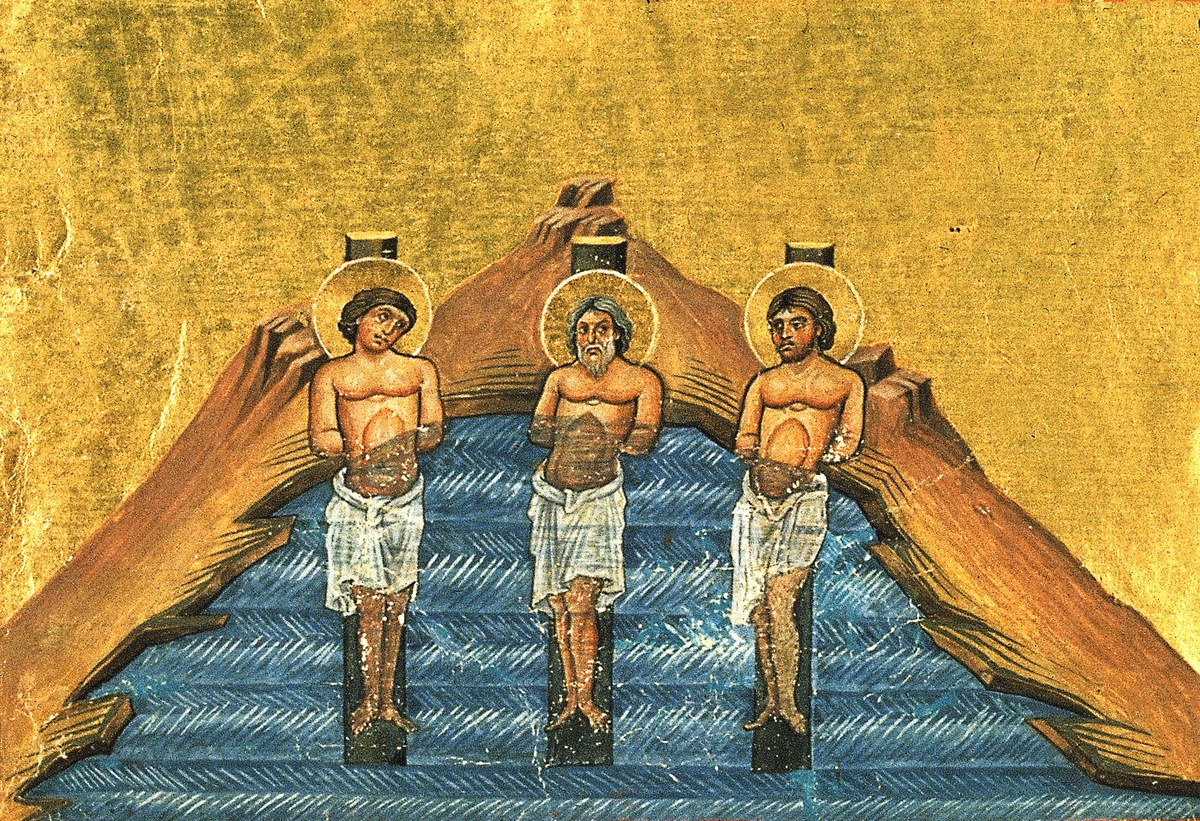

The three martyrs belong to the mission of the Apostle Andrew, who by the constant tradition of the Eastern Church preached the Gospel around the Black Sea and along the Danube, in the wild borderlands the Greeks called Scythia. Inna, Pinna and Rimma — the names are non-Greek, of the region's own tongue, and are given with some variation in the manuscripts (Inna, Pinna and Nirra among them) — were natives of these parts, sometimes described as Goths and sometimes, in the later Slavic reading of their memory, as Slavs of the Danube country. Andrew baptised them and, the tradition holds, ordained them to preach; and they laboured as his disciples among the idol-worshipping tribes settled about the lower Danube and the coast toward the region of Varna, converting many barbarians to Christ and baptising them in the true faith.
Their preaching drew the anger of a local pagan prince or chieftain, who had them arrested and commanded them to renounce Christ and sacrifice to the idols. When they refused and confessed their faith without wavering, the prince devised for them a death fitted to the country's bitter winters. It was the depth of winter, and the river was frozen so hard that not men only but loaded carts could cross upon the ice. The chieftain had stakes fixed upright in the river-ice, bound the three saints to them, and left them there as the water rose and froze about them; and as the ice mounted little by little to their necks, the martyrs surrendered their blessed souls to God. So they won the crown by cold, as others by fire and sword — a martyrdom the synaxaria dwell on for its strangeness and its patience.
Relics and veneration
Their bodies were recovered by Christians and buried; the tradition preserves the memory of a translation of their relics to Alushta, on the southern coast of the Crimea, kept as their second feast on June 20. Honoured from early times in the Greek synaxaria as martyrs of Scythia, they have been especially claimed in the Slavic and Romanian traditions as the first martyrs of their own soil — the protomartyrs, in the later reading, of the peoples of the Danube and the northern Black Sea. The Antiochian Archdiocese, whose synaxarion likewise keeps them, numbers them among the disciples and companion-martyrs of the Apostle Andrew.
Feast and commemoration
January 20 (church date; Old Calendar civil February 2), the day of their martyrdom, kept in the Byzantine synaxaria and shared with the great desert father Euthymius the Great, who leads the day. A second commemoration on June 20 (Old Calendar civil July 3) keeps the translation of their relics to Alushta in the Crimea. The three are venerated across the Greek, Slavic and Romanian calendars.
Hymns
Troparion — Tone 4
Thy Martyrs, O Lord, in their contest received incorruptible crowns from Thee our God; for, possessed of Thy strength, they cast down the tyrants and shattered the feeble insolence of the demons. By their prayers, O Christ God, save our souls.
Original translation from the Greek
Iconography
The three are depicted together as young martyrs of the early Church, in the tunics and mantles of laymen, each bearing the martyr's cross; the narrative type shows them bound to stakes in the frozen river, the ice risen to their necks — the distinctive image of their cold martyrdom. The stored image is the miniature of the Menologion of Basil II (Constantinople, 985; Vat. gr. 1613, p. 337), which gives exactly this narrative type: the three young martyrs bound to the stakes driven into the frozen river, the ice-blue water risen about them and the winter hills behind — the manuscript's rendering of the cold martyrdom, and the oldest surviving image of the three.
Disputed questions
- Origin — Goths, Scythians, or Slavs. The oldest notices call the three martyrs of Scythia, and their non-Greek names point to the mixed barbarian population of the lower Danube; the frequent modern description of them as Slavs reflects the later Slavic appropriation of their memory rather than a demonstrable fact of the second century, when Slavs are not yet attested in the region. The entry keeps the sources' own term, Scythia Minor, and notes the Slavic reading as a later development.
- Date. No year is transmitted. Their association with the Apostle Andrew places them in the first or early second century; the entry's record follows the common reckoning of an early-second-century martyrdom, given without precision.
- Ordination. Some accounts describe Andrew as having ordained the three to the priesthood; others speak only of their baptism and discipleship. The calendars commemorate them simply as martyrs, and the entry follows that emphasis while recording the tradition of their ordination.