
Marcian of Syracuse
The Holy Hieromartyr Marcian, Bishop of Syracuse
Hieromartyr · Bishop · Martyr
Commemorated 9 February — Commemorated as "Marcellus, bishop of Sicily," with the disciples of Peter, on the leavetaking of the Meeting, 30 October — Bishop and martyr of Syracuse in Sicily
Marcian, the first bishop of Syracuse in Sicily, is venerated as a disciple of the Apostle Peter sent to preach in the West, and as a hieromartyr of the apostolic age. The tradition places his labours in a cave near Syracuse, from which he spread the faith through the island, and records that he died a martyr; his relics are kept at Gaeta on the Italian mainland. He is commemorated on October 30 and is identified in the received calendars with the "Marcellus, bishop of Sicily" honoured on February 9.
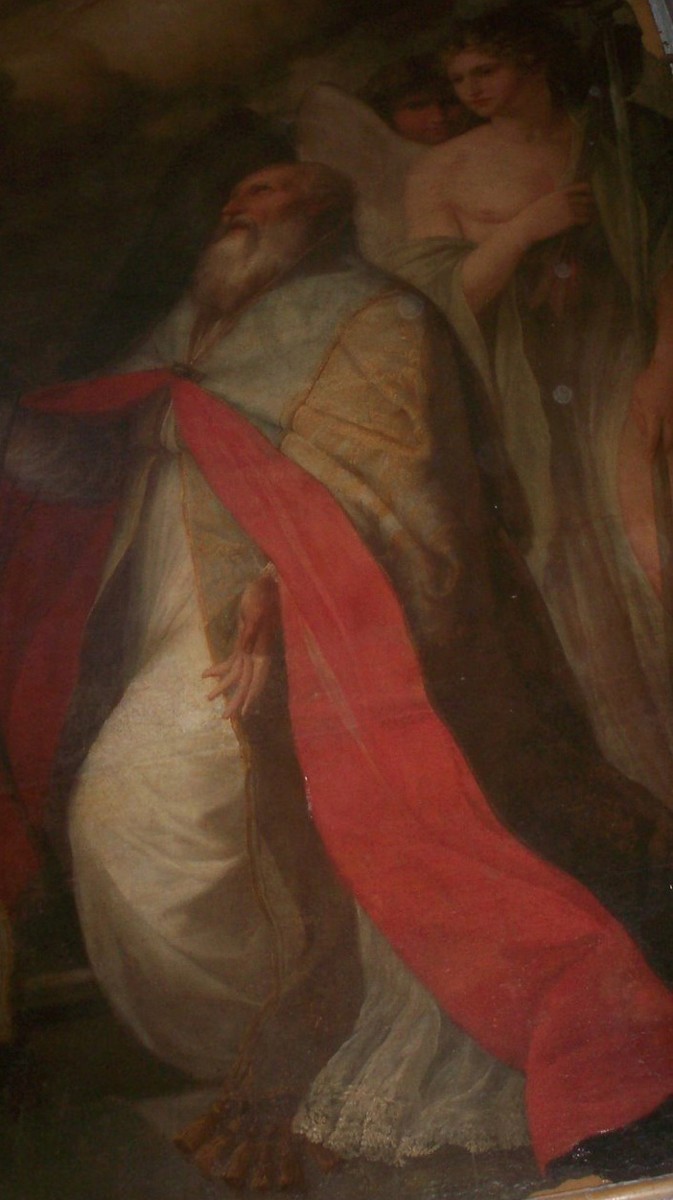

Marcian belongs to the first generation of the Church's mission to the West. The tradition names him a disciple of the Apostle Peter, sent by him to Sicily, where he settled in a cave near the city of Syracuse and from there preached Christ with such success that he is remembered as the first bishop of that see — and, in the wider Western reckoning, as one of the first bishops of the West altogether. He governed the young Sicilian church and at length was put to death for the faith, dying a martyr. His relics were later translated to Gaeta, on the coast north of Naples, where they are venerated.
Feast and commemoration
October 30 (church date; Old Calendar civil November 12). The day's proper service belongs to the martyrs Zenobius and Zenobia; Marcian receives synaxarion commemoration. The Sicilian and wider Western tradition keeps his memory at Syracuse, where he is honoured as protobishop of the city; the same saint is commemorated on February 9 under the name Marcellus.
Hymns
Troparion — Tone 4
Sharing the way of life of the apostles and having succeeded to their throne, you found in action, O God-inspired one, an ascent to divine vision; therefore, rightly dividing the word of truth, you contested for the faith even unto blood, O hieromartyr Marcian. Intercede with Christ God for the salvation of our souls.
Original translation from the Greek
Iconography
Marcian is shown as a bishop of the apostolic age, vested in the omophorion and holding the Gospel book, sometimes with the palm of martyrdom. The stored image is an 18th-century Sicilian painting of San Marciano di Siracusa by Sebastiano Lo Monaco (1730–1775), a Baroque depiction from the saint's own city rather than a Byzantine icon — an apt witness to his standing as protobishop of Syracuse, retained under the public-domain provision for pre-modern works.
Disputed questions
- Identity with Marcellus of February 9. The received English calendar (OCA) states plainly that "the Hieromartyr Marcian is the same person as Saint Marcellus, Bishop of Sicily," commemorated on February 9; the Slavonic synaxaria likewise gloss him "Marcian of Syracuse (Marcellus of Sicily)." The doubled name and the two feast days appear to preserve one saint under two forms. This entry accordingly carries the February 9 commemoration as a secondary feast of the same saint, rather than minting a separate "Marcellus of Sicily"; on February 9 he is kept with the two other disciples of the Apostle Peter honoured that day, Pancratius of Tauromenium and Philagrius of Cyprus, on the leavetaking of the Meeting of the Lord. (Should later evidence prove Marcian of Syracuse and Marcellus of Sicily two distinct men after all, this secondary feast would be split into a separate entry; the received identification is followed here.)
- The manner of death. That Marcian was martyred is the constant of the tradition; the received notices do not agree on the particulars, and some Western accounts have him killed by opponents of his preaching at Syracuse.
- Date. As an apostolic-age figure his lifetime is placed in the first century, though the Sicilian episcopal chronology of the period is not securely documented.
- Not to be confused with the later Marcian the Oikonomos, presbyter and steward of the Great Church of Constantinople and builder of churches (†c. 471, kept January 10), nor with the notaries Marcian and Martyrius of Constantinople (October 25) or Marcian, hermit of Cyrrhus (November 2); this Marcian is the apostolic-age bishop and hieromartyr of Syracuse.
- Not to be confused with Marcellus of the Akoimetoi (†c. 485, kept December 29), the fifth-century abbot of the Monastery of the Unsleeping Ones at Constantinople — a different saint entirely, who shares only the alternate name "Marcellus" by which this Marcian is known in the calendars.