
Veneration of the Precious Chains of the Apostle Peter
On January 16 the Church venerates the precious chains (fetters) with which Herod Agrippa bound the Apostle Peter when he cast him into prison at Jerusalem, from which an angel of the Lord delivered him and the chains fell from his hands (Acts 12:1–11). Kept as relics by the Christians of Jerusalem, the chains passed about the year 439 to the empress Eudokia, who sent part of them to Constantinople and part to her daughter Licinia Eudoxia at Rome; there they were enshrined in the basilica raised on the Esquiline that still bears their name, San Pietro in Vincoli — "Saint Peter in Chains." The feast honours not the day of Peter's martyrdom but the honour paid to the iron that touched the chief Apostle: a veneration of relics through which, the hymns say, the faithful "receive the loosing of their transgressions." It is one of the several feasts of Peter's own cycle, distinct from the joint feast of Peter and Paul on June 29.
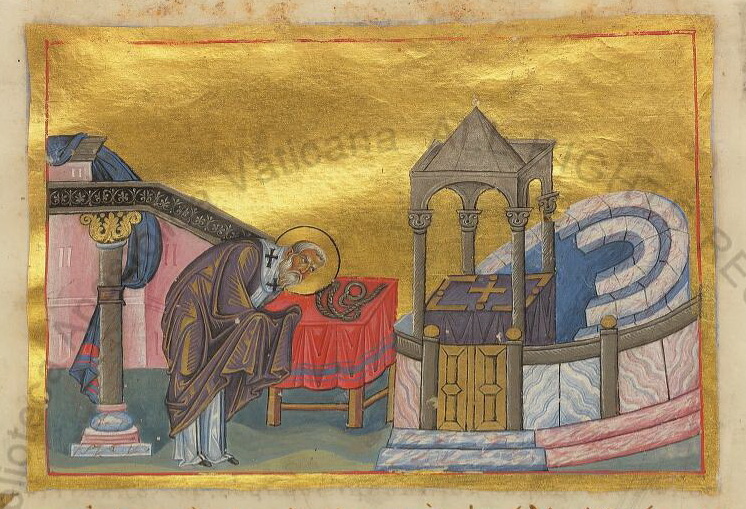

The imprisonment under Herod (Acts 12)
The event the feast reaches back to is recorded by the Evangelist Luke in the Acts of the Apostles. "About that time Herod the king stretched forth his hands to vex certain of the church. And he killed James the brother of John with the sword" — the Apostle James the son of Zebedee, the first of the Twelve to be martyred — "and because he saw it pleased the Jews, he proceeded further to take Peter also… and when he had apprehended him, he put him in prison, and delivered him to four quaternions of soldiers to keep him" (Acts 12:1–4). The "Herod" of the passage is Herod Agrippa I, grandson of Herod the Great, who reigned over a reunited Judaea from 41 to 44 under the emperors Caligula and Claudius; the imprisonment falls about the year 42, at the season of the Passover. Peter was held "bound with two chains" between two soldiers, with keepers before the door, while the church "prayed without ceasing" for him.
On the night before Herod meant to bring him out, "behold, the angel of the Lord came upon him, and a light shined in the prison: and he smote Peter on the side, and raised him up, saying, Arise up quickly. And his chains fell off from his hands." Led past the guards and through the iron gate that "opened to them of his own accord," Peter came to himself in the street and said, "Now I know of a surety, that the Lord hath sent his angel, and hath delivered me out of the hand of Herod" (Acts 12:7–11). It is precisely these fallen chains — the iron that could not hold the Apostle whom Christ had made the rock — that the Church venerates. The hymnography plays throughout on the paradox: the fetters of a prisoner become an instrument of freedom, and the bonds that bound Peter now loose the bonds of sin from those who honour them.
From Jerusalem to Eudokia
The Christians of Jerusalem are said to have kept the chains from apostolic times, venerating them and receiving healings by them, as they kept the relics of the first martyrs of the city. In the fifth century the chains enter recorded history through the piety of the imperial house. The empress Eudokia (Aelia Eudocia), wife of the emperor Theodosius II, made two lengthy pilgrimages to the Holy Land (438–439 and again in her later retirement there), lavished her wealth on the churches of Jerusalem, and — the tradition holds — received from Juvenal, Patriarch of Jerusalem, the chains of Saint Peter as the supreme gift of the holy city. Eudokia divided the treasure: one portion she sent to Constantinople, where it was enshrined and where a yearly veneration was established; the other she sent westward to her daughter.
The chains at Rome and San Pietro in Vincoli
Eudokia's daughter, the empress Licinia Eudoxia, wife of the western emperor Valentinian III, received the chain at Rome. According to the Roman tradition she presented it to Pope Leo the Great (or, in some accounts, to an earlier pope), who compared it with the chain already kept at Rome from Peter's imprisonment under Nero in the Mamertine prison; and — the celebrated legend adds — when the two chains were brought together they fused miraculously into a single unbroken series of links, so that the eastern and western fetters became one. To house the relic the basilica of Saint Peter in Chains (San Pietro in Vincoli, the titulus Eudoxiae) was built or rebuilt on the Esquiline Hill, consecrated in the 440s; there the chains rest to this day beneath the high altar, in the church that later Romans knew best for Michelangelo's statue of Moses. The Latin Church long kept the feast of Saint Peter ad Vincula on August 1 (dropped from the general Roman calendar in the reforms of 1960–1969); the Byzantine East keeps the veneration on January 16.
The feast at Constantinople
At Constantinople the portion sent by Eudokia was venerated in a chapel of the imperial city; the twelfth-century Russian pilgrim Anthony of Novgorod records that the chains of the Apostle Peter were kept in a chapel of Saint Peter by the north-east corner of the Great Church of Hagia Sophia, where they were brought out for the faithful to venerate on this day. The January 16 commemoration thus belongs to the sanctoral proper of the imperial capital and passed from there into the universal Byzantine Menaion, in which the day is appointed a full festal office of the Apostle.
Feast and commemoration
January 16 (church date; New Calendar civil January 16; Old Calendar civil January 29). The feast is kept universally in the Byzantine rite, with a proper apolytikion and kontakion of the Chains and a festal office of the chief Apostle in the Menaion; it is one of the recurring feasts of Peter's own cycle (with June 29, Peter and Paul, and the joint commemorations of the two Apostles). The Latin West kept the parallel feast of Peter's Chains on August 1 until the twentieth century. On the day the Byzantine calendar keeps also the martyr-brothers Peusippus, Elasippus and Mesippus and the martyr Danax the Reader.
Taxonomy flag — feast_type. The controlled feast_type vocabulary of the project's constitution
(indiction | theotokos-synaxis | icon-of-the-theotokos | angelic | dominical | theotokian | dedication | deliverance) has no value for the veneration or
translation of a saint's relics. This feast is a relic-veneration feast of the
Apostle Peter: neither a Theotokos nor an angelic nor a dominical commemoration,
and not, strictly, the dedication of a church. dedication is chosen here as the
nearest existing term — the repository already types saints' relic-shrine
feasts as dedication (the
Dedication of the Church of George at Lydda,
the Dedication of the Anastasis), and this
feast is historically bound to the dedication of the Roman basilica ad Vincula
raised to enshrine the chains. But the term is a stretch: the feast venerates a
portable relic (in character a translation-of-relics, a value that exists only
in the per-feast rank list, not among feast_types). No new term is minted. The
gap is flagged for a deliberate decision — a relic / relic-veneration
feast_type, or the generalisation of an existing one — extending the standing
feast_type question at the project's record of open questions (which records the parallel absence
of a generic synaxis value) to the relic-feast species.
Note on the Apostle Peter's own entry. Peter the chief Apostle does not yet possess a saint file in this collection: his principal feast (June 29, with Paul) falls later in the September-to-August production sweep than the current wave, and per §4 he is not re-minted here. This feast file supplies the account, propers, and icon of the January 16 veneration only; the Apostle's Life belongs to his own entry when it is authored, and this file is to be cross-linked to it then.
Hymns
Troparion
Without departing from Rome, thou hast come to dwell among us through the precious chains that thou didst wear, O first-throned of the Apostles; and as in faith we venerate them, we entreat thee: by thine intercessions with God, grant unto us the great mercy.
Original translation from the Greek
Kontakion
Let us praise Peter the greatest, the chief and first of the Apostles, the God-inspired herald of the truth; and in faith let us kiss his Chain, receiving thereby the loosing of our transgressions.
Original translation from the Greek
Appointed readings
Epistle — Acts 12:1–11
1Now about that time Herod the king stretched forth his hands to vex certain of the church. 2And he killed James the brother of John with the sword. 3And because he saw it pleased the Jews, he proceeded further to take Peter also. (Then were the days of unleavened bread.) 4And when he had apprehended him, he put him in prison, and delivered him to four quaternions of soldiers to keep him; intending after Easter to bring him forth to the people. 5Peter therefore was kept in prison: but prayer was made without ceasing of the church unto God for him. 6And when Herod would have brought him forth, the same night Peter was sleeping between two soldiers, bound with two chains: and the keepers before the door kept the prison. 7And, behold, the angel of the Lord came upon him, and a light shined in the prison: and he smote Peter on the side, and raised him up, saying, Arise up quickly. And his chains fell off from his hands. 8And the angel said unto him, Gird thyself, and bind on thy sandals. And so he did. And he saith unto him, Cast thy garment about thee, and follow me. 9And he went out, and followed him; and wist not that it was true which was done by the angel; but thought he saw a vision. 10When they were past the first and the second ward, they came unto the iron gate that leadeth unto the city; which opened to them of his own accord: and they went out, and passed on through one street; and forthwith the angel departed from him. 11And when Peter was come to himself, he said, Now I know of a surety, that the Lord hath sent his angel, and hath delivered me out of the hand of Herod, and from all the expectation of the people of the Jews.
Gospel — John 21:15–25
15So when they had dined, Jesus saith to Simon Peter, Simon, son of Jonas, lovest thou me more than these? He saith unto him, Yea, Lord; thou knowest that I love thee. He saith unto him, Feed my lambs. 16He saith to him again the second time, Simon, son of Jonas, lovest thou me? He saith unto him, Yea, Lord; thou knowest that I love thee. He saith unto him, Feed my sheep. 17He saith unto him the third time, Simon, son of Jonas, lovest thou me? Peter was grieved because he said unto him the third time, Lovest thou me? And he said unto him, Lord, thou knowest all things; thou knowest that I love thee. Jesus saith unto him, Feed my sheep. 18Verily, verily, I say unto thee, When thou wast young, thou girdedst thyself, and walkedst whither thou wouldest: but when thou shalt be old, thou shalt stretch forth thy hands, and another shall gird thee, and carry thee whither thou wouldest not. 19This spake he, signifying by what death he should glorify God. And when he had spoken this, he saith unto him, Follow me. 20Then Peter, turning about, seeth the disciple whom Jesus loved following; which also leaned on his breast at supper, and said, Lord, which is he that betrayeth thee? 21Peter seeing him saith to Jesus, Lord, and what shall this man do? 22Jesus saith unto him, If I will that he tarry till I come, what is that to thee? follow thou me. 23Then went this saying abroad among the brethren, that that disciple should not die: yet Jesus said not unto him, He shall not die; but, If I will that he tarry till I come, what is that to thee? 24This is the disciple which testifieth of these things, and wrote these things: and we know that his testimony is true. 25And there are also many other things which Jesus did, the which, if they should be written every one, I suppose that even the world itself could not contain the books that should be written. Amen.
Iconography
The feast is imaged in two ways. The narrative type shows the deliverance of Peter from prison: the Apostle led by the angel past the sleeping guards, the broken or fallen chains at his wrists, the iron gate opening of itself — the scene of Acts 12. The second, proper to the veneration, shows the chains themselves displayed or held up for veneration, sometimes with the Apostle standing beside them. The stored image is the miniature for January 16 from the Menologion of Basil II (Constantinople, c. 985; Vatican, Vat. gr. 1613): the veneration of the precious chains of the Apostle Peter, the deliverance from prison rendered in the manuscript's characteristic gold-ground style (source, public domain, pd-old-work).