
Paschaltide, day 22 · 21 days since Pascha
Paralytic; SS Cyril and Methodius, Apostles to the Slavs
About Founding of Constantinople →
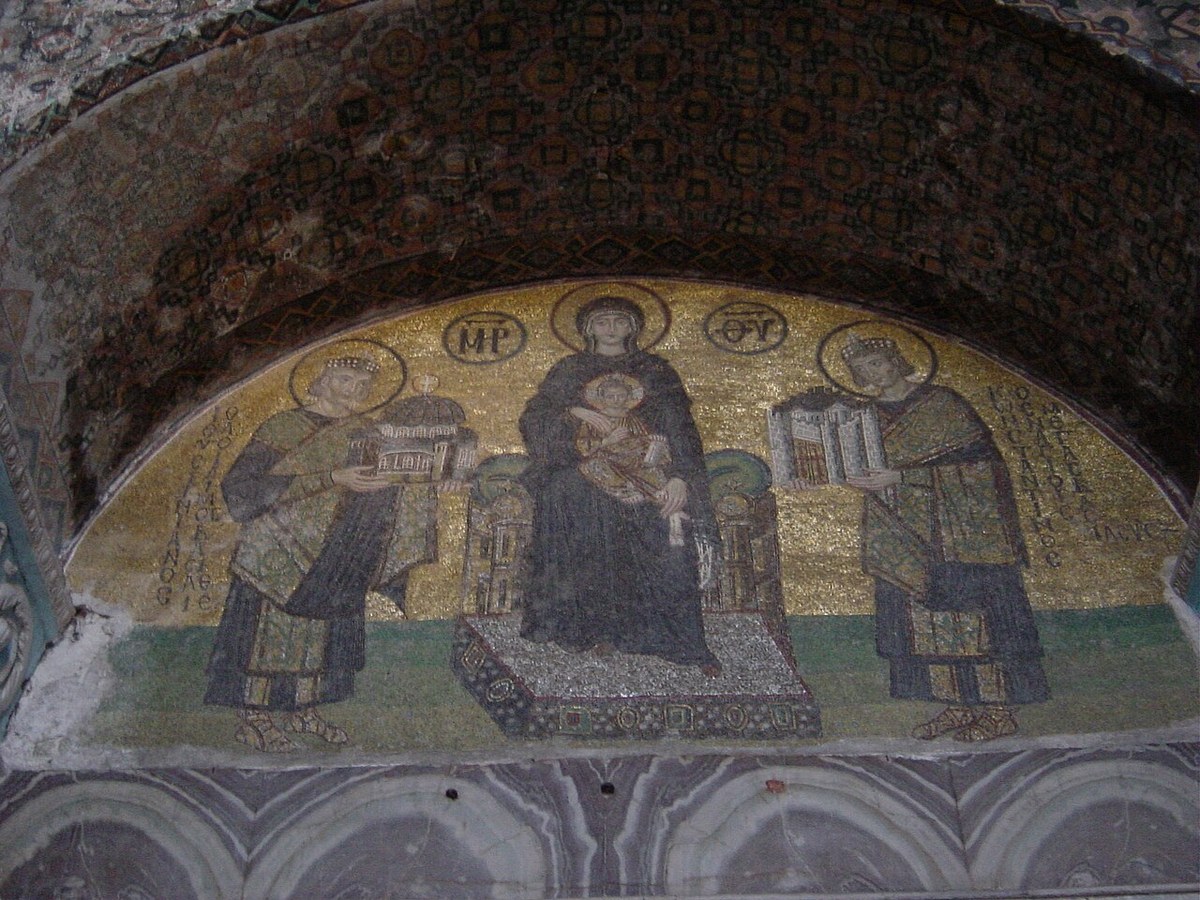
_-_Foto_G._Dall%27Orto_24-5-2006.jpg)
Saints commemorated
-
Holy Hieromartyr Mocius (288? 295?)
Mocius was a presbyter of Amphipolis in Macedonia who, in the persecution under Diocletian, broke into the drunken festival of Dionysus in his own city and called its worshippers to abandon their vileness for Christ. Tortured at Amphipolis and at Laodicea, thrown into a heated furnace and to the beasts and preserved unharmed, he was at length sent to Perinthus and then to Byzantium, and there beheaded about the year 295 — some thirty-five years before Constantine dedicated the new capital on the same site. Constantine afterwards built a church over his relics, and Mocius became the first and for centuries the most honoured of the martyrs of the City: his memory on May 11 is inseparable from the birthday of Constantinople itself.
-
Cyril the Philosopher
Cyril (c. 826 – 869), born Constantine at Thessalonica and known in his own day as the Philosopher, was the Byzantine scholar-monk who, with his elder brother Methodius, became the apostle of the Slavs. Trained in the imperial schools of Constantinople under Photius and Leo the Mathematician, he served as librarian of Hagia Sophia and teacher of philosophy, and was sent on embassies of disputation to the Arabs and the Khazars. Answering the request of Prince Rastislav of Great Moravia for teachers in the Slavic tongue, he devised the first Slavic alphabet — the Glagolitic — and with it translated the Gospel, the Epistle, the Psalter, and the services into Slavonic, opening the Scriptures and the Liturgy to a whole family of nations in their own language. Against the "trilingual" party that would confine worship to Hebrew, Greek, and Latin, he defended the right of every tongue to praise God. He carried the relics of Clement of Rome, which he had recovered in the Crimea, to Rome, where the Pope blessed the Slavonic books; there he fell ill, received the great schema with the name Cyril, and reposed on February 14, 869, and was buried in the Basilica of San Clemente. From his Glagolitic sprang the Cyrillic script that bears his name.
-
Joseph of Astrakhan
Joseph (1579–1671) was the first Metropolitan of Astrakhan, a native of that frontier city on the lower Volga who entered monastic life there, became archimandrite of its Trinity monastery, and was raised to the new metropolitan see in 1656. In the rising of the townspeople of Astrakhan during the revolt of Stepan Razin he refused to bless the rebels or to abandon his flock; on 11 May 1671 he was seized in his own cathedral after serving the Liturgy, tortured and thrown from the bell-tower of the citadel. His body lay nine days unburied before the clergy could vest and inter it, and healings were reported at his grave. He was glorified by the Council of the Russian Church in April 1918, in the first weeks of a new age of Russian martyrdom.
-
Methodius of Moravia
Methodius (c. 815–885) was, with his younger brother Cyril the Philosopher, the apostle of the Slavs — the elder of the two "Thessalonian brothers" who devised the Slavonic letters, translated the Scriptures and the services of the Church into the Slavonic tongue, and carried the Gospel to Great Moravia and the peoples of central Europe. After Cyril's death Methodius laboured on for sixteen years as archbishop, translating almost the whole Bible into Slavonic, defending the right of the Slavs to worship God in their own language against fierce opposition, and enduring imprisonment for the faith. He is honoured as Equal-to-the-Apostles; from the work of the two brothers and their disciples flows the whole tradition of Slavonic Orthodoxy.
-
Nicodemus of Serbia
Nicodemus (†1324) was Archbishop of Peć and of all the Serbian lands from 1317 to his death, an Athonite monk of Hilandar before his elevation and one of the most learned Serbian churchmen of the fourteenth century. He translated the Jerusalem Typikon into Serbian, giving the Serbian Church the liturgical order it has kept ever since; he compiled a synaxarion-calendar recording the death-days of the Serbian kings and archbishops so that their memorials might be kept correctly; he twice acted as peacemaker in the murderous quarrels of the Nemanjić house; he crowned Stephen Uroš III Dečanski at Epiphany 1321; and he built and restored churches at Peć, at Žiča and on Athos. He is honoured with the Serbian hierarchs, and his relics rest in the church of St Demetrius at the Patriarchate of Peć.
-
Olympia and Euphrosyne of Lesbos
Olympia and Euphrosyne were nuns of the monastery of Karyes at Thermi on Lesbos, put to death by pirates in 1235 — Olympia the young abbess of the house, Euphrosyne an eldress of it. Euphrosyne was hanged from a tree and burnt; Olympia was burnt over her whole body with torches, had a heated iron driven through her ears, and was at last nailed to a board with twenty nails. Their memory was lost for seven centuries and recovered in 1959, when their relics were found at the site of the ruined monastery in the same series of Lesbian discoveries that brought to light the relics of St Raphael and his companions. They are commemorated on May 11, and on Bright Tuesday with the Lesbian saints.
-
Rostislav of Moravia
Rostislav (Rastislav, †c. 870) was Prince of Great Moravia from 846, the ruler whose embassy to Constantinople in 862 brought Cyril and Methodius to the Slavs. Refused Slavonic-speaking teachers by Rome, he asked for them from the Emperor Michael III, and the mission that resulted gave the Slavonic peoples their alphabet, their Scriptures and their liturgy. Rostislav sheltered and financed that work against the fierce opposition of the Frankish clergy, was betrayed to the Franks by his nephew Svatopluk in 870, and was blinded and imprisoned in Bavaria, where he died. The Orthodox Church of the Czech Lands and Slovakia glorified him as Equal-to-the-Apostles in 1994, and he is commemorated on May 11 with the brothers he summoned.
-
Sophronius of the Kiev Caves
Sophronius was a recluse of the Far Caves of the Kiev Caves Lavra, one of the monks of that house whose ascetic life is known only from the liturgical commemoration of the Caves fathers and whose relics rest in the Far (Theodosian) Caves. The Canon to the Venerable Fathers of the Far Caves remembers his solitary struggle in enclosure and says that he was counted worthy to hear the singing of angels. He is usually placed in the thirteenth century, but nothing of his history survives; his memory is kept on May 11, again on March 11 in Kievan usage, and with the whole company of the Far Caves fathers on August 28.
British Isles and Ireland
- Holy Martyr & Hermit Fremund of Offchurch (866)
- St. Tudy, Breton missionary to Cornwall (5th C)
Troparia & kontakia
Apolytikion — Tone 4
Sharing the manner of life of the Apostles and seated upon their thrones, thou didst find in the practice of virtue the way to the vision of God, O divinely-inspired one; therefore, having rightly divided the word of truth, thou didst contend for the faith even unto blood, O hieromartyr Mocius: intercede with Christ God that our souls may be saved.
Kontakion
To thee, our Champion Leader, we thy servants ascribe the prizes of victory and the thanksgiving of our deliverance, O Theotokos; and as thou hast might that cannot be withstood, deliver us from every peril, that we may cry unto thee: Rejoice, O Bride unwedded.
Kontakion — Tone 2
Enlightening the world with firm and God-inspired teaching, with beams of purest light, thou didst run through the whole earth like lightning, O blessed Cyril, scattering the all-radiant word of God in the west and the north and the south, and enlightening the world with wonders.
Kontakion — Tone 2
Grown old in the service of the altar, thou wast not spared the martyr's contest, O hierarch Joseph; for from the tower thou wast cast down, and didst rise up to the heights: wherefore Astrakhan honours thee as her first shepherd and her intercessor.
Kontakion — Tone 3
Let us honour the sacred pair, our enlighteners, who by translating the divine writings poured forth for us a fountain of the knowledge of God, from which even to this day we draw abundantly; and we call thee blessed, O Methodius, together with Cyril, thou intercessor before the throne of the Most High for our souls.
Kontakion — Tone 2
Thou didst overthrow the altars of the demons by thy word, O wise Mocius, and the fire and the beasts were made powerless against thee; and giving thy neck to the sword in the City of Constantine, thou wast shown a first-fruits of her martyrs: entreat Christ God for those who honour thee.
Kontakion — Tone 2
Having laboured on the Holy Mountain and been set as a shepherd over the Serbian flock, thou didst give thy people the order of the divine services and the memory of their fathers, O hierarch Nicodemus; and now, standing before the throne of glory, remember those who honour thy repose.
Kontakion — Tone 2
The tortures of the enemies of Christ ye endured with courage, O venerable martyrs, the one hanged upon the tree and the other pierced and nailed; and now, your relics being made manifest, ye pour out healings upon those who honour you.
Kontakion — Tone 8
Rejoice, O Moravian land, that hast borne a prince apostolic in zeal; for Rostislav sought and found the teachers of the Slavs, and by their word thy children were made literate in the things of God: with them entreat Christ for us who honour thee.
Troparion
O Sovereign Lady, guard the city that thou hast taken for thine own: for in thee it was founded, and by thy name it is called, and unto thee it lifts up its walls and its people as an offering; keep it in peace beneath thy protection, and save from every danger those who cry to thee: Rejoice, thou Champion of Christians.
Troparion — Tone 4
From thy swaddling-clothes, O God-voiced one, thou didst diligently take Wisdom to be thy sister; and beholding her all-radiant as a pure maiden, thou didst receive her and lead her home, and adorning thy soul and thy mind with her as with golden chains, thou wast found to be another Cyril, wise in mind and in name, O blessed one.
Troparion — Tone 4 (common of a hieromartyr)
Sharing the manner of life of the Apostles and seated upon their thrones, thou didst find in the practice of virtue the way to the vision of God, O divinely-inspired Joseph; and being first shepherd of the city of thy birth, thou didst lay down thy life rather than bless iniquity: intercede with Christ God that our souls may be saved.
Troparion — Tone 4
Equals of the Apostles and teachers of the Slavonic lands, Cyril and Methodius inspired of God: entreat the Master of all to establish all the Slavonic peoples in Orthodoxy and concord, to grant peace to the world, and to save our souls.
Troparion — Tone 8 (common of a hierarch)
Guide of Orthodoxy, teacher of piety and holiness, lamp of the Serbian land, divinely inspired adornment of hierarchs, O most wise Nicodemus: by thy teaching thou hast enlightened all, thou harp of the Spirit; intercede with Christ God that our souls may be saved.
Troparion — Tone 4 (common of women martyrs)
As lambs of the flock of Christ ye were found in the fold of Karyes, and when the wolves came ye did not flee, O Olympia and Euphrosyne; for by fire and by iron ye were perfected, and hidden in the earth for many generations, ye have been revealed in these latter days to the joy of Lesbos: intercede with Christ God that our souls may be saved.
Troparion — Tone 4 (common of a right-believing prince)
Thou didst not seek an earthly kingdom only for thy people, O right-believing Rostislav, but the Word of God in their own tongue; and having sought teachers from the imperial city, thou didst receive the letters and the divine services, and hast enlightened the Slavonic race: wherefore, having suffered bonds and blindness for thy labour, thou dost intercede with Christ God that our souls may be saved.
Troparion — Tone 8 (common of a venerable father)
Walled in the darkness of the cave, thou didst find the unwaning light, O Sophronius our father; for in silence and enclosure thy prayer was made unceasing, and thou wast granted to hear the angels praising God: pray for us who honour thy memory.
Readings
Vespers
Composite 2 - Proverbs 10, 3, 8
1The memory of a just man is praised, and the Lord’s blessing is upon his head. Blessed is one who has found wisdom; a mortal who knows understanding. To import her is better than treasures of gold and silver. She is more valuable than precious stones; nothing of value equals her worth. Justice proceeds from her mouth; she bears law and mercy on her tongue. Therefore, my children, listen to me, for I speak weighty things. And blessed is the one who keeps my ways. For my goings out are the goings out of life, and favour is prepared from the Lord. Therefore I exhort you, and utter my voice to the children of humankind. Because I, Wisdom, have prepared counsel, knowledge and understanding. I have called on them. Counsel and sureness are mine; prudence is mine, strength is mine. I love those who are my friends, while those who seek me will find grace. You innocent, then, understand cunning; you untaught, take it to heart. Listen to me, for I will speak weighty things, and I will open right things from my lips. Because my throat will meditate truth; lying lips are abominable before me. All the words of my mouth are with justice, there is nothing crooked in them nor twisted. They are all straight for those who understand, and right for those who find knowledge. For I teach you what is true, that your hope may be in the Lord and that you may be filled with spirit.
Proverbs 10.31-11.12
31The mouth of the just bringeth forth wisdom: but the froward tongue shall be cut out. 32The lips of the righteous know what is acceptable: but the mouth of the wicked speaketh frowardness. 1A false balance is abomination to the LORD: but a just weight is his delight. 2When pride cometh, then cometh shame: but with the lowly is wisdom. 3The integrity of the upright shall guide them: but the perverseness of transgressors shall destroy them. 4Riches profit not in the day of wrath: but righteousness delivereth from death. 5The righteousness of the perfect shall direct his way: but the wicked shall fall by his own wickedness. 6The righteousness of the upright shall deliver them: but transgressors shall be taken in their own naughtiness. 7When a wicked man dieth, his expectation shall perish: and the hope of unjust men perisheth. 8The righteous is delivered out of trouble, and the wicked cometh in his stead. 9An hypocrite with his mouth destroyeth his neighbour: but through knowledge shall the just be delivered. 10When it goeth well with the righteous, the city rejoiceth: and when the wicked perish, there is shouting. 11By the blessing of the upright the city is exalted: but it is overthrown by the mouth of the wicked. 12He that is void of wisdom despiseth his neighbour: but a man of understanding holdeth his peace.
Wisdom of Solomon 4.7-15
7But though the righteous be prevented with death, yet shall he be in rest. 8For honourable age is not that which standeth in length of time, nor that is measured by number of years. 9But wisdom is the gray hair unto men, and an unspotted life is old age. 10He pleased God, and was beloved of him: so that living among sinners he was translated. 11Yea speedily was he taken away, lest that wickedness should alter his understanding, or deceit beguile his soul. 12For the bewitching of naughtiness doth obscure things that are honest; and the wandering of concupiscence doth undermine the simple mind. 13He, being made perfect in a short time, fulfilled a long time: 14For his soul pleased the Lord: therefore hasted he to take him away from among the wicked. 15This the people saw, and understood it not, neither laid they up this in their minds, That his grace and mercy is with his saints, and that he hath respect unto his chosen.
4th Matins Gospel
Luke 24.1-12
1Now upon the first day of the week, very early in the morning, they came unto the sepulchre, bringing the spices which they had prepared, and certain others with them. 2And they found the stone rolled away from the sepulchre. 3And they entered in, and found not the body of the Lord Jesus. 4And it came to pass, as they were much perplexed thereabout, behold, two men stood by them in shining garments: 5And as they were afraid, and bowed down their faces to the earth, they said unto them, Why seek ye the living among the dead? 6He is not here, but is risen: remember how he spake unto you when he was yet in Galilee, 7Saying, The Son of man must be delivered into the hands of sinful men, and be crucified, and the third day rise again. 8And they remembered his words, 9And returned from the sepulchre, and told all these things unto the eleven, and to all the rest. 10It was Mary Magdalene, and Joanna, and Mary the mother of James, and other women that were with them, which told these things unto the apostles. 11And their words seemed to them as idle tales, and they believed them not. 12Then arose Peter, and ran unto the sepulchre; and stooping down, he beheld the linen clothes laid by themselves, and departed, wondering in himself at that which was come to pass.
Epistle
Acts 9.32-42
32And it came to pass, as Peter passed throughout all quarters, he came down also to the saints which dwelt at Lydda. 33And there he found a certain man named Æneas, which had kept his bed eight years, and was sick of the palsy. 34And Peter said unto him, Æneas, Jesus Christ maketh thee whole: arise, and make thy bed. And he arose immediately. 35And all that dwelt at Lydda and Saron saw him, and turned to the Lord. 36Now there was at Joppa a certain disciple named Tabitha, which by interpretation is called Dorcas: this woman was full of good works and almsdeeds which she did. 37And it came to pass in those days, that she was sick, and died: whom when they had washed, they laid her in an upper chamber. 38And forasmuch as Lydda was nigh to Joppa, and the disciples had heard that Peter was there, they sent unto him two men, desiring him that he would not delay to come to them. 39Then Peter arose and went with them. When he was come, they brought him into the upper chamber: and all the widows stood by him weeping, and shewing the coats and garments which Dorcas made, while she was with them. 40But Peter put them all forth, and kneeled down, and prayed; and turning him to the body said, Tabitha, arise. And she opened her eyes: and when she saw Peter, she sat up. 41And he gave her his hand, and lifted her up, and when he had called the saints and widows, presented her alive. 42And it was known throughout all Joppa; and many believed in the Lord.
Hebrews 7.26-8.2 (Saints)
26For such an high priest became us, who is holy, harmless, undefiled, separate from sinners, and made higher than the heavens; 27Who needeth not daily, as those high priests, to offer up sacrifice, first for his own sins, and then for the people’s: for this he did once, when he offered up himself. 28For the law maketh men high priests which have infirmity; but the word of the oath, which was since the law, maketh the Son, who is consecrated for evermore. 1Now of the things which we have spoken this is the sum: We have such an high priest, who is set on the right hand of the throne of the Majesty in the heavens; 2A minister of the sanctuary, and of the true tabernacle, which the Lord pitched, and not man.
Gospel
John 5.1-15
1After this there was a feast of the Jews; and Jesus went up to Jerusalem. 2Now there is at Jerusalem by the sheep market a pool, which is called in the Hebrew tongue Bethesda, having five porches. 3In these lay a great multitude of impotent folk, of blind, halt, withered, waiting for the moving of the water. 4For an angel went down at a certain season into the pool, and troubled the water: whosoever then first after the troubling of the water stepped in was made whole of whatsoever disease he had. 5And a certain man was there, which had an infirmity thirty and eight years. 6When Jesus saw him lie, and knew that he had been now a long time in that case, he saith unto him, Wilt thou be made whole? 7The impotent man answered him, Sir, I have no man, when the water is troubled, to put me into the pool: but while I am coming, another steppeth down before me. 8Jesus saith unto him, Rise, take up thy bed, and walk. 9And immediately the man was made whole, and took up his bed, and walked: and on the same day was the sabbath. 10The Jews therefore said unto him that was cured, It is the sabbath day: it is not lawful for thee to carry thy bed. 11He answered them, He that made me whole, the same said unto me, Take up thy bed, and walk. 12Then asked they him, What man is that which said unto thee, Take up thy bed, and walk? 13And he that was healed wist not who it was: for Jesus had conveyed himself away, a multitude being in that place. 14Afterward Jesus findeth him in the temple, and said unto him, Behold, thou art made whole: sin no more, lest a worse thing come unto thee. 15The man departed, and told the Jews that it was Jesus, which had made him whole.
Matthew 5.14-19 (Saints)
14Ye are the light of the world. A city that is set on an hill cannot be hid. 15Neither do men light a candle, and put it under a bushel, but on a candlestick; and it giveth light unto all that are in the house. 16Let your light so shine before men, that they may see your good works, and glorify your Father which is in heaven. 17Think not that I am come to destroy the law, or the prophets: I am not come to destroy, but to fulfil. 18For verily I say unto you, Till heaven and earth pass, one jot or one tittle shall in no wise pass from the law, till all be fulfilled. 19Whosoever therefore shall break one of these least commandments, and shall teach men so, he shall be called the least in the kingdom of heaven: but whosoever shall do and teach them, the same shall be called great in the kingdom of heaven.