
Friday 9 July 2027
Hieromartyr Pancratius, Bishop of Taormina
Friday of the 3rd week after Pentecost
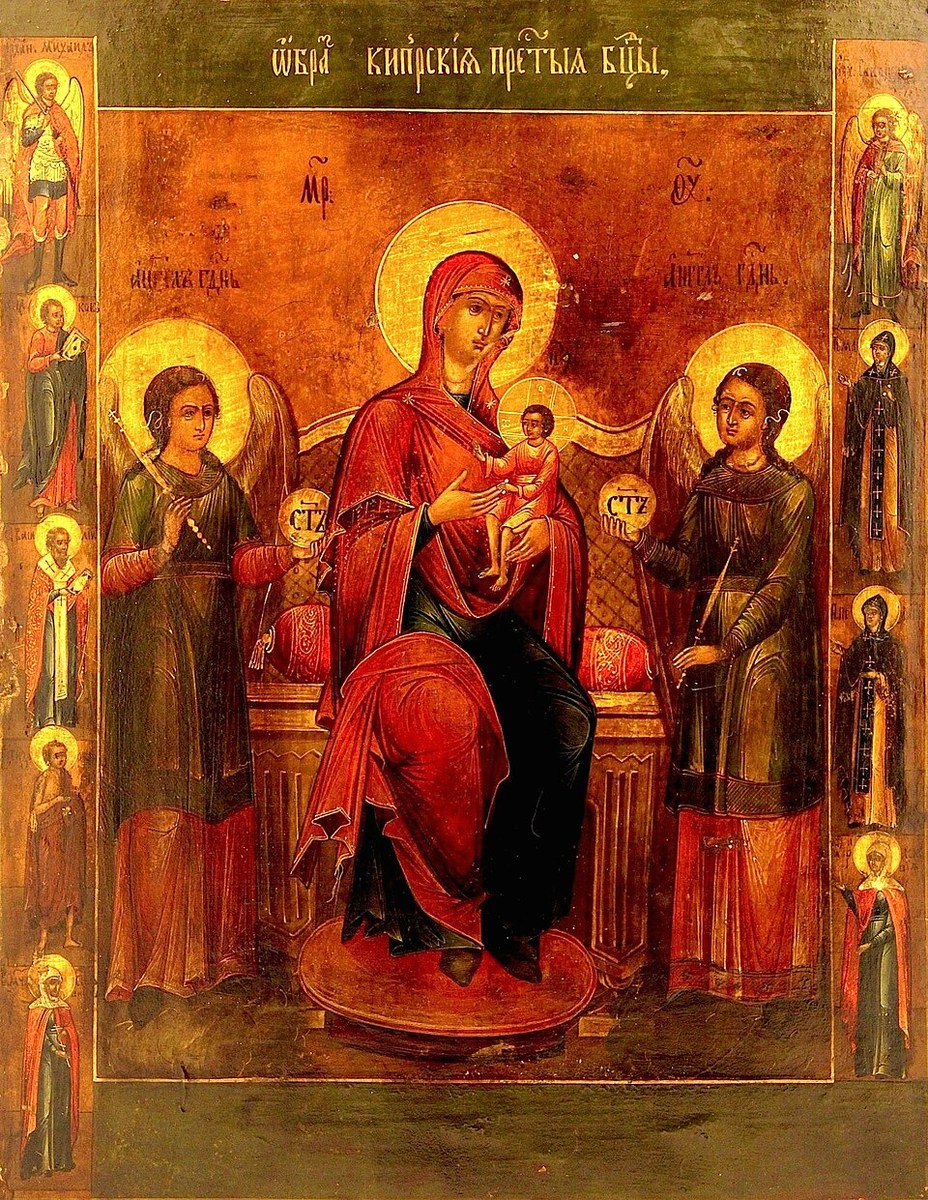
About Cyprus Icon of the Mother of God → · About Dedication of the Church of the Theotokos at the Pege → · About Kolochsk Icon of the Mother of God →

Saints commemorated
-
Saint of the day
Hieromartyr Pancratius, Bishop of Taormina
Pancratius (first century) is venerated as the first bishop of Tauromenium (Taormina) in Sicily and the apostle of the island — a disciple of the Apostle Peter, who is said to have consecrated him and sent him westward to preach. Of Antiochene origin, converted (the tradition holds) with his parents in the days of the Lord's own preaching, he was set by Peter over the young church of Tauromenium, where he laboured with such success that he is remembered as the enlightener of eastern Sicily; he overthrew idols, worked wonders, and built up a Christian people, until he was set upon and stoned to death by pagans (in some accounts by a band of brigands). He is honoured in the Byzantine calendars on February 9, kept with the leavetaking of the Meeting of the Lord, and is one of the three disciples of Peter — with Marcellus of Sicily and Philagrius of Cyprus — whom the day commemorates as apostles of the West.
-
Andrew and Probus
Two martyrs of whom the Byzantine synaxaria preserve nothing but their names, their day, and the manner of their death: Andrew and Probus were perfected by fire. They stand on July 9 in the Greek day-lists, are given a single elegiac distich in the synaxarion, and have no Life, no place, no persecutor and no date. The entry that follows is short because the record is short.
-
Cyril of Gortyna
Cyril was bishop of Gortyna, the metropolis of Roman Crete and the see founded by the Apostle Titus, and he was martyred there as a very old man in the persecution of Diocletian and Maximian. The synaxarion gives his story with unusual and memorable particularity: he had lived austerely as an ascetic, was consecrated bishop in his sixty-eighth year, governed his flock twenty-five years, and was then brought before the governor Agrianus; condemned to the fire, he stood unhurt while his bonds burned away and the pyre fell to ashes, and was let go. When he went on converting the pagans he was sentenced again — a bridle put in his mouth, and, being ninety-three and unable to walk, set on an ox-cart to be carried to execution. At a place called Raxos the oxen halted of their own accord, and there he was beheaded. The Greek Menaion keeps him on June 14; the Russian and American calendars on July 9.
-
Dionysius the Rhetor and Metrophanes
Two monks of the Monastery of Stoudios at Constantinople who came to the Holy Mountain at the turn of the sixteenth century in search of stillness, and who, after passing through Karyes and the Skete of Saint Anna, settled in a cave on the steep and stony ground between Saint Anna's and Katounakia: the elder Dionysius, honoured by the Great Church with the office of Rhetor, a learned man, a fine calligrapher and a writer; and his disciple Metrophanes, a spiritual father who left the Mountain for a time to hear confessions in the villages of Chalkidiki under Ottoman rule. Their cave became the nucleus of what is now the Little Skete of Saint Anna (Mikragianna), and they are honoured as its first inhabitants and founders. Dionysius reposed on 9 July 1606, Metrophanes not long after.
-
Methodius of Lampe
Methodius, surnamed Silygardos, was a Cretan of the village of Vyzari in the province of Amari, who became abbot of the monastery of the Asomatoi (the Bodiless Powers) and then bishop of Lampe, one of the ancient sees of the island. He set himself against the violence of the Turkish authorities toward his flock, was arrested for it, and after long torture was put to death on 9 July 1793. His body was buried near the place of his martyrdom, at the little monastery of the Taxiarchs. He is a local Cretan commemoration: no notice of him stands in the received synaxaria, and no service in his honour has ever been found.
-
Michael Pakhnanas
Michael Pakhnanas — the surname is also written Baknanas (Μπακνανάς) — was an illiterate young gardener of Athens, born about 1750 in the quarter of Vlassarou beneath the Acropolis, on ground that is now the excavated Ancient Agora. Returning to the city from a village where he had been working, he was seized by the Turkish guard and falsely accused of smuggling gunpowder to the Greek insurgents. Offered his life if he would apostatise to Islam, he answered with the sentence that fixed him in the memory of Athens — "Δὲν τουρκεύω", "I will not turn Turk." Led out to execution he went rejoicing; the executioner struck him first with the flat and reversed blade to frighten him into recanting, and then nicked his throat, and to each stroke Michael answered, "Strike, for the faith." He was beheaded on 9 July 1771, aged about twenty-one, and is honoured as the new martyr of the Church of Athens.
-
Patermuthius, Coprius and Alexander
Three Egyptians who suffered under Julian the Apostate (361–363): Patermuthius, in his youth the captain of a band of robbers, who repented, was baptised, went into the desert and gave the rest of his life to nursing the sick and burying the dead; Coprius, the priest who was his disciple and the eyewitness who wrote down his deeds — the man who walked unhurt into a fire to confound a Manichaean; and Alexander, a soldier of the guard who, watching Coprius tortured, confessed Christ on the spot and was burnt alive. Coprius, deceived by the emperor's plea that he too had once served Christ, denied the faith and then, brought to himself by his elder's tears, confessed it again and died for it. Patermuthius and Coprius were beheaded. Their memory is kept on July 9 in the Slavonic and American calendars and on December 17 in the received Greek books.
-
Theodore of Edessa
Theodore, called the Sabbaite from the Palestinian lavra in which he spent most of his life, was a native of Edessa in Mesopotamia who was orphaned as a boy, gave away his inheritance, and went to Jerusalem, where he was tonsured at the Great Lavra of Saint Sabbas. After decades of obedience and of enclosure he was drawn out of his solitude and made bishop of Edessa — a Melkite see of the Patriarchate of Antioch, then long under Muslim rule — where he contended with the Manichaeans, the Nestorians and the Monophysites and governed his diminished Chalcedonian flock. His Life makes him travel to Baghdad to lay the grievances of the Christians before the caliph, whom he heals and baptises under the name John, and who is afterwards killed for confessing Christ. Theodore returned to Saint Sabbas and died there in 848. Chapters of ascetic teaching under his name passed into the Philokalia, and his Life, translated early into Slavonic, became one of the favourite reading-books of medieval Rus.
British Isles and Ireland
- St. Evereld (Avril), Virgin and abbess of Everingham (c.700)
- St. Golvinus (Golwen) (7th C)
Troparia & kontakia
Apolytikion — Tone 4 (common of martyrs)
Thy martyrs, O Lord, in their contest received incorruptible crowns from Thee our God; for possessing Thy strength they cast down the tyrants and shattered the feeble insolence of the demons. By their intercessions save our souls.
Apolytikion — Tone 8 (common of venerable fathers)
In you, O Fathers, was preserved unfailing that which is according to the image, for taking up the Cross you followed after Christ, and by your deeds you taught us to overlook the flesh, which passes away, and to attend to the soul, which is a thing immortal; wherefore your spirits, O holy Dionysius and Metrophanes, rejoice with the angels.
Apolytikion — Tone 4 (common of a hieromartyr)
As a sharer in the ways and a successor to the thrones of the Apostles, O divinely-inspired one, thou didst find in the practice of virtue the means to ascend to divine heights; rightly dividing the word of truth, thou didst contend for the faith even unto blood, O hieromartyr Methodius: intercede with Christ God that our souls may be saved.
Apolytikion — Tone 4 (*Ταχὺ προκατάλαβε*)
In the youth of thy body thou didst cast down the murderous enemy by thy contest for Christ our God, thy neck being severed; wherefore the far-renowned city of the Athenians sings thy struggle, O new martyr Michael, for out of her thou didst spring up as a fragrant flower.
Apolytikion — Tone 4
Sharing in the ways of the Apostles and succeeding to their throne, thou didst find in labours an ascent to divine vision, O God-inspired one; wherefore, rightly dividing the word of truth, thou didst contend for the faith even unto blood, O Hieromartyr Pancratius. Intercede with Christ our God that our souls may be saved.
Apolytikion — Tone 4 (common of martyrs)
Thy martyrs, O Lord, in their contest received incorruptible crowns from Thee our God; for possessing Thy strength they cast down the tyrants and shattered the feeble insolence of the demons. By their intercessions save our souls.
Apolytikion — Tone 8 (common of a hierarch-ascetic)
In thee, O Father, was preserved unfailing that which is according to the image, for taking up the Cross thou didst follow after Christ, and by thy deeds thou didst teach us to overlook the flesh, which passes away, and to attend to the soul, which is a thing immortal; wherefore thy spirit, O holy Theodore, rejoices with the angels.
Kontakion — Tone 6
Enthroned thou art shown in thine image, O Queen, with the angels standing about thee and the Word upon thine arm; the impious arrow drew blood from thee and the wound became a wonder, and to this day thou dost cleanse the eyes of them that look on thee. Wherefore we cry: hail, O thou refuge of the islands and of the Russian land.
Kontakion — Tone 6
Thou didst show forth thine image in a poor man's house at the river Koloch, O Lady, and the palsied rose up before it; the city of Moscow came out to meet thee with its hierarch, and where thou wast found a house of prayer was raised. Wherefore we cry to thee: forsake not them that seek thee.
Kontakion — Tone 2
Fleeing the praise of men and the burden of teaching, you found a cave on the rock above the sea, and made it a house of prayer and a mother of ascetics; wherefore the Little Skete honours you as its founders, O Dionysius, wise in speech, and Metrophanes, obedient son.
Kontakion — Tone 2
The robber became a physician of the sick and a burier of the dead, and the fire had no power upon his disciple; and a soldier, beholding their endurance, was himself enrolled in the ranks of the martyrs. Wherefore we honour Patermuthius with Coprius and Alexander, and glorify Christ who crowned them.
Kontakion — Tone 2
The bright lamp of the desert didst thou become, and afterwards a shepherd of the faithful in the land of thy fathers; forsaking the silence thou hadst loved, thou didst take up the labour of the word, O wise Theodore, and having finished thy course thou hast returned to thy cell, and to Christ, whom thou didst serve.
Synaxarion
Standing in the arena of the fire, O Word, the two men were cooled by Thy breezes.
Synaxarion
Though Cyril of Gortyna was an old man, he had a heart still young toward the sword.
Synaxarion
The godly severing of his head does not dismay Michael; for Christ's sake he receives it willingly. Why, O swordsman, do you cut the throat a little at a time? Michael does not fear the sword. On the ninth, unyielding bronze shore through Michael's neck.
Troparion — Tone 4 (common of an icon of the Mother of God)
Today the faithful keep radiant festival, overshadowed by thy coming, O Mother of God; and looking upon thy most pure image we cry with compunction: shelter us beneath the precious veil of thy protection, and deliver us from every evil, entreating thy Son, Christ our God, to save our souls.
Troparion — Tone 4 (common of the dedication of a church of the Theotokos)
As the heaven of many lights is this house of thy glory shown to be, O Theotokos, enlightening all the faithful; and standing within it we cry to thee: establish this house, O Lady, and preserve it unshaken unto the end, and grant peace to thy people, for thou art the salvation of our souls.
Troparion — Tone 4 (common of an icon of the Mother of God)
Today the faithful keep radiant festival, overshadowed by thy coming, O Mother of God; and looking upon thy most pure image we cry with compunction: shelter us beneath the precious veil of thy protection, and deliver us from every evil, entreating thy Son, Christ our God, to save our souls.
Troparion — Tone 4 (common of a hieromartyr)
As a sharer in the ways and a successor to the thrones of the Apostles, thou didst find in the practice of virtue the means to ascend to divine heights, O divinely-inspired one; rightly dividing the word of truth, thou didst contend for the faith even unto blood, O hieromartyr Cyril: intercede with Christ God that our souls may be saved.
Readings
Epistle
Romans 9.6-19
6Not as though the word of God hath taken none effect. For they are not all Israel, which are of Israel: 7Neither, because they are the seed of Abraham, are they all children: but, In Isaac shall thy seed be called. 8That is, They which are the children of the flesh, these are not the children of God: but the children of the promise are counted for the seed. 9For this is the word of promise, At this time will I come, and Sara shall have a son. 10And not only this; but when Rebecca also had conceived by one, even by our father Isaac; 11(For the children being not yet born, neither having done any good or evil, that the purpose of God according to election might stand, not of works, but of him that calleth;) 12It was said unto her, The elder shall serve the younger. 13As it is written, Jacob have I loved, but Esau have I hated. 14What shall we say then? Is there unrighteousness with God? God forbid. 15For he saith to Moses, I will have mercy on whom I will have mercy, and I will have compassion on whom I will have compassion. 16So then it is not of him that willeth, nor of him that runneth, but of God that sheweth mercy. 17For the scripture saith unto Pharaoh, Even for this same purpose have I raised thee up, that I might shew my power in thee, and that my name might be declared throughout all the earth. 18Therefore hath he mercy on whom he will have mercy, and whom he will he hardeneth. 19Thou wilt say then unto me, Why doth he yet find fault? For who hath resisted his will?
Gospel
Matthew 10.32-36, 11.1
32Whosoever therefore shall confess me before men, him will I confess also before my Father which is in heaven. 33But whosoever shall deny me before men, him will I also deny before my Father which is in heaven. 34Think not that I am come to send peace on earth: I came not to send peace, but a sword. 35For I am come to set a man at variance against his father, and the daughter against her mother, and the daughter in law against her mother in law. 36And a man’s foes shall be they of his own household. 1And it came to pass, when Jesus had made an end of commanding his twelve disciples, he departed thence to teach and to preach in their cities.