
About Galaktotrophousa Icon of the Mother of God →
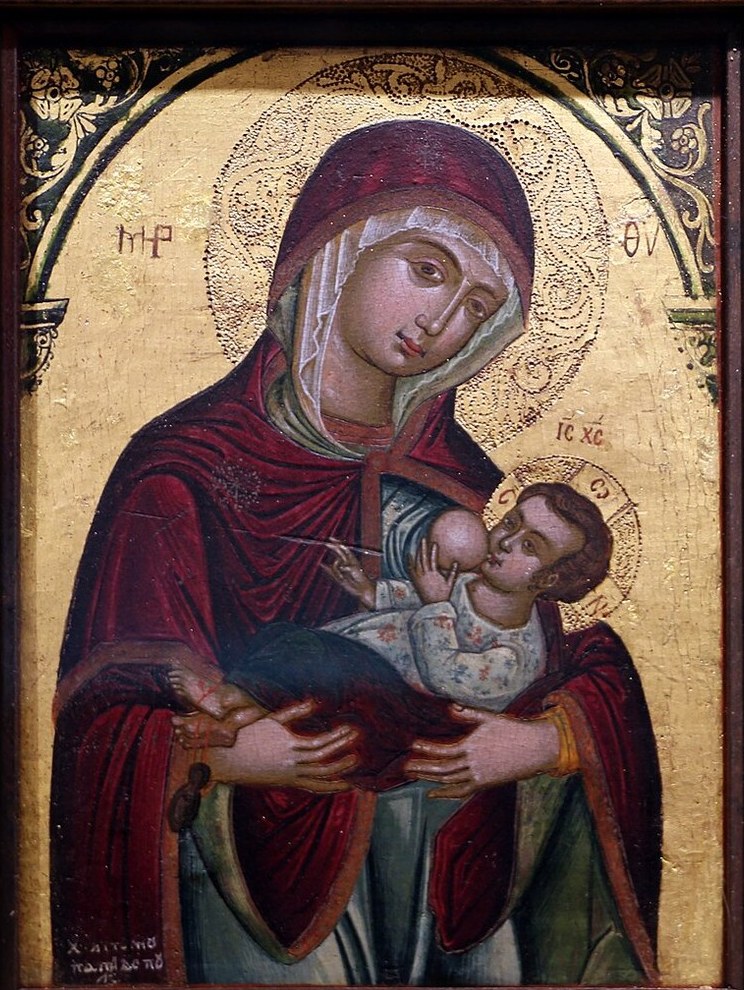
.jpg)
Saints commemorated
-
Saint of the day
St Sava, Archbishop of Serbia
-
Holy Martyr Tatiana (ca. 230)
Tatiana of Rome (died c. 226) was a noble Roman virgin and deaconess martyred under the emperor Alexander Severus. Daughter of a man who had thrice been consul and who raised her secretly in the faith, she consecrated her virginity to Christ and served the Church of Rome as a deaconess, tending the sick and the poor. Arrested in the persecution driven by the prefect Ulpian, she was subjected to a long sequence of tortures out of which the tradition tells its most vivid signs: the temple of Apollo into which she was led fell in ruin, the arena lion loosed upon her lay down and licked her feet, and several of her executioners, seeing her wounds healed and their own blows turned back upon them, confessed Christ and were themselves baptised in their blood. Beheaded with the sword — together, the account says, with her aged father — she became one of the best-loved virgin-martyrs of the Church, and in Russia the patroness of students, her feast kept as "Tatiana's Day" and bound to the founding of the University of Moscow.
-
Venerable Benedict Biscop, Abbot of Wearmouth (689-690)
-
Eupraxia of Tabenna
Eupraxia was a child of the senatorial nobility of Constantinople — daughter of Antigonus, a kinsman of the emperor Theodosius the Great — who was taken to Egypt at the age of seven, asked to be left in a women's monastery of the Thebaid near Tabennisi, and never came out again. Betrothed in infancy to a senator's son, she wrote to the emperor at the age of twelve to renounce the match and to ask that her whole inheritance be given to the poor and the churches, saying that she was already the bride of Christ. In the monastery she chose the lowest work of the house — the kitchen, the water, the sweeping — carried her fast from daily food to one meal a week, bore in silence the malice of an envious sister and a series of disfiguring accidents, and received before her death the gift of healing. She died aged about thirty, about the year 410–413, ten days after the abbess had seen her in a vision standing before the throne of God. Her Life is one of the most widely copied of the early Egyptian women's lives, and she is commemorated on July 25 with Olympias the Deaconess.
-
Euthasia
Euthasia (died c. 305) was a virgin-martyr commemorated on January 12, of whom the synaxaria preserve only the fact of her consecrated virginity and her death by the sword. The Greek books group her among the martyrs of the Diocletianic age, about the year 305.
-
Mertius of Mauretania
Mertius (died c. 305) was a soldier of the Roman army in Mauretania, in Roman Africa, martyred in the persecution of Diocletian. Commanded to sacrifice to the idols and refusing, he was given over to torture, which he bore without a sound; cast into prison, he died there of hunger and of the wounds of his torments. He is commemorated on January 12.
-
Peter Absolom
Peter Absolom (died c. 309–311) was a young Christian of Anea, near Eleutheropolis in Palestine, martyred by fire at Caesarea in the persecution of Diocletian and his successors — one of the Palestinian martyrs whose sufferings Eusebius of Caesarea witnessed and recorded. Renowned, the tradition says, for his bodily strength and his piety, he was seized, refused every inducement to deny Christ or even to make a token compliance, and was burned alive. He is commemorated on January 12.
Readings
Epistle
1 Peter 1.1-2, 10-12, 2.6-10
1Peter, an apostle of Jesus Christ, to the strangers scattered throughout Pontus, Galatia, Cappadocia, Asia, and Bithynia, 2Elect according to the foreknowledge of God the Father, through sanctification of the Spirit, unto obedience and sprinkling of the blood of Jesus Christ: Grace unto you, and peace, be multiplied. 10Of which salvation the prophets have enquired and searched diligently, who prophesied of the grace that should come unto you: 11Searching what, or what manner of time the Spirit of Christ which was in them did signify, when it testified beforehand the sufferings of Christ, and the glory that should follow. 12Unto whom it was revealed, that not unto themselves, but unto us they did minister the things, which are now reported unto you by them that have preached the gospel unto you with the Holy Ghost sent down from heaven; which things the angels desire to look into. 6Wherefore also it is contained in the scripture, Behold, I lay in Sion a chief corner stone, elect, precious: and he that believeth on him shall not be confounded. 7Unto you therefore which believe he is precious: but unto them which be disobedient, the stone which the builders disallowed, the same is made the head of the corner, 8And a stone of stumbling, and a rock of offence, even to them which stumble at the word, being disobedient: whereunto also they were appointed. 9But ye are a chosen generation, a royal priesthood, an holy nation, a peculiar people; that ye should shew forth the praises of him who hath called you out of darkness into his marvellous light: 10Which in time past were not a people, but are now the people of God: which had not obtained mercy, but now have obtained mercy.
Gospel
Mark 10.23-32
23And Jesus looked round about, and saith unto his disciples, How hardly shall they that have riches enter into the kingdom of God! 24And the disciples were astonished at his words. But Jesus answereth again, and saith unto them, Children, how hard is it for them that trust in riches to enter into the kingdom of God! 25It is easier for a camel to go through the eye of a needle, than for a rich man to enter into the kingdom of God. 26And they were astonished out of measure, saying among themselves, Who then can be saved? 27And Jesus looking upon them saith, With men it is impossible, but not with God: for with God all things are possible. 28Then Peter began to say unto him, Lo, we have left all, and have followed thee. 29And Jesus answered and said, Verily I say unto you, There is no man that hath left house, or brethren, or sisters, or father, or mother, or wife, or children, or lands, for my sake, and the gospel’s, 30But he shall receive an hundredfold now in this time, houses, and brethren, and sisters, and mothers, and children, and lands, with persecutions; and in the world to come eternal life. 31But many that are first shall be last; and the last first. 32And they were in the way going up to Jerusalem; and Jesus went before them: and they were amazed; and as they followed, they were afraid. And he took again the twelve, and began to tell them what things should happen unto him,
Troparia & kontakia
Apolytikion — Tone 1
Venerating thy divine icon as the tabernacle of thy glory, O Virgin Milk-Giver, we glorify thee; for from it thou dost mystically pour forth the milk of immaterial gifts, and dost nourish the hearts and the souls of those who cry to thee in faith: Glory to thy magnificence, O pure one; glory to thy wonders; glory to thine unutterable goodness toward us.
Kontakion — Tone 2
Let us hymn her who as a mother gives suck, as to an infant, to Him who was ineffably born of her — the only Theotokos, who nourishes with milk Christ our God; for she delivers us from many dangers.
Kontakion — Tone 2
Despising the bridal chamber of earth and the wealth of thy fathers, thou wast betrothed to Christ alone, O all-blessed Eupraxia; and serving thy sisters in the lowest labours thou wast raised on high, and dost intercede unceasingly for us all.
Megalynarion
Come, brethren, let us venerate the sacred and honoured icon of the Milk-Giver; for it wells up the grace of ineffable compassion, and warms our hearts and our souls.
Synaxarion
A spiritual milk thou pourest forth, O thou who barest God: thy divine icon is the Milk-Giver.
Synaxarion
For the head of all-radiant Tatiana the sword wrought out a radiant crown. On the twelfth, the sword shore through Tatiana's neck.
Troparion — Tone 8 (common of a venerable woman)
In thee, O mother, was the divine image preserved unimpaired: for taking up the cross thou didst follow after Christ, and by thy deeds thou hast taught us to despise the flesh, which passeth away, and to care rather for the soul, a thing immortal. Wherefore, O venerable Eupraxia, thy spirit rejoiceth with the angels.
Troparion — Tone 4
Thy lamb Tatiana crieth unto Thee, O Jesus, with a loud voice: Thee, my Bridegroom, do I love, and seeking Thee I strive in contest; I am crucified and buried together with Thee in Thy baptism, and I suffer for Thy sake, that I may reign with Thee; I die for Thee, that I may live in Thee. Receive me then as a spotless sacrifice, offered unto Thee in love. By her prayers, O Merciful One, save Thou our souls.