
Apostles' Fast, day 1
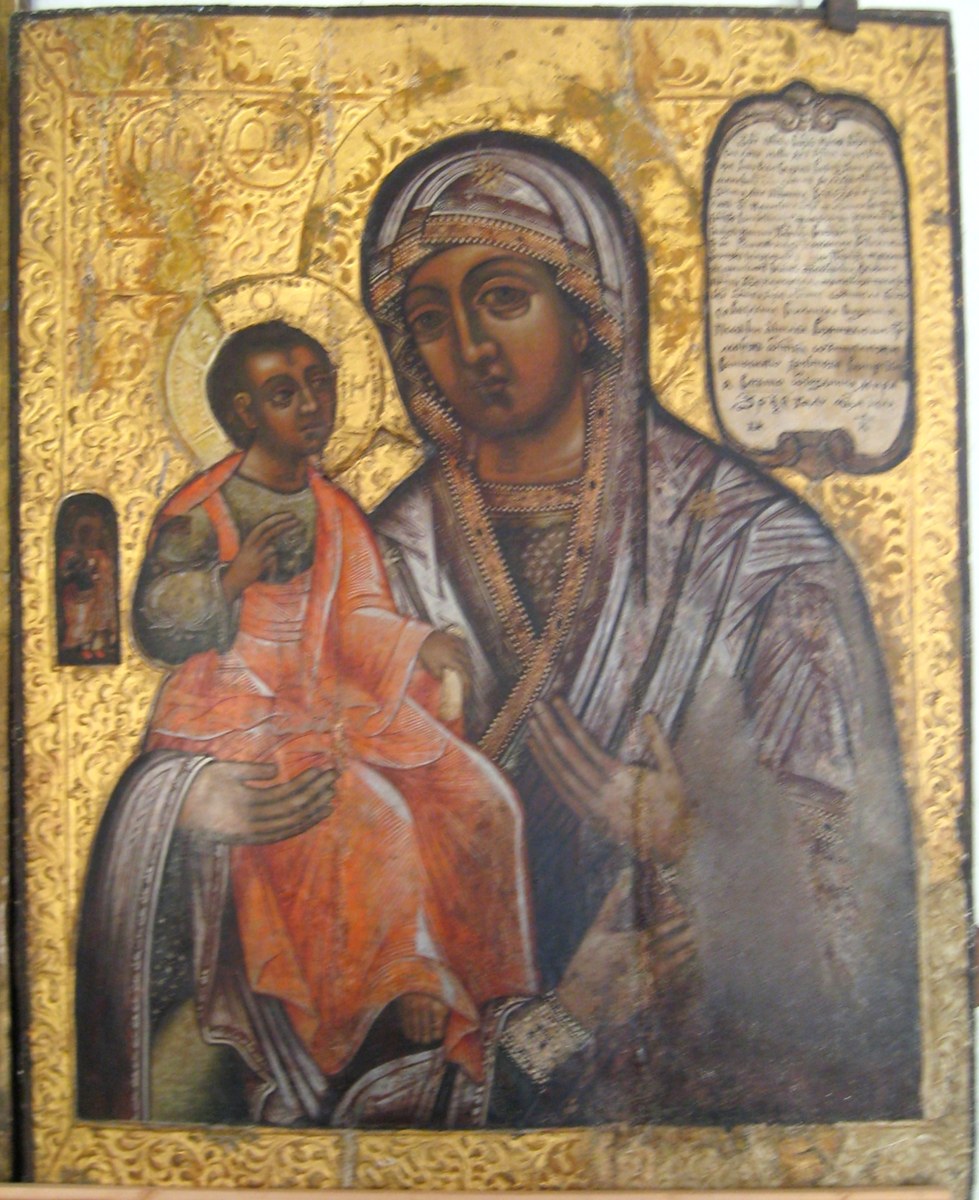
About Three-Handed Icon of the Mother of God →
.jpg)
Saints commemorated
-
Saint of the day
Trans. Rel. Ven. Cyrus and John
Cyrus and John (†c. 311) are among the most beloved of the holy unmercenaries — the anargyroi, physicians who healed without payment in the name of Christ. Cyrus was a renowned physician of Alexandria who, when the persecution of Diocletian broke out, withdrew to the Arabian desert and there healed souls and bodies by prayer alone; John, a soldier of Edessa, sought him out and became his companion in the ascetic and healing life. Learning that a Christian woman, Athanasia, and her three young daughters — Theoctiste, Theodota and Eudoxia — had been seized at Canopus near Alexandria, the two came to strengthen them for their confession, were themselves arrested, and after cruel tortures were beheaded together with the mother and her daughters, about the year 311. Their relics, first laid in the church of the Evangelist Mark at Alexandria, were translated by Cyril of Alexandria to Menouthis, where their shrine displaced a famous pagan healing-cult and became one of the great healing sanctuaries of the Christian East — the setting of the Miracles recorded by Sophronius of Jerusalem. They are kept on January 31, and on June 28 for the translation of their relics.
-
Sts Sergius and Herman (1353), abbots of Valaam
Sergius and Herman are venerated as the founders of the Monastery of the Transfiguration on Valaam, the great island house in the northern reaches of Lake Ladoga that became the mother of monasticism for the whole Karelian north and, through its children, for Solovki, Konevets, Ondrusov and at last Alaska. Tradition makes Sergius a Greek monk who came northward as a missionary among the pagan Karelians and Herman his companion, sometimes named as a Karelian convert; they settled on the rocky archipelago, gathered a brotherhood under a rule of fasting, vigil and manual labour, and reposed there — the service books say about the year 1353. No Life of them survives, and the dating of their coming is one of the vexed questions of Russian church history, ranging from the tenth century to the end of the fourteenth. Their relics lie hidden beneath the floor of the monastery cathedral, twice carried to Novgorod for safety from Swedish raids and twice brought home. The Church keeps their memory on June 28, and on September 11 the return of their relics to the island.
-
Synaxis of the Icon of our Most Holy Lady the Theotokos "Of the Three Hands"
-
Our Holy Father Sennuphius the Standard-Bearer (4th c.)
-
Donagus of Libya
Donagus — the name appears in the English calendars as Donatus — is a hieromartyr, a priest or bishop put to death for Christ, commemorated on June 28 and located by the tradition in Libya, the Greek name for the African provinces west of Egypt. No account of his passion survives; the synaxarion preserves his name, his rank, and his country.
-
Macedonius the Martyr
Macedonius is a martyr of the Greek synaxarion of June 28, named without country, date, or account of his passion. The commemoration stands in the middle of a group of similarly bare martyr-notices for the day — a hieromartyr in Libya, two children, three martyrs of Galatia, seventy martyrs of Scythopolis — which together represent the layer of the Constantinopolitan synaxarion in which the name alone survived.
-
Magnus the Venerable
Magnus is an ascetic of the Greek synaxarion of June 28 of whom one thing only is recorded, and it is the thing the Church thought worth recording: that he reposed in peace while he was praying. The notice preserves no country, no century, no monastery and no deed. The manner of his death is his whole memorial, and it is a considerable one — the tradition sets him among those whom the Lord found watching.
-
Moses the Anchorite
Moses the Anchorite is one of the ascetics of the Greek synaxarion whose whole surviving memory is a single line: that he struggled in a manner pleasing to God and fell asleep in peace. He is commemorated on June 28. Neither his country, his century, nor the desert in which he lived is transmitted, and the Church honours him as she honours many of the anchorites — by name only, without a story, on the principle that the name written in the book of life is enough.
-
Pappias the Martyr
Pappias suffered in the great persecution of Diocletian and Maximian at the beginning of the fourth century — the last and fiercest of the persecutions, in which, as the notice of his day observes, Christians were killed in numbers beyond counting. Of his own passion the synaxarion preserves the essential outline and nothing more: that he confessed Christ before the magistrate, was imprisoned and tortured, remained unmoved in the piety of his fathers, and was at last beheaded. He is commemorated on June 28.
-
Paul the Physician of Corinth
Paul, called the Physician, was a monk of Corinth who was tonsured in his youth and lived out his life in the monastic struggle. His memory rests on a single story of great beauty: a woman of the neighbourhood, having borne a child out of wedlock, laid the blame on him, and the elder — rather than defend himself — took the accusation and the infant alike upon himself with joy, until, his brethren reproaching him for a broken vow, he bade the newborn child name its own father before them all, and the infant spoke and pointed to a blacksmith of the town. For that patience under slander God gave him the gift of healing the sick, from which comes the surname the calendar keeps. He reposed in peace at the age of seventy, and the Church honours him on June 28.
-
Plutarch and Companions
Plutarch, Serenus, Heraclides, Heron, a second Serenus and the woman Heraïs were pupils of the catechetical school of Alexandria who were put to death in the persecution of Septimius Severus, about the years 202–203, when their teacher — the young Origen, not yet twenty and newly set over the school — walked with each of them to the place of execution. Their names and the manner of their deaths are preserved by Eusebius of Caesarea, who took them from Origen's own circle: Plutarch the first to suffer, Serenus perfected by fire, Heraclides and Heron beheaded while still a catechumen and a neophyte, a second Serenus beheaded after torture, and Heraïs, a woman under instruction, who "received her baptism in fire." With them the Greek synaxarion of June 28 names Potamiaena and her mother Marcella, who died in the same persecution and whose entry is kept at the seventh of the month. The company is one of the earliest and best-documented martyrdoms of the Alexandrian church.
-
Potamiaena of Alexandria
Potamiaena was a young Christian woman of Alexandria, in the household of a pagan master who desired her and could not have her. To his demands she answered — in the form the tradition has kept — that she was a Christian, and that she valued her honour above her life; and when he threatened her with the courts she told him plainly that she would rather die. He denounced her to the prefect of Egypt, who offered her the usual choice and, when she refused, had her lowered into a cauldron of boiling pitch, in which she died, keeping both her virginity and her faith; the older and better witness adds that her mother Marcella was burned with her, and that the executioner Basilides was converted by what he had seen and was himself martyred soon after, Potamiaena having appeared to him in the night and set a crown upon his head. The Byzantine calendars keep her on June 7, the Latin on June 28.
-
Sergius the Magistros
Sergius, called the Magistros from the high Byzantine dignity he held, was a nobleman of Niketia in Paphlagonia, on the Black Sea coast near Amastris, and a kinsman of the empress Theodora, wife of the last iconoclast emperor Theophilus. In a court committed to the war against the holy images he remained openly Orthodox: he sheltered those hunted for the icons, laboured for their restoration, and after the emperor's death used his standing with Theodora to press for the council that restored the icons in 843. He ended his life in Crete, where he is especially honoured, reposing about the year 866; first buried at the monastery that bore his title, his relics were afterwards translated to the monastery of the Most Holy Theotokos near Nicomedia, the house founded from his own town. The Church keeps him on June 28 as a confessor.
-
Seventy Martyrs of Scythopolis
A company of seventy martyrs who suffered at Scythopolis in Palestine — the Greek city on the site of biblical Beth-shean, in the Jordan valley below Galilee — is commemorated in the Greek synaxarion on June 28. Their names, the persecution in which they died and the manner of their deaths are not transmitted; only the number, the place, and the day.
-
Three Martyrs of Galatia
Three martyrs who suffered in Galatia, the inland province of Asia Minor evangelised by the Apostle Paul, are commemorated in the Greek synaxarion on June 28. Their names are not transmitted, nor the persecution, nor the manner of their death; the Church keeps them by their number and their country.
-
Two Children Martyred for Christ
Among the commemorations of June 28 the Greek synaxarion names two children who were put to death for Christ, the tradition specifying that they were crucified. Their names, their country and the persecution in which they suffered are not transmitted. They stand in the calendar as witnesses of the Church's oldest conviction about the martyrdom of the young: that the confession of a child is a confession, and that the crown does not wait upon years.
-
Xenophon of Robeika
Xenophon of Robeika (died 1262) was a Russian monastic of the Novgorod tradition, a disciple of the school of Varlaam of Khutyn who, after serving as abbot of the great Khutyn monastery, withdrew to seek a stricter solitude and founded a monastery of Saint Nicholas on the Robeika river, some miles from Novgorod. He is venerated as the founder-abbot of that house and is commemorated among the saints of Novgorod. His feast is kept on January 26 (the day of his name, shared with the ancient Xenophon of Constantinople) and his repose on June 28.
British Isles and Ireland
- St. Austell of Cornwall (6th C)
- St. Crummine, bishop of Lackan (5th C)
Troparia & kontakia
Apolytikion — Tone 4 (common of a virgin-martyr)
Thy lamb Potamiaena cries aloud to Thee, O Jesus: Thee do I love, my Bridegroom, and seeking Thee I contend; I am crucified and buried with Thee in Thy baptism, and I suffer for Thy sake that I may reign with Thee, and I die for Thee that I may live in Thee. Accept me as a spotless sacrifice, offered to Thee in love; and by her prayers, O merciful one, save our souls.
Kontakion — Tone 3
Having received from divine grace the gift of wonders, O holy ones, ye work miracles without ceasing, cutting away all our passions by an unseen surgery, O godly-minded Cyrus, together with the divine John; for ye are physicians divine.
Kontakion — Tone 2
Thou wast a bought slave and a free woman, O Potamiaena, and when thy master demanded what was not his thou didst answer that thy honour was dearer to thee than thy life; wherefore the cauldron and the pitch became thy bridal chamber, and thy crown was seen by the very hands that killed thee.
Kontakion — Tone 4
Ye left the tumult of the world and came to the isle of Ladoga, and there upon the bare rock ye planted a garden of monastics, watering it with your tears; and now, standing before the Transfigured Lord, ye keep unharmed the habitation ye founded. Wherefore we cry: rejoice, Sergius and Herman, boast of the northern land.
Megalynarion
In thee rejoiceth, O Full of Grace, all creation: the angelic host and the race of men; O hallowed temple and noetic paradise, boast of virgins, of whom God took flesh and became a little child, He that is our God before all ages. For He made thy womb a throne, and thy body He made wider than the heavens. In thee rejoiceth, O Full of Grace, all creation: glory to thee.
Sticheron
Most valiant champions, physicians set forth by God, Cyrus and John of great renown: as ye brought to nothing the godless insolence of the tyrants, so shatter the wanderings of my mind that tyrannize over me; heal the passions of my soul, and deliver me from the judgment to come, entreating the Redeemer.
Troparion — Tone 4 (common of an icon of the Theotokos)
O Mother of God, we thy servants offer thee this hymn of thanksgiving before thine honourable icon, from which thou pourest forth healings upon the faithful; and beholding the hand restored by thy prayer, we cry to thee: preserve from every affliction those who take refuge in thee, and save our souls.
Troparion — Tone 5
The wonders of Thy holy Martyrs Thou hast given us as an invincible rampart, O Christ our God. At their entreaties scatter the counsels of the heathen, and strengthen the scepters of the kingdom, for Thou alone art good and the Lover of mankind.
Troparion — Tone 4 (common of a hieromartyr)
Sharing in the ways of the Apostles and seated with them upon their throne, thou didst find in thy labours, O God-inspired one, the ladder that leadeth to contemplation; and, offering thyself a whole burnt-offering, thou didst pour forth thy blood for the Church of Christ. O hieromartyr Donagus, entreat Christ God that our souls may be saved.
Troparion — Tone 4 (common of a martyr)
Thy martyr Macedonius, O Lord, in his contest received an incorruptible crown from Thee, our God; for possessing Thy strength, he cast down the tyrants and shattered the feeble insolence of the demons. By his intercessions save our souls.
Troparion — Tone 8 (common of a venerable father)
In thee, O Father, was preserved unimpaired that which is according to the image; for taking up the Cross thou didst follow Christ, and by thy deeds thou hast taught us to despise the flesh, which passeth away, and to care for the soul, which is a thing immortal. Wherefore, O venerable Magnus, thy spirit rejoiceth with the angels.
Troparion — Tone 8 (common of a venerable father)
In thee, O Father, was preserved unimpaired that which is according to the image; for taking up the Cross thou didst follow Christ, and by thy deeds thou hast taught us to despise the flesh, which passeth away, and to care for the soul, which is a thing immortal. Wherefore, O venerable Moses, thy spirit rejoiceth with the angels.
Troparion — Tone 4 (common of a martyr)
Thy martyr Pappias, O Lord, in his contest received an incorruptible crown from Thee, our God; for possessing Thy strength, he cast down the tyrants and shattered the feeble insolence of the demons. By his intercessions save our souls.
Troparion — Tone 8 (common of a venerable father)
In thee, O Father, was preserved unimpaired that which is according to the image; for taking up the Cross thou didst follow Christ, and by thy deeds thou hast taught us to despise the flesh, which passeth away, and to care for the soul, which is a thing immortal. Wherefore, O venerable Paul, thy spirit rejoiceth with the angels.
Troparion — Tone 4 (common of many martyrs)
Thy martyrs, O Lord, in their contest received incorruptible crowns from Thee, our God; for possessing Thy strength, they cast down the tyrants and shattered the feeble insolence of the demons. By their intercessions save our souls.
Troparion — Tone 4
Having become true hearers of the Gospel of Christ, O venerable ones, ye counted the world and all that is in the world as a perishing thing, and made your dwelling upon an island of the lake of Ladoga; and there, wounded with the love of Christ and taking His Cross upon your shoulders, ye lived in the flesh as angels, in prayers and labours, in fastings and vigils. Wherefore ye received from God the gift of healings, to heal the sicknesses of soul and body in them that run to you with faith. Therefore do we now cry unto you: O venerable fathers Sergius and Herman, entreat Christ God that our souls may be saved.
Troparion — Tone 8 (common of a venerable confessor)
The image of God was truly preserved in thee, O Father; for thou didst take up the Cross and follow Christ, and by thy deeds thou didst teach us to despise the flesh, for it passeth away, and to attend to the soul, a thing immortal; and thou didst contend for the holy icons and confess the Word made flesh. Wherefore, O venerable Sergius, thy spirit rejoiceth with the angels.
Troparion — Tone 4 (common of many martyrs)
Thy martyrs, O Lord, in their contest received incorruptible crowns from Thee, our God; for possessing Thy strength, they cast down the tyrants and shattered the feeble insolence of the demons. By their intercessions save our souls.
Troparion — Tone 4 (common of many martyrs)
Thy martyrs, O Lord, in their contest received incorruptible crowns from Thee, our God; for possessing Thy strength, they cast down the tyrants and shattered the feeble insolence of the demons. By their intercessions save our souls.
Troparion — Tone 4 (common of many martyrs)
Thy martyrs, O Lord, in their contest received incorruptible crowns from Thee, our God; for possessing Thy strength, they cast down the tyrants and shattered the feeble insolence of the demons. By their intercessions save our souls.
Readings
Epistle
Romans 2.28-3.18
28For he is not a Jew, which is one outwardly; neither is that circumcision, which is outward in the flesh: 29But he is a Jew, which is one inwardly; and circumcision is that of the heart, in the spirit, and not in the letter; whose praise is not of men, but of God. 1What advantage then hath the Jew? or what profit is there of circumcision? 2Much every way: chiefly, because that unto them were committed the oracles of God. 3For what if some did not believe? shall their unbelief make the faith of God without effect? 4God forbid: yea, let God be true, but every man a liar; as it is written, That thou mightest be justified in thy sayings, and mightest overcome when thou art judged. 5But if our unrighteousness commend the righteousness of God, what shall we say? Is God unrighteous who taketh vengeance? (I speak as a man) 6God forbid: for then how shall God judge the world? 7For if the truth of God hath more abounded through my lie unto his glory; why yet am I also judged as a sinner? 8And not rather, (as we be slanderously reported, and as some affirm that we say,) Let us do evil, that good may come? whose damnation is just. 9What then? are we better than they? No, in no wise: for we have before proved both Jews and Gentiles, that they are all under sin; 10As it is written, There is none righteous, no, not one: 11There is none that understandeth, there is none that seeketh after God. 12They are all gone out of the way, they are together become unprofitable; there is none that doeth good, no, not one. 13Their throat is an open sepulchre; with their tongues they have used deceit; the poison of asps is under their lips: 14Whose mouth is full of cursing and bitterness: 15Their feet are swift to shed blood: 16Destruction and misery are in their ways: 17And the way of peace have they not known: 18There is no fear of God before their eyes.
Gospel
Matthew 6.31-34, 7.9-11
31Therefore take no thought, saying, What shall we eat? or, What shall we drink? or, Wherewithal shall we be clothed? 32(For after all these things do the Gentiles seek:) for your heavenly Father knoweth that ye have need of all these things. 33But seek ye first the kingdom of God, and his righteousness; and all these things shall be added unto you. 34Take therefore no thought for the morrow: for the morrow shall take thought for the things of itself. Sufficient unto the day is the evil thereof. 9Or what man is there of you, whom if his son ask bread, will he give him a stone? 10Or if he ask a fish, will he give him a serpent? 11If ye then, being evil, know how to give good gifts unto your children, how much more shall your Father which is in heaven give good things to them that ask him?
Beginning of Apostles' Fast