
Friday 23 July 2027
Martys Trophimus, Theophilus and Companions
Friday of the 5th week after Pentecost
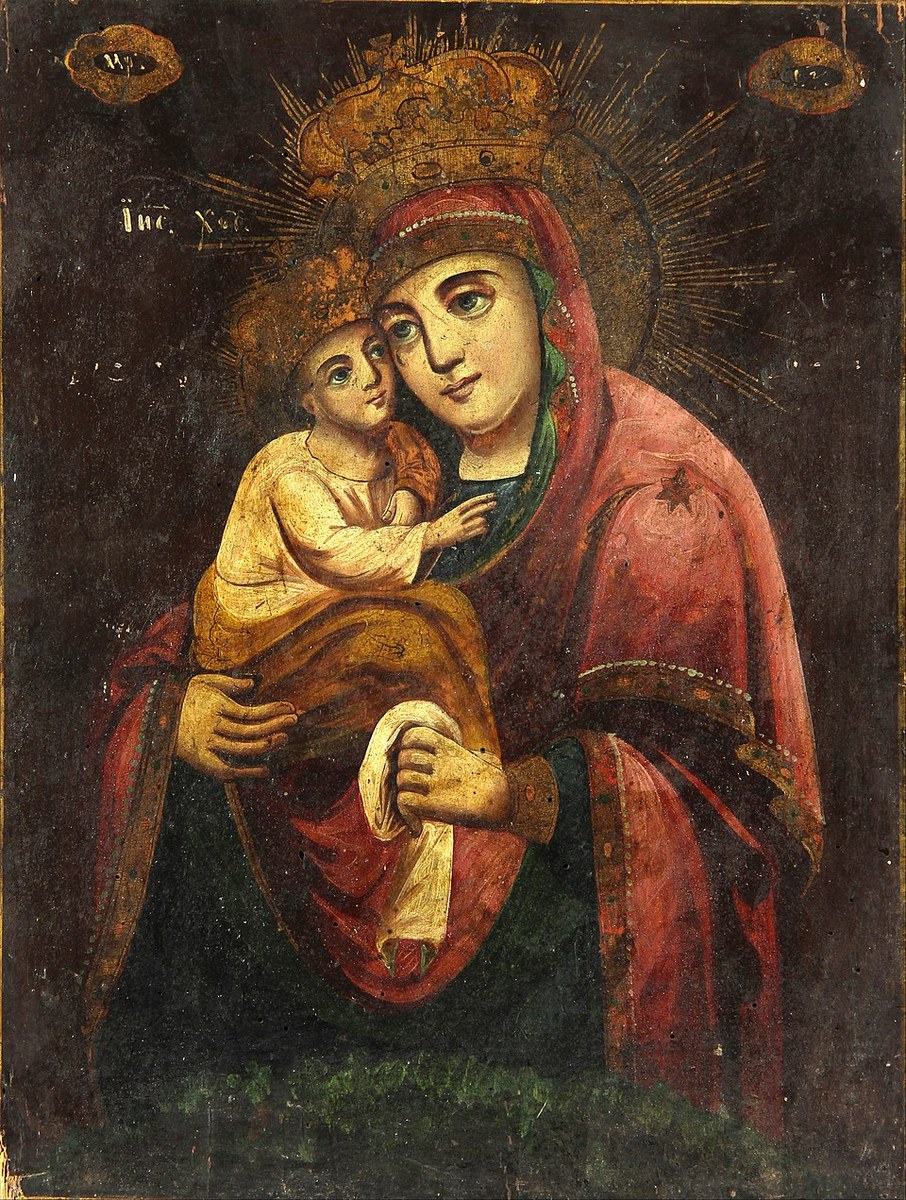
About Pochaev Icon of the Mother of God →

Saints commemorated
-
Saint of the day
Martys Trophimus, Theophilus and Companions
Trophimus, Theophilus and thirteen who suffered with them are a company of martyrs of the Great Persecution under Diocletian, put to death in Lycia on the southern coast of Asia Minor about the year 305. The synaxarion account is short and follows a shape familiar from the Lycian and Pamphylian passions: brought to trial together, they confessed Christ with one voice and refused the sacrifice; their legs were broken and they were thrown into a fire, out of which they came unhurt and praised Christ the louder; and the judge, unable to break them, had them beheaded. They are kept on July 23 by the Slavonic calendars and by the OCA, and are the principal commemoration of that day in Antiochian and Russian usage.
-
Hieromartyr Apollinarius, bishop of Ravenna (75)
-
Holy Prophet Ezekiel (6th c. BC)
-
Righteous Anna (Hannah), mother of the prophet Samuel Righteous Anna (Hannah), mother of the prophet Samuel
-
Anna of Leukadion
Anna, called also Susanna, was a noblewoman of Constantinople born in 840, in the last years of the iconoclast emperor Theophilus. Orphaned young and left a great estate, she spent it on the poor; and when a wealthy Hagarene of the capital sought her in marriage and obtained the emperor's own consent to the match, she refused him, endured his persecution, and prayed to be delivered — a deliverance that came, the account says, when her suitor was struck down and died. She then withdrew to a church of the Mother of God in the quarter called Leukadion (or Leukate), and lived there some fifty years in fasting, vigil and prayer until a light illness took her to God. Her relics were later found whole and fragrant, and healings were worked at them. The Greek Menaion keeps her memory on July 23.
-
Apollinaris of Ravenna
Apollinaris is the first bishop and the protomartyr of Ravenna, the Adriatic city that became the capital of the Western empire and then the seat of Byzantine rule in Italy. The tradition received by the Church makes him an Antiochene, a disciple of the Apostle Peter, whom he followed to Rome and who sent him to preach at Ravenna in the reign of Claudius; there he healed, baptised, built up a church, was five times tried, tortured, banished and recalled, and died of a last beating outside the city walls after twenty-eight years as bishop. Modern historians doubt almost every date in that account and place him a century or more later; what is not doubted is the antiquity and force of his cult, which raised over his grave the basilica of Sant'Apollinare in Classe, whose sixth-century apse still shows him standing with his hands lifted in prayer among the sheep of his flock. The East keeps him on July 23.
-
Apollonius of Rome
Apollonius, called the Apologist, was a Roman of senatorial rank who was denounced as a Christian under Commodus, about the year 185, and who answered the charge not by denial nor by silence but by reading out before the prefect and the Senate a written defence of the faith — one of the earliest Christian apologies known to have been delivered to the Roman state itself. The book is lost; Eusebius had it and quoted from the record of the trial, and Jerome names him among the ecclesiastical writers. He was condemned under the standing law against Christians and put to death. The Byzantine calendars keep him on July 23, where the Greek synaxarion names him with the bishops of Ravenna; the Latin West keeps him on April 21.
-
Phocas of Sinope
Phocas was bishop of Sinope, the great harbour city of the southern Black Sea coast, and died a martyr there in the year 117, in the persecution at the end of Trajan's reign: refusing to renounce Christ, he was tortured and shut into a bath-house heated to fury, where he gave up his spirit. Styled "the Wonderworker" in the synaxaria, he became one of the most beloved saints of the Black Sea world — the patron of seafarers, invoked daily by those in peril on the waters, and a defender against fire and drowning. His relics were translated to Constantinople in 404, and his feast is kept on September 22.
-
Theodore Ushakov
Theodore Ushakov (1745–1817) was the admiral who created the Russian Black Sea fleet and never lost to it a battle, a ship, or a man into captivity — and who, having commanded in forty-three engagements, ended his life in prayer and almsgiving beside the walls of the Sanaksar monastery, where his uncle Theodore of Sanaksar had been abbot. He broke the Ottoman fleets at Fidonisi, Kerch, Tendra and Kaliakra; he took Corfu in 1799 in an assault from the sea that Suvorov envied him; and in the Ionian Islands he set up, with the counsel of the local clergy, a Christian polity that returned the islanders their churches. Refused advancement, he resigned in 1807, withdrew to the country by Sanaksar, gave away what he had to the widows and orphans of the fleet and to prisoners of the Napoleonic wars, and died in 1817. The Russian Church glorified him in 2001 as a righteous warrior, not for his victories but for his mercy; he is honoured as the patron of the Russian navy, and his glorification is kept on July 23.
-
Vitalis of Ravenna
Vitalis is the martyr in whose honour the emperor Justinian's mosaic masterpiece, the Basilica of San Vitale at Ravenna, was raised over the reputed place of his death, and whose figure stands in its apse receiving the martyr's crown from the hand of Christ. The tradition makes him a citizen — by some accounts a soldier — of Milan, husband of Valeria and father of the martyrs Gervasius and Protasius, who came to Ravenna in the train of the judge Paulinus, encouraged the martyr Ursicinus not to falter, buried him honourably, was denounced for it, racked, and then thrown into a pit and buried alive under stones and earth. The Greek synaxarion of July 23 keeps him with Apollinaris and styles both of them "bishops of Ravenna," a title the Western sources never give him; his own place, date and even his existence as distinct from other martyrs of the name are matters of long scholarly doubt, and the entry sets them out.
Troparia & kontakia
Kontakion — Tone 1
A fountain of healings and a stronghold of the Orthodox faith hath thy Pochaev icon been shown to be, O Theotokos; wherefore set us also free, who run to it, from troubles and temptations; keep thy Lavra unharmed; establish Orthodoxy in the lands that stand round about; and loose the sins of them that pray to thee — for whatsoever thou willest, thou art able to do.
Kontakion — Tone 2
Thou wast shown to be a lamp of the Church, a shepherd sent from Antioch to the shore of the Adriatic, and having opened the eyes of the blind, thou didst open the eyes of a whole city to the light; wherefore, having endured stripes and exile and the sea, thou hast received the crown, O hierarch Apollinaris, and dost pray without ceasing for us all.
Kontakion — Tone 6
As a hierarch offering sacrifices, O father, at the end thou didst offer thyself a living sacrifice; having borne witness lawfully to Christ God, strengthened by angels and choosing death, thou art with them that cry to thee: Come, O Phocas, be with us, and none shall be against us.
Kontakion — Tone 2
Broken in the limbs but unbroken in the soul, ye stood in the fire as in a cool dew, O martyrs of Lycia; and when the flame would not silence you, the sword sent you crowned to the Master. With Trophimus and Theophilus at your head, entreat Him for our souls.
Kontakion — Tone 1
A fountain of healings and a stronghold of the Orthodox faith hath thy Pochaev icon been shown to be, O Theotokos; wherefore set us also free, who run to it, from troubles and temptations; keep thy Lavra unharmed; establish Orthodoxy in the lands that stand round about; and loose the sins of them that pray to thee — for whatsoever thou willest, thou art able to do.
Kontakion — Tone 2
Thou wast shown to be a lamp of the Church, a shepherd sent from Antioch to the shore of the Adriatic, and having opened the eyes of the blind, thou didst open the eyes of a whole city to the light; wherefore, having endured stripes and exile and the sea, thou hast received the crown, O hierarch Apollinaris, and dost pray without ceasing for us all.
Kontakion — Tone 6
As a hierarch offering sacrifices, O father, at the end thou didst offer thyself a living sacrifice; having borne witness lawfully to Christ God, strengthened by angels and choosing death, thou art with them that cry to thee: Come, O Phocas, be with us, and none shall be against us.
Kontakion — Tone 2
Broken in the limbs but unbroken in the soul, ye stood in the fire as in a cool dew, O martyrs of Lycia; and when the flame would not silence you, the sword sent you crowned to the Master. With Trophimus and Theophilus at your head, entreat Him for our souls.
Stichera
From infancy thou becamest a lover of the Lord, O all-blessed Phocas, hieromartyr of Christ; taking up the weapon of the Cross upon thy shoulders, thou didst walk unswervingly the way of salvation; wherefore thou becamest a companion of the angels, an adversary of the demons, and wast shown a fervent intercessor for the world.
Stichera
From infancy thou becamest a lover of the Lord, O all-blessed Phocas, hieromartyr of Christ; taking up the weapon of the Cross upon thy shoulders, thou didst walk unswervingly the way of salvation; wherefore thou becamest a companion of the angels, an adversary of the demons, and wast shown a fervent intercessor for the world.
Troparion — Tone 5
Before thy holy icon, O Lady, they that pray are counted worthy of healing; they receive the knowledge of the true faith, and they beat back the assaults of the Hagarenes. Wherefore for us also, who fall down before thee, ask forgiveness of sins; enlighten our hearts with thoughts of godliness, and raise up prayer to thy Son for the salvation of our souls.
Troparion — Tone 8
In thee, O Mother, was preserved unimpaired that which is according to the image; for taking up the cross thou didst follow Christ, and by thy deeds thou hast taught us to despise the flesh, which passes away, and to care for the soul, a thing immortal. Therefore, O venerable Anna, thy spirit rejoices with the angels.
Troparion — Tone 4
Sharing the manner of life of the Apostles and succeeding to their throne, thou didst find in the active life, O God-inspired one, a ladder to divine vision; therefore, rightly dividing the word of truth, thou didst contend for the faith even unto blood, O hieromartyr Apollinaris. Intercede with Christ our God that our souls may be saved.
Troparion — Tone 4
Thy martyr Apollonius, O Lord, in his contest received from Thee our God the crown of incorruption; for having Thy strength he cast down the tyrants, and shattered the feeble boldness of the demons. By his intercessions save our souls.
Troparion — Tone 4
As a sharer of the ways of the Apostles and a successor to their throne, thou didst find thy practice, O God-inspired one, to be a passage unto contemplation; wherefore, rightly dividing the word of truth, thou didst suffer for the faith even unto blood, O Hieromartyr Phocas: intercede with Christ God that our souls may be saved.
Troparion — Tone 4 (common of the righteous)
The image of the righteous shone forth in thee, O Theodore: in the midst of arms thou didst keep mercy, and in the midst of honours, poverty of spirit; having given away thy substance to the captive and the orphan, thou didst finish thy course in prayer. Entreat Christ our God that He may save our souls.
Troparion — Tone 4
Thy martyrs, O Lord, in their contest received from Thee our God the crowns of incorruption; for having Thy strength they cast down the tyrants, and shattered the feeble boldness of the demons. By their intercessions save our souls.
Troparion — Tone 4
Thy martyr Vitalis, O Lord, in his contest received from Thee our God the crown of incorruption; for having Thy strength he cast down the tyrants, and shattered the feeble boldness of the demons. By his intercessions save our souls.
Troparion — Tone 5
Before thy holy icon, O Lady, they that pray are counted worthy of healing; they receive the knowledge of the true faith, and they beat back the assaults of the Hagarenes. Wherefore for us also, who fall down before thee, ask forgiveness of sins; enlighten our hearts with thoughts of godliness, and raise up prayer to thy Son for the salvation of our souls.
Troparion — Tone 8
In thee, O Mother, was preserved unimpaired that which is according to the image; for taking up the cross thou didst follow Christ, and by thy deeds thou hast taught us to despise the flesh, which passes away, and to care for the soul, a thing immortal. Therefore, O venerable Anna, thy spirit rejoices with the angels.
Troparion — Tone 4
Sharing the manner of life of the Apostles and succeeding to their throne, thou didst find in the active life, O God-inspired one, a ladder to divine vision; therefore, rightly dividing the word of truth, thou didst contend for the faith even unto blood, O hieromartyr Apollinaris. Intercede with Christ our God that our souls may be saved.
Troparion — Tone 4
Thy martyr Apollonius, O Lord, in his contest received from Thee our God the crown of incorruption; for having Thy strength he cast down the tyrants, and shattered the feeble boldness of the demons. By his intercessions save our souls.
Troparion — Tone 4
As a sharer of the ways of the Apostles and a successor to their throne, thou didst find thy practice, O God-inspired one, to be a passage unto contemplation; wherefore, rightly dividing the word of truth, thou didst suffer for the faith even unto blood, O Hieromartyr Phocas: intercede with Christ God that our souls may be saved.
Troparion — Tone 4 (common of the righteous)
The image of the righteous shone forth in thee, O Theodore: in the midst of arms thou didst keep mercy, and in the midst of honours, poverty of spirit; having given away thy substance to the captive and the orphan, thou didst finish thy course in prayer. Entreat Christ our God that He may save our souls.
Troparion — Tone 4
Thy martyrs, O Lord, in their contest received from Thee our God the crowns of incorruption; for having Thy strength they cast down the tyrants, and shattered the feeble boldness of the demons. By their intercessions save our souls.
Troparion — Tone 4
Thy martyr Vitalis, O Lord, in his contest received from Thee our God the crown of incorruption; for having Thy strength he cast down the tyrants, and shattered the feeble boldness of the demons. By his intercessions save our souls.
Readings
Epistle
Romans 16.1-16
1I commend unto you Phebe our sister, which is a servant of the church which is at Cenchrea: 2That ye receive her in the Lord, as becometh saints, and that ye assist her in whatsoever business she hath need of you: for she hath been a succourer of many, and of myself also. 3Greet Priscilla and Aquila my helpers in Christ Jesus: 4Who have for my life laid down their own necks: unto whom not only I give thanks, but also all the churches of the Gentiles. 5Likewise greet the church that is in their house. Salute my wellbeloved Epaenetus, who is the firstfruits of Achaia unto Christ. 6Greet Mary, who bestowed much labour on us. 7Salute Andronicus and Junia, my kinsmen, and my fellowprisoners, who are of note among the apostles, who also were in Christ before me. 8Greet Amplias my beloved in the Lord. 9Salute Urbane, our helper in Christ, and Stachys my beloved. 10Salute Apelles approved in Christ. Salute them which are of Aristobulus’ household. 11Salute Herodion my kinsman. Greet them that be of the household of Narcissus, which are in the Lord. 12Salute Tryphena and Tryphosa, who labour in the Lord. Salute the beloved Persis, which laboured much in the Lord. 13Salute Rufus chosen in the Lord, and his mother and mine. 14Salute Asyncritus, Phlegon, Hermas, Patrobas, Hermes, and the brethren which are with them. 15Salute Philologus, and Julia, Nereus, and his sister, and Olympas, and all the saints which are with them. 16Salute one another with an holy kiss. The churches of Christ salute you.
Gospel
Matthew 13.3-9
3And he spake many things unto them in parables, saying, Behold, a sower went forth to sow; 4And when he sowed, some seeds fell by the way side, and the fowls came and devoured them up: 5Some fell upon stony places, where they had not much earth: and forthwith they sprung up, because they had no deepness of earth: 6And when the sun was up, they were scorched; and because they had no root, they withered away. 7And some fell among thorns; and the thorns sprung up, and choked them: 8But other fell into good ground, and brought forth fruit, some an hundredfold, some sixtyfold, some thirtyfold. 9Who hath ears to hear, let him hear.