
Friday 30 January 2026
Synaxis 3 Hierarchs: Basil the Great, Gregory the Theologian, John Chrysostom
Synaxis 3 Hierarchs: Basil the Great, Gregory the Theologian, John Chrysostom
About Synaxis of the Three Holy Hierarchs →
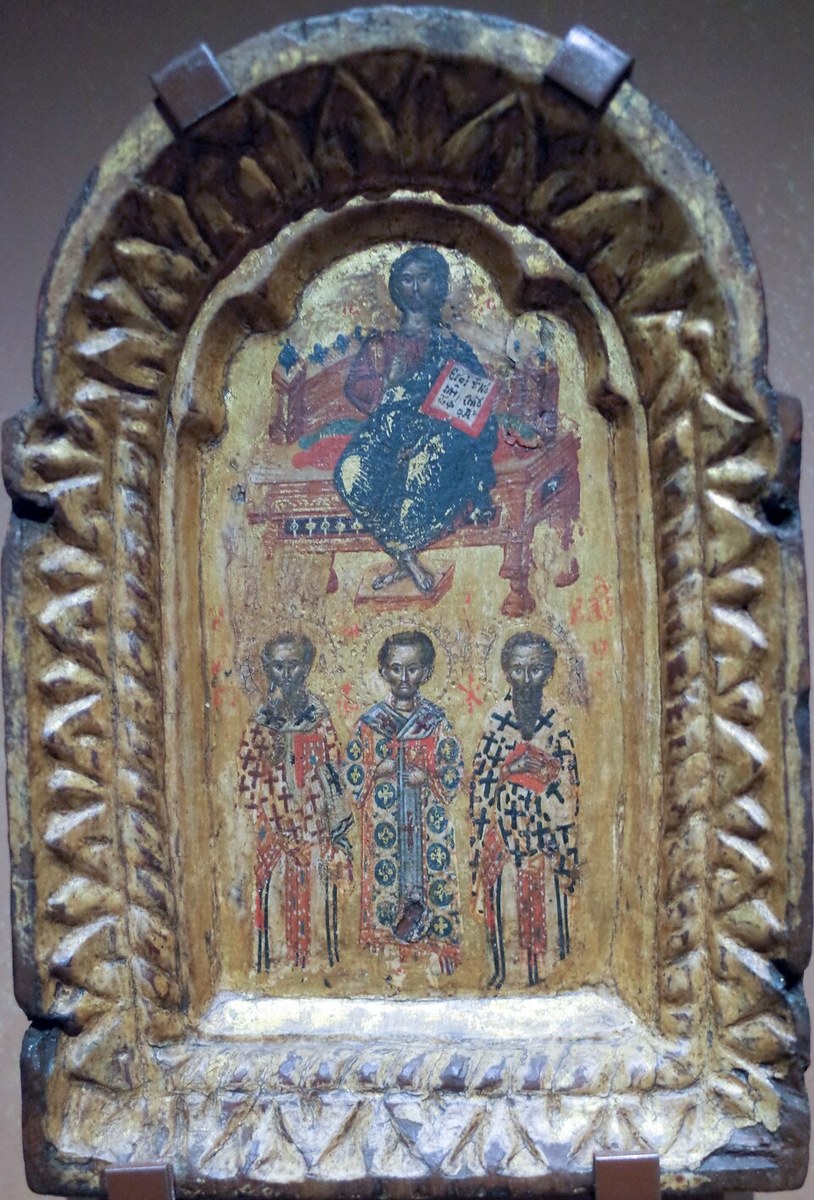
Saints commemorated
-
Saint of the day
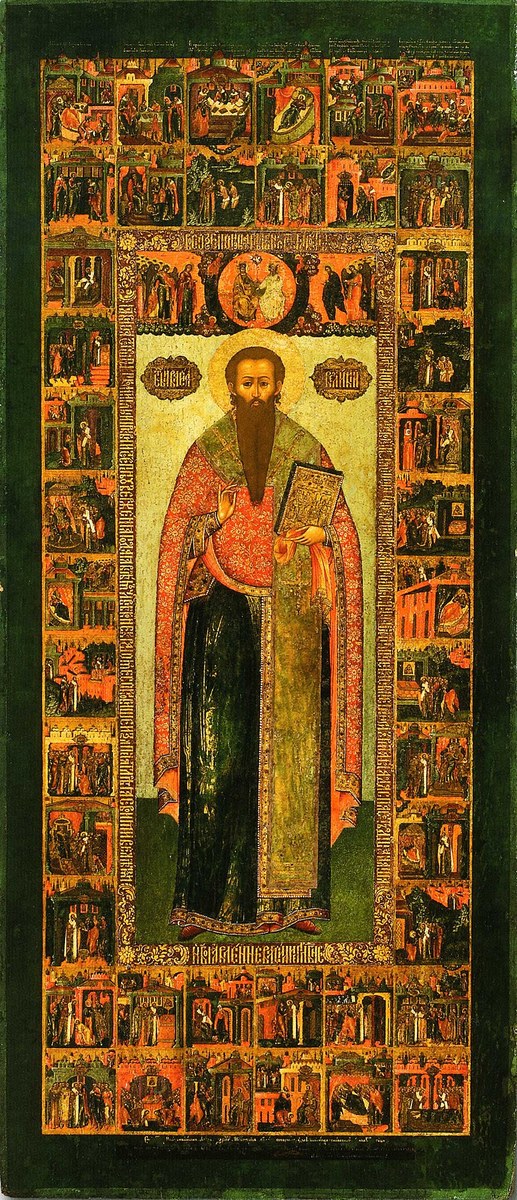
Basil the Great
Basil the Great (c. 330 – 379) was Archbishop of Caesarea in Cappadocia, one of the three Cappadocian Fathers and — with Gregory the Theologian and John Chrysostom — one of the Three Holy Hierarchs and Ecumenical Teachers of the Church. Born into a family that gave the calendar more saints than any other, he was educated at Athens, renounced a brilliant secular career at the urging of his sister Macrina, and founded the coenobitic monasticism of the Christian East, whose Rules he wrote. As bishop from 370 he led the defence of the Nicene faith through the darkest years of the Arian ascendancy, withstood the emperor Valens and his prefect Modestus to their faces, and forged the theological language — one ousia in three hypostases — by which the Church confessed the Trinity and the full divinity of the Holy Spirit, set out in his treatise On the Holy Spirit. He built at Caesarea the Basiliad, a whole city of mercy for the sick, the leprous, and the poor, and gave his name to the Liturgy served on the great days of the year. Worn out by asceticism, illness, and labour, he died on January 1, 379, not yet fifty, and was mourned by Christians, Jews, and pagans alike. The Church keeps him on January 1, with the Circumcision of Christ, and on January 30 among the Three Hierarchs.
-
Saint of the day
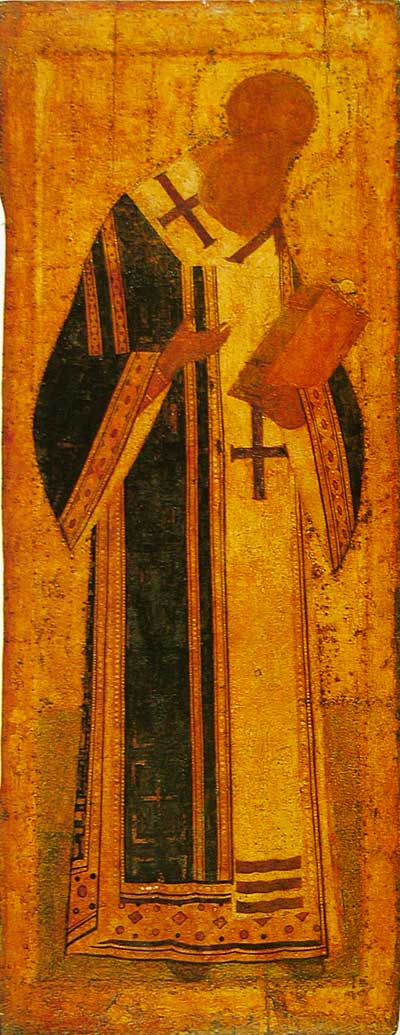
Gregory the Theologian
Gregory the Theologian (c. 329 – 389/390), Gregory of Nazianzus, was Archbishop of Constantinople and — with Basil the Great and John Chrysostom — one of the Three Holy Hierarchs and Ecumenical Teachers of the Church. The most gifted orator and poet of the Cappadocian Fathers and the lifelong friend of Basil, whom he met as a student at Athens, he was drawn against his own longing for solitude into the priesthood and then the episcopate. Summoned to Constantinople in 379, when the capital had been in Arian hands for forty years, he gathered the scattered Nicene flock in the little chapel of the Anastasia and there preached the Five Theological Orations that won him alone among the Fathers, with John the Evangelist and later Symeon, the name "the Theologian." He presided for a time over the Second Ecumenical Council (Constantinople, 381), which confessed the full divinity of the Holy Spirit and gave the Creed its final form; then, weary of the intrigues of the great see, he resigned his throne in the midst of the Council and withdrew to Cappadocia, where he spent his last years in prayer, asceticism, and the writing of poems. He reposed at his family estate of Arianzus about the year 390, and is kept on January 25, and on January 30 among the Three Hierarchs.
-
Saint of the day
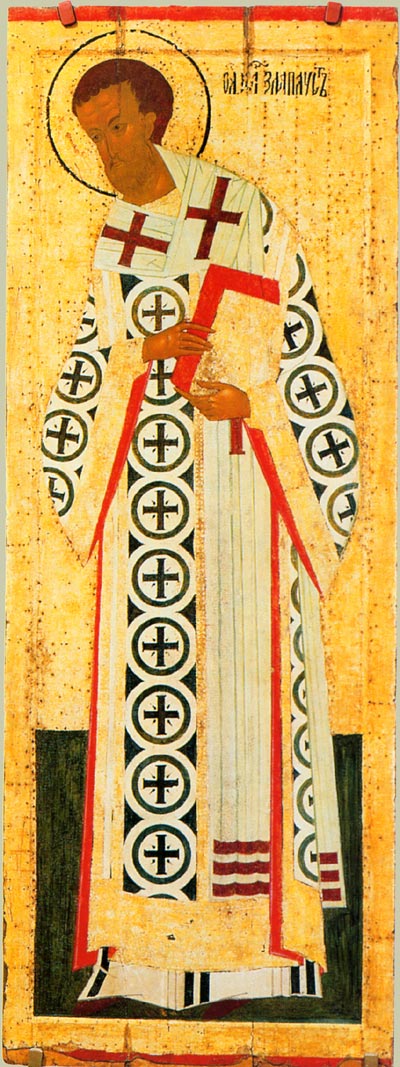
John Chrysostom
John Chrysostom (c. 347–407) is the golden-mouthed preacher of Antioch and Archbishop of Constantinople, reckoned with Basil the Great and Gregory the Theologian as one of the Three Holy Hierarchs and Ecumenical Teachers of the Church. Born and formed at Antioch — trained in rhetoric under the pagan Libanius, in Scripture in the Antiochene school of Diodore of Tarsus, and in asceticism in the mountains above the city — he was ordained deacon and then priest by his bishops Meletius and Flavian, and for twelve years preached the homilies that made his name: the great cycle On the Statues, and the running expositions of Genesis, the Psalms, Matthew, John, Acts, and the whole of Paul that remain the fullest patristic commentary on the New Testament. Taken to Constantinople as archbishop in 398, he reformed the clergy and spent the Church's wealth on the poor, and for it was hounded by the empress Eudoxia and by Theophilus of Alexandria, condemned at the Synod of the Oak, and twice exiled; he died on the forced march to Pityus, at Comana in Pontus, with the words "Glory to God for all things." His relics were brought back to Constantinople in 438, and the normal eucharistic service of the Orthodox Church bears his name — the Divine Liturgy of St John Chrysostom.
-
Saint Peter, King of Bulgaria (970)
-
Hippolytus of Rome
Hippolytus of Rome, a bishop and martyr of the third century, is commemorated on January 30 together with a company of Roman martyrs — the official Censorinus, the virgin Chryse ("the golden one"), Sabinus, and some twenty others. The Eastern synaxarion tells of Censorinus and his fellow-prisoners, of the many soldiers and citizens converted by the miracles worked in the prison, and of the aged Hippolytus who, hearing of their sufferings, came before the judge, openly confessed Christ and rebuked the persecutor, and was put to death with them. This Hippolytus the tradition identifies with Hippolytus the writer (c. 170 – c. 235), the most learned churchman of third-century Rome — a disciple of the school of Irenaeus, a prolific exegete and theologian, and the central figure in one of the earliest Roman schisms, reconciled to the Church and dying a confessor in exile on Sardinia. The relationship of the martyr of the synaxarion to the writer, and to the several other Roman Hippolyti, is one of the tangled questions of early hagiography, and is set out below.
-
Theophilus the New
Theophilus the New (†c. 784) was a Byzantine military commander and senator, honoured by the emperor and set at the head of the imperial forces, who was taken captive by the Arabs in a sea-campaign that ended in defeat. Held prisoner for some four years and pressed with threats and with the promise of great honours to deny Christ and embrace the faith of his captors, he refused steadfastly, and was at last beheaded. The Church keeps him on January 30 among the martyrs, styling him "the New" to distinguish him from the earlier saints of his name. His memory belongs with the long line of Byzantine soldiers and commanders who, taken in the wars with the Caliphate, sealed with their blood the confession they had made in arms.
British Isles and Ireland
- St. Tudy, virgin, daughter of King Brychan of Brecknock (5th C)
- St. Bathild, Queen of France (680)
- St. Amnichad, hermit (1043)
Troparia & kontakia
Kontakion — Tone 2
The sacred and God-proclaiming heralds, the very crown of teachers, thou hast taken to thyself, O Lord, unto the enjoyment of thy good things and unto rest; for thou didst receive their labours and their toil as more than every whole-burnt offering, O thou who alone dost glorify thy saints.
Kontakion — Tone 4
Thou wast shown forth as an unshaken foundation of the Church, dispensing to all mortals a lordship inviolable and sealing it with thy decrees, O Basil, revealer of the things of heaven.
Kontakion — Tone 3
With thy theologian's tongue, O glorious one, thou didst unravel the tangled webs of the orators, and didst array the Church in the garment of Orthodoxy, woven from on high; and clothed in it she cries aloud with us, thy children: Rejoice, O Father, thou loftiest mind of theology.
Kontakion — Tone 2
Robed in the vesture of the priesthood, thou didst pour out thy blood, O blessed and God-wise Hippolytus, and hast passed over rejoicing to Christ thy Master; entreat him without ceasing on behalf of us all.
Kontakion — Tone 6
From the heavens hast thou received divine grace, and by thy lips thou dost teach all men to worship the one God in Trinity, O John Chrysostom, all-blessed and venerable one. Rightly do we acclaim thee, for thou art a teacher who makest plain the things of God.
Kontakion — Tone 4
As a soldier of the earthly king made worthy to soldier for the King of heaven, thou didst endure the long bondage and the sword, O martyr Theophilus, and wast not moved from the confession of Christ; wherefore thou hast received the unfading crown.
Troparion — Tone 1
The three greatest luminaries of the triple-sunned Godhead, who with the beams of their divine teachings have set the whole world ablaze; the honey-flowing rivers of wisdom, who have watered all creation with the streams of the knowledge of God — Basil the Great, and Gregory the Theologian, together with the renowned John of the golden-flowing tongue: come, let all we who love their words be gathered together and honour them with hymns; for they ever intercede before the Trinity on our behalf.
Troparion — Tone 1
Thy proclamation hath gone forth into all the earth, which received thy word; thereby thou didst teach the faith in a manner worthy of God, and make plain the nature of things that are, and adorn the ways of men. O royal priesthood, venerable Father, entreat Christ God to grant us great mercy.
Troparion — Tone 1
The shepherd's pipe of thy theology overcame the trumpets of the orators; for as thou didst search out the depths of the Spirit, so too were the beauties of eloquence added unto thee. Wherefore, O Father Gregory, intercede with Christ our God, that our souls may be saved.
Troparion — Tone 4
And having shared in their ways, thou hast succeeded to their thrones, O inspired of God; for having found in action an ascent to divine vision, thou didst rightly divide the word of truth, and didst contend for the faith even unto blood, O Hieromartyr Hippolytus. Intercede with Christ God that our souls be saved.
Troparion — Tone 8
The grace that shone forth from thy mouth like a beacon of fire hath enlightened the whole world; it hath laid up for mankind the treasures of freedom from avarice, and shown us the height of humility. And as thou dost instruct us by thine own words, O Father John Chrysostom, so intercede with the Word, Christ our God, for the salvation of our souls.
Troparion — Tone 4
Thy martyr Theophilus, O Lord, in his contest received the crown incorruptible from thee our God; for, possessed of thy strength, he cast down the tyrants and broke the feeble insolence of the demons. By his prayers, O Christ God, save our souls.
Readings
Vespers
Deuteronomy 1.8-11, 15-17
8Behold, I have set the land before you: go in and possess the land which the LORD sware unto your fathers, Abraham, Isaac, and Jacob, to give unto them and to their seed after them. 9And I spake unto you at that time, saying, I am not able to bear you myself alone: 10The LORD your God hath multiplied you, and, behold, ye are this day as the stars of heaven for multitude. 11(The LORD God of your fathers make you a thousand times so many more as ye are, and bless you, as he hath promised you!) 15So I took the chief of your tribes, wise men, and known, and made them heads over you, captains over thousands, and captains over hundreds, and captains over fifties, and captains over tens, and officers among your tribes. 16And I charged your judges at that time, saying, Hear the causes between your brethren, and judge righteously between every man and his brother, and the stranger that is with him. 17Ye shall not respect persons in judgment; but ye shall hear the small as well as the great; ye shall not be afraid of the face of man; for the judgment is God’s: and the cause that is too hard for you, bring it unto me, and I will hear it.
Deuteronomy 10.14-21
14Behold, the heaven and the heaven of heavens is the LORD’s thy God, the earth also, with all that therein is. 15Only the LORD had a delight in thy fathers to love them, and he chose their seed after them, even you above all people, as it is this day. 16Circumcise therefore the foreskin of your heart, and be no more stiffnecked. 17For the LORD your God is God of gods, and Lord of lords, a great God, a mighty, and a terrible, which regardeth not persons, nor taketh reward: 18He doth execute the judgment of the fatherless and widow, and loveth the stranger, in giving him food and raiment. 19Love ye therefore the stranger: for ye were strangers in the land of Egypt. 20Thou shalt fear the LORD thy God; him shalt thou serve, and to him shalt thou cleave, and swear by his name. 21He is thy praise, and he is thy God, that hath done for thee these great and terrible things, which thine eyes have seen.
Wisdom of Solomon 3.1-9
1But the souls of the righteous are in the hand of God, and there shall no torment touch them. 2In the sight of the unwise they seemed to die: and their departure is taken for misery, 3And their going from us to be utter destruction: but they are in peace. 4For though they be punished in the sight of men, yet is their hope full of immortality. 5And having been a little chastised, they shall be greatly rewarded: for God proved them, and found them worthy for himself. 6As gold in the furnace hath he tried them, and received them as a burnt offering. 7And in the time of their visitation they shall shine, and run to and fro like sparks among the stubble. 8They shall judge the nations, and have dominion over the people, and their Lord shall reign for ever. 9They that put their trust in him shall understand the truth: and such as be faithful in love shall abide with him: for grace and mercy is to his saints, and he hath care for his elect.
Matins Gospel
John 10.9-16
9I am the door: by me if any man enter in, he shall be saved, and shall go in and out, and find pasture. 10The thief cometh not, but for to steal, and to kill, and to destroy: I am come that they might have life, and that they might have it more abundantly. 11I am the good shepherd: the good shepherd giveth his life for the sheep. 12But he that is an hireling, and not the shepherd, whose own the sheep are not, seeth the wolf coming, and leaveth the sheep, and fleeth: and the wolf catcheth them, and scattereth the sheep. 13The hireling fleeth, because he is an hireling, and careth not for the sheep. 14I am the good shepherd, and know my sheep, and am known of mine. 15As the Father knoweth me, even so know I the Father: and I lay down my life for the sheep. 16And other sheep I have, which are not of this fold: them also I must bring, and they shall hear my voice; and there shall be one fold, and one shepherd.
Epistle
2 Peter 1.1-10
1Simon Peter, a servant and an apostle of Jesus Christ, to them that have obtained like precious faith with us through the righteousness of God and our Saviour Jesus Christ: 2Grace and peace be multiplied unto you through the knowledge of God, and of Jesus our Lord, 3According as his divine power hath given unto us all things that pertain unto life and godliness, through the knowledge of him that hath called us to glory and virtue: 4Whereby are given unto us exceeding great and precious promises: that by these ye might be partakers of the divine nature, having escaped the corruption that is in the world through lust. 5And beside this, giving all diligence, add to your faith virtue; and to virtue knowledge; 6And to knowledge temperance; and to temperance patience; and to patience godliness; 7And to godliness brotherly kindness; and to brotherly kindness charity. 8For if these things be in you, and abound, they make you that ye shall neither be barren nor unfruitful in the knowledge of our Lord Jesus Christ. 9But he that lacketh these things is blind, and cannot see afar off, and hath forgotten that he was purged from his old sins. 10Wherefore the rather, brethren, give diligence to make your calling and election sure: for if ye do these things, ye shall never fall:
Hebrews 13.7-16 (Hierarchs)
7Remember them which have the rule over you, who have spoken unto you the word of God: whose faith follow, considering the end of their conversation. 8Jesus Christ the same yesterday, and to day, and for ever. 9Be not carried about with divers and strange doctrines. For it is a good thing that the heart be established with grace; not with meats, which have not profited them that have been occupied therein. 10We have an altar, whereof they have no right to eat which serve the tabernacle. 11For the bodies of those beasts, whose blood is brought into the sanctuary by the high priest for sin, are burned without the camp. 12Wherefore Jesus also, that he might sanctify the people with his own blood, suffered without the gate. 13Let us go forth therefore unto him without the camp, bearing his reproach. 14For here have we no continuing city, but we seek one to come. 15By him therefore let us offer the sacrifice of praise to God continually, that is, the fruit of our lips giving thanks to his name. 16But to do good and to communicate forget not: for with such sacrifices God is well pleased.
Gospel
Mark 13.1-8
1And as he went out of the temple, one of his disciples saith unto him, Master, see what manner of stones and what buildings are here! 2And Jesus answering said unto him, Seest thou these great buildings? there shall not be left one stone upon another, that shall not be thrown down. 3And as he sat upon the mount of Olives over against the temple, Peter and James and John and Andrew asked him privately, 4Tell us, when shall these things be? and what shall be the sign when all these things shall be fulfilled? 5And Jesus answering them began to say, Take heed lest any man deceive you: 6For many shall come in my name, saying, I am Christ; and shall deceive many. 7And when ye shall hear of wars and rumours of wars, be ye not troubled: for such things must needs be; but the end shall not be yet. 8For nation shall rise against nation, and kingdom against kingdom: and there shall be earthquakes in divers places, and there shall be famines and troubles: these are the beginnings of sorrows.
Matthew 5.14-19 (Hierarchs)
14Ye are the light of the world. A city that is set on an hill cannot be hid. 15Neither do men light a candle, and put it under a bushel, but on a candlestick; and it giveth light unto all that are in the house. 16Let your light so shine before men, that they may see your good works, and glorify your Father which is in heaven. 17Think not that I am come to destroy the law, or the prophets: I am not come to destroy, but to fulfil. 18For verily I say unto you, Till heaven and earth pass, one jot or one tittle shall in no wise pass from the law, till all be fulfilled. 19Whosoever therefore shall break one of these least commandments, and shall teach men so, he shall be called the least in the kingdom of heaven: but whosoever shall do and teach them, the same shall be called great in the kingdom of heaven.