
Thursday 30 July 2026
Apostles Silas and Silvanus of the Seventy
Thursday of the 9th week after Pentecost
Saints commemorated
-
Saint of the day
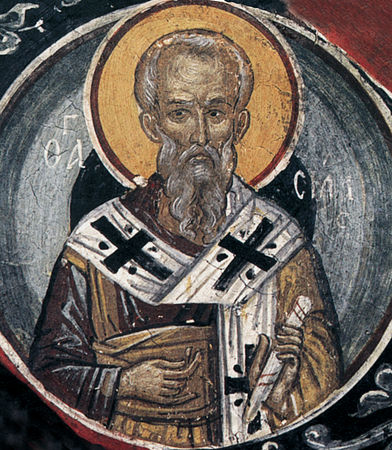
Apostles Silas and Silvanus of the Seventy
On July 30 the Church keeps together four apostles of the Seventy whose names stand in the New Testament itself: Silas, the prophet and "chief man among the brethren" whom the Council of Jerusalem sent to Antioch with its decree and who then walked the whole of Paul's second journey with him — beaten at Philippi, singing in the stocks at midnight, and left at last as bishop of Corinth; Silvanus, whom the tradition makes bishop of Thessalonica and a martyr, and whose name Peter writes at the end of his first epistle; Crescens, whom Paul's last letter sends away to Galatia and whom the synaxarion follows into Gaul before his martyrdom under Trajan; and Epaenetus, "the firstfruits unto Christ," greeted in Romans 16 and remembered as first bishop of Carthage. With them on this day the Menaion names Andronicus, bishop of Pannonia, whose own feast is May 17. The four are of the first apostolic generation, and their history is exactly as long as the few verses in which they appear and the short notices the synaxaria have added to them.
-
Hieromarytyr Polychronius, Bishop of Babylon, and those with him (251)
Polychronius, bishop of Babylon, suffered in the persecution of Decius (249–251) with a company of his own clergy — the priests Parmenius, Helimenas and Chrysotelus and the deacons Luke and Mocius — and with a number of laymen of Persia. Brought before the emperor and required to sacrifice, he answered that Christians offer themselves in sacrifice to Christ and never worship the work of men's hands, and thereafter, when questioned again, kept silence altogether, so that the emperor had his mouth beaten in with stones. His priests and deacons were burned and then beheaded at Cordula. Two Persian nobles who were secretly Christians, Abdon and Sennen, gathered up the bodies and buried them by night, and for that were carried to Rome, thrown to the beasts — which would not touch them — and killed with the sword about the year 251. With them the synaxaria name Maximus and Olympius. The Church keeps the whole company on July 30.
-
Venerable Angelina, Princess of Albania.
Angelina was an Albanian nobleman's daughter who married the blinded and dispossessed despot Stephen Branković of Serbia, followed him through exile in Venetian Albania and northern Italy, buried him there, and then — twice widowed of a country, since Serbia itself had fallen to the Turks in 1459 — brought her sons and her husband's body north into Hungarian Syrmia to begin again. Both sons, George and John, are numbered among the saints; George became the monk and metropolitan Maximus, and with him Angelina founded the monastery of Krušedol in the Fruška Gora, the house that became the spiritual centre of the Serbs of the Danube for two centuries. She ended her days there as a nun, about 1520, and is venerated as Prepodobna mati Angelina, "our venerable mother Angelina" — the matriarch of the last Serbian ruling house and of its exile.
-
Andronicus and Junia
Andronicus and Junia are the two Christians of the first generation whom the Apostle Paul greets at Romans 16:7 as "my kinsmen and my fellow-prisoners, who are of note among the apostles, who also were in Christ before me" — the only persons in the New Testament of whom that last phrase is said. The Byzantine tradition numbers Andronicus among the Seventy and makes him bishop of Pannonia, and honours Junia with him as his synergos, his fellow-labourer in the Gospel; both are remembered as having suffered for Christ. Their relics, hidden in the persecutions and long anonymous, were brought to light outside Constantinople at the Gate of Eugenius, and identified there by revelation. They are kept on May 17, and again on February 22 with the finding of those relics, and Andronicus a third time on July 30 with his fellow-apostles of the Seventy.
-
Herman of Solovki
Herman was the first of the three founders of Solovki to reach the islands and the last of them to die: an unlettered hermit of the Karelian coast who was living by a chapel on the river Vyg when Sabbatius came north in 1429 looking for a place of solitude, and who told him of the empty island in the White Sea. The two crossed the sea together and settled under the Sekirnaya Hill, and lived there six years. After Sabbatius' repose Herman brought the young Zosimas across in 1436 and stayed with him while the monastery grew up around them; he was on the islands for more than fifty years, and outlived them both. Unable to read or write, he did the one thing that has mattered most to posterity: he called clerics and dictated his memories of Sabbatius and Zosimas, so that the Life of the founders of Solovki rests on the testimony of an eyewitness. He died at Novgorod in 1479 on one of the supply journeys he was still making in old age; when in 1484 his grave was opened to bring him home, the relics were found incorrupt, and that finding is his feast.
-
John the Soldier
John was a soldier of the imperial army under Julian the Apostate (361–363), enrolled in a detachment sent to hunt down Christians — and he used the commission to save them. He warned those about to be arrested, opened the way for prisoners to escape, carried help to the imprisoned and buried the dead, all the while passing among his fellow soldiers as a diligent persecutor. When the deception was discovered he was chained and sent to Constantinople to await the emperor's judgment; Julian fell in Persia before the case was heard, and John was released. He spent a long old age in almsgiving, fasting and prayer, and died in extreme age, and was buried among the poor and forgotten. Long afterwards he made himself known by appearing to a devout woman and naming his grave; his relics were taken up and laid in the church of St John the Theologian at Constantinople, where healings followed. In the Slavic world he became the patron of soldiers, the consoler of the sorrowing, and — by a usage as old as it is universal — the saint to whom one prays for the recovery of what has been stolen.
-
Proculus, Ephebus, Apollonius and Abundius
Three students from Athens — Proculus, Ephebus and Apollonius — had come to Rome to read rhetoric under the Greek master Craton, and were in his house on the night that Valentine, bishop of Interamna, straightened Craton's crippled son by prayer. All three were baptised with the household and became Valentine's disciples. After his beheading at Rome they carried his body north to Interamna and buried it on the Flaminian road; they stayed there preaching, and were taken by the consul Leontius and put to death by night, as their master had been. Abundius, son of the prefect of the city of Rome, whom Valentine had also converted and whose conversion had precipitated the bishop's arrest, came looking for them, found them dead, buried them beside Valentine — and was martyred in his turn. The four are kept with Valentine on July 30.
-
Tsotne Dadiani
Tsotne Dadiani was eristavi — duke — of Egrisi, the western Georgian principality of Odishi (Samegrelo, Mingrelia), in the middle of the thirteenth century, when Georgia lay under Mongol occupation. About the year 1246 the Georgian nobility met secretly at Kokhtastavi in Meskheti to plan a rising; the plot was betrayed, and the conspirators were seized and carried to Ani, where they were stripped, bound hand and foot, smeared with honey and laid out under the sun to be eaten by insects until they should confess and name their fellows. Tsotne had not been taken with them: he was absent from the meeting on its business. When he learned what was being done to his companions he rode to Ani, went in among them, took off his own clothes, bound himself, and lay down beside them. The Mongol commander, astonished past anger, questioned him, was told that he had come to share the punishment of men who had done nothing without him, and released the whole company. The Georgian Church glorified him on 26 October 1999, and keeps his memory on July 30.
-
Valentine of Interamna
Valentine was bishop of Interamna Nahars — the modern Terni in Umbria, some sixty miles north of Rome — in the third century, and was renowned for a gift of healing. Called to Rome by a Greek rhetorician named Craton, whose son lay crippled and beyond the physicians' help, he asked and was granted a night alone with the boy, and gave him back straightened and whole; whereupon Craton, his household, and the three Athenian students lodging with him — Proculus, Ephebus and Apollonius — received baptism, and after them Abundius, son of the prefect of the city. Denounced for turning the young men of Rome from the gods, Valentine was seized, scourged and beheaded by night, and his three disciples carried the body home to Interamna and buried it there. The Byzantine calendars keep him on July 30; the Latin West keeps him on February 14, where his memory has become entangled beyond disentangling with that of a Roman presbyter of the same name.
British Isles and Ireland
- St. Tatwine, 9th archbishop of Canterbury (734)
- St. Ermengyth of Thanet, virgin (c.680)
Troparia & kontakia
Apolytikion — Tone 3
Holy apostles Andronicus and Junia, intercede with the merciful God, that he may grant to our souls the forgiveness of transgressions.
Apolytikion — Tone 4
As a sharer in the ways and a successor to the thrones of the Apostles, O divinely inspired one, thou didst find in contemplation the means to ascend to divine heights; rightly dividing the word of truth, thou didst struggle for the faith even unto blood, O hieromartyr Polychronius: intercede with Christ God that our souls may be saved.
Apolytikion — Tone 4 (common of several martyrs)
Thy martyrs Proculus, Ephebus, Apollonius and Abundius, O Lord, in their contest received incorruptible crowns from thee our God; for possessing thy strength, they cast down the tyrants and shattered the feeble insolence of the demons: by their intercessions save our souls.
Apolytikion — Tone 3
Holy Apostles, intercede with the merciful God, that he may grant to our souls the forgiveness of transgressions.
Apolytikion — Tone 4
As a sharer in the ways and a successor to the thrones of the Apostles, O divinely inspired one, thou didst find in contemplation the means to ascend to divine heights; rightly dividing the word of truth, thou didst struggle for the faith even unto blood, O hieromartyr Valentine: intercede with Christ God that our souls may be saved.
Kontakion — Tone 2
Kinsmen of Paul and sharers of his bonds, who were in Christ before him and laboured with him in the Gospel: Andronicus, adornment of the hierarchs, and Junia, of note among the apostles — intercede unceasingly for those who honour your memory.
Kontakion — Tone 2
Thou didst show the desert of the sea to those who sought it, and didst remain there when they had gone to their rest; and having no letters thyself, thou didst leave the memory of the fathers to the Church in written words. Wherefore Solovki honours thee, O Herman, as its first-comer and its faithful servant.
Kontakion — Tone 6
Set to hunt down the sheep of Christ, thou didst shepherd them instead, O John: loosing the bound, comforting the imprisoned and burying the slain, thou wast thyself bound for their sake. Wherefore, having received the crown of thy confession, thou art a ready helper to all who are wronged and in need.
Kontakion — Tone 2
Thou didst keep silence before the tyrant and speak boldly before God, O Polychronius; and thy priests and deacons, and the strangers who buried thee, followed thee through fire and sword into one crown. With them intercede for us who keep your memory.
Kontakion — Tone 4
As fellow-labourers of Paul and heralds of the word, you were sent out to the nations, O wise apostles: Silas the prophet, Silvanus the martyr-shepherd, Crescens who ran even to the western lands, and Epaenetus the firstfruits of the Gospel. Cease not to pray for those who keep your memory.
Kontakion — Tone 2
Thou didst raise up the son of the stranger by a night of prayer, and by that healing didst gather a household and three scholars into the fold of Christ; then, laying down thy own life by night for the flock, thou wast made the first shepherd and the crown of the city between the rivers, O hieromartyr Valentine.
Troparion — Tone 8 (common of a venerable woman)
In thee, O mother, was preserved unimpaired that which is according to the image; for taking up the cross, thou didst follow Christ, and by thy deeds thou didst teach us to despise the flesh, for it passeth away, but to care for the soul, a thing immortal. Wherefore, O venerable Angelina, thy spirit rejoiceth with the angels.
Troparion — Tone 8
By a flood of tears thou didst make the barren desert fruitful, and thy longing for God brought forth fruit a hundredfold; thou becamest a beacon on the island of the sea, shining upon the north with signs and wonders. O our father Herman, intercede with Christ God that our souls may be saved.
Troparion — Tone 4
Thy martyr John, O Lord, in his contest received an incorruptible crown from thee our God; for possessing thy strength, he cast down the tyrants and shattered the feeble insolence of the demons: by his intercessions save our souls.
Troparion — Tone 4 (common of a confessor)
Thou didst not count thy freedom a thing to be grasped, but didst go down of thine own will into the bonds of thy brethren, O right-believing Tsotne; and by that love thou didst loose them all. Wherefore Christ God, who laid down his life for his friends, hath glorified thee: intercede with him that our souls may be saved.
Readings
Epistle
1 Corinthians 14.6-19
6Now, brethren, if I come unto you speaking with tongues, what shall I profit you, except I shall speak to you either by revelation, or by knowledge, or by prophesying, or by doctrine? 7And even things without life giving sound, whether pipe or harp, except they give a distinction in the sounds, how shall it be known what is piped or harped? 8For if the trumpet give an uncertain sound, who shall prepare himself to the battle? 9So likewise ye, except ye utter by the tongue words easy to be understood, how shall it be known what is spoken? for ye shall speak into the air. 10There are, it may be, so many kinds of voices in the world, and none of them is without signification. 11Therefore if I know not the meaning of the voice, I shall be unto him that speaketh a barbarian, and he that speaketh shall be a barbarian unto me. 12Even so ye, forasmuch as ye are zealous of spiritual gifts, seek that ye may excel to the edifying of the church. 13Wherefore let him that speaketh in an unknown tongue pray that he may interpret. 14For if I pray in an unknown tongue, my spirit prayeth, but my understanding is unfruitful. 15What is it then? I will pray with the spirit, and I will pray with the understanding also: I will sing with the spirit, and I will sing with the understanding also. 16Else when thou shalt bless with the spirit, how shall he that occupieth the room of the unlearned say Amen at thy giving of thanks, seeing he understandeth not what thou sayest? 17For thou verily givest thanks well, but the other is not edified. 18I thank my God, I speak with tongues more than ye all: 19Yet in the church I had rather speak five words with my understanding, that by my voice I might teach others also, than ten thousand words in an unknown tongue.
Gospel
Matthew 20.17-28
17And Jesus going up to Jerusalem took the twelve disciples apart in the way, and said unto them, 18Behold, we go up to Jerusalem; and the Son of man shall be betrayed unto the chief priests and unto the scribes, and they shall condemn him to death, 19And shall deliver him to the Gentiles to mock, and to scourge, and to crucify him: and the third day he shall rise again. 20Then came to him the mother of Zebedee’s children with her sons, worshipping him, and desiring a certain thing of him. 21And he said unto her, What wilt thou? She saith unto him, Grant that these my two sons may sit, the one on thy right hand, and the other on the left, in thy kingdom. 22But Jesus answered and said, Ye know not what ye ask. Are ye able to drink of the cup that I shall drink of, and to be baptized with the baptism that I am baptized with? They say unto him, We are able. 23And he saith unto them, Ye shall drink indeed of my cup, and be baptized with the baptism that I am baptized with: but to sit on my right hand, and on my left, is not mine to give, but it shall be given to them for whom it is prepared of my Father. 24And when the ten heard it, they were moved with indignation against the two brethren. 25But Jesus called them unto him, and said, Ye know that the princes of the Gentiles exercise dominion over them, and they that are great exercise authority upon them. 26But it shall not be so among you: but whosoever will be great among you, let him be your minister; 27And whosoever will be chief among you, let him be your servant: 28Even as the Son of man came not to be ministered unto, but to minister, and to give his life a ransom for many.