
Thursday 10 June 2027
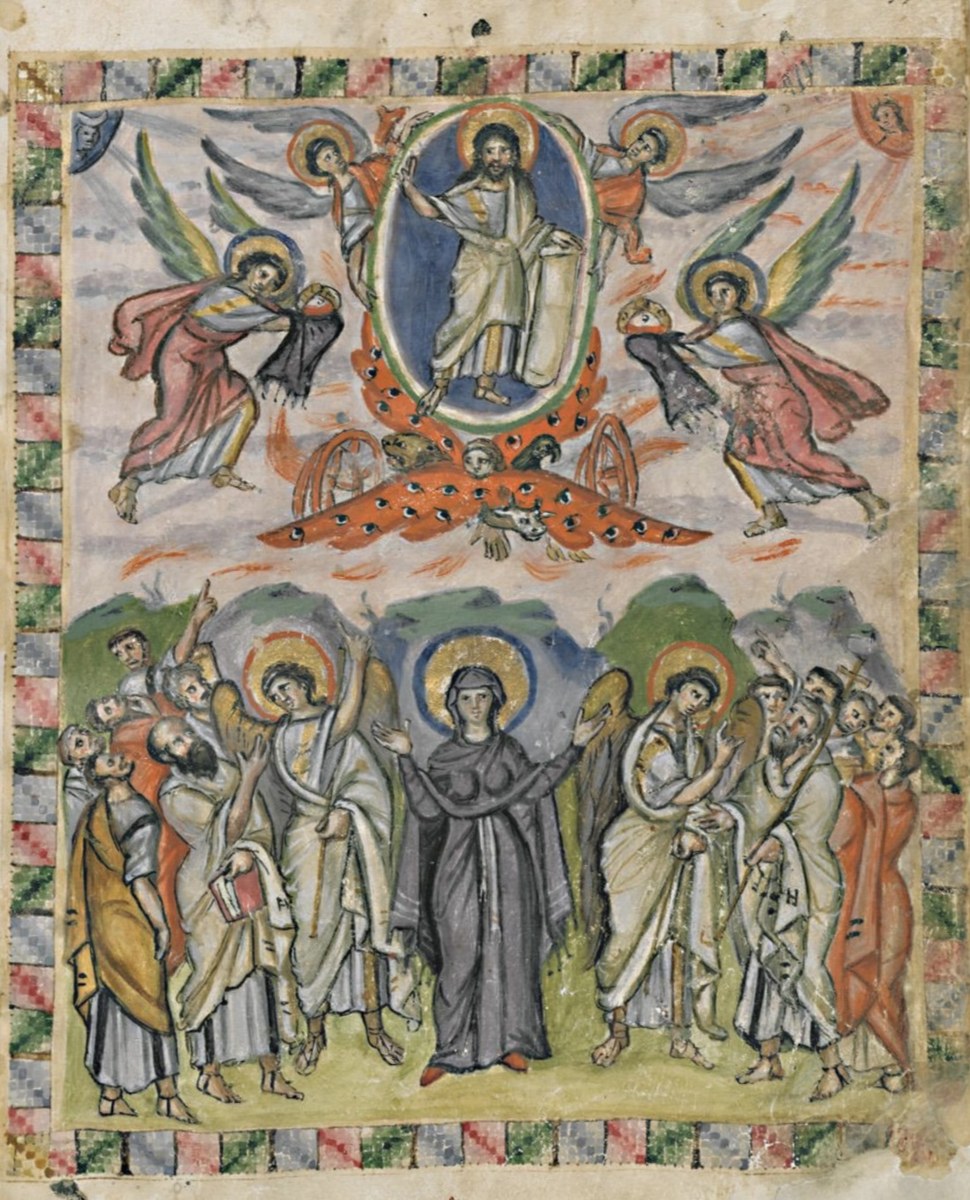
Ascension of the Lord
The Ascension of our Lord, God, and Saviour Jesus Christ
Ascensiontide, day 1 · 39 days since Pascha
Ascension of the Lord

Saints commemorated
-
Hieromartyr Timothy, Bishop of Prussa
-
St John Maximovitch, Metropolitan of Tobolsk
John Maximovich (1651–1715) was Metropolitan of Tobolsk and All Siberia, the last of the great Kievan scholar-bishops of the seventeenth century to be sent east, and the founder of the missionary church of Siberia in its settled form. Born at Nezhin and trained at the Kiev-Mohyla college, where he afterwards taught, he was tonsured at the Kiev Caves monastery, became Archbishop of Chernigov in 1697 — where he founded the school that is reckoned the first seminary in Russia and set up a printing press — and in 1711 was sent as metropolitan to Tobolsk. From there he pressed the Siberian mission to the peoples of the north and east, and in 1714 despatched the mission that was to become the Russian ecclesiastical mission in Peking. He was the author of the Heliotropion (Iliotropion), a treatise on the conforming of the human will to the will of God. He died on 10 June 1715, on his knees at prayer, having that day served the poor at table. He was glorified in 1916.
-
Holy Martyrs Alexander and Antonina (313)
Antonina was a Christian virgin of Krodamon in Asia Minor, celebrated for her beauty and her almsgiving, who was denounced to the governor Festus and, having refused both his threats and his offer to make her a priestess of Artemis, was condemned to be violated in a soldiers' brothel. Alexander, a soldier of the guard and himself secretly a Christian, contrived to enter her cell, gave her his military cloak and helmet, and sent her out disguised as a soldier while he remained in her place. When the substitution was discovered he bore the torments in silence; Antonina returned of her own will to stand beside him. The two had their hands cut off, were smeared with pitch, and were cast into a burning pit, about the year 313. Their relics were afterwards taken to Constantinople.
-
Hieromartyr Metrophanes, first Chinese priest, and the Chinese New Martyrs of the Boxer Uprising (1900)
-
Alexius of Bithynia
Alexius is a bishop in Bithynia commemorated in the Greek synaxaria on June 10, of whom the record preserves nothing but the name, the province, and the fact that he reposed in peace. The Greek calendars carry him with a distich and state expressly that no further details of his life survive. His notice is given here at the length the sources permit.
-
Apollos the Bishop
Apollos — the name appears also as Apollo — is a bishop-saint commemorated in the Greek synaxaria on June 10, of whom nothing whatever is transmitted beyond the fact that he was a bishop and that he reposed in peace. The Greek books carry him with a single distich, and the standard Greek calendars state plainly that no further details of his life survive. He is recorded here at the length the record allows, and no more.
-
Basil of Ryazan
Basil was bishop of Murom and then of Ryazan in the second half of the thirteenth century, in the generation after the Mongol conquest, and is the chief hierarch-saint of the Ryazan land. His life is remembered for one thing above all: slandered by his own people at Murom and driven out, he spread his episcopal mantiya upon the water of the Oka, stood upon it holding the Murom icon of the Mother of God, and was carried against the current to Ryazan, where he was received as bishop. He reposed on 3 July 1295. On 10 June 1609, in the Time of Troubles, his relics were uncovered by Archbishop Theodoret of Ryazan and translated into the Dormition cathedral of the Ryazan kremlin, and that day became his second feast. He is invoked in Ryazan against the perils of travel and of drowning.
-
Bassian of Lodi
Bassian was bishop of Lodi (Roman Laus Pompeia) in northern Italy for some thirty-five years at the turn of the fourth and fifth centuries, and is remembered chiefly as the friend and fellow-labourer of Ambrose of Milan, with whom he stood against Arianism in the Italian sees and at whose deathbed he was present in 397. Son of the pagan governor of Syracuse, he was sent to Rome for his education, was catechised there by a presbyter named Gordian, and was baptised against his father's will; he withdrew to Ravenna to live in seclusion, and was consecrated bishop of Lodi by Ambrose and by Ursus of Ravenna about 374. At Lodi he built and, in 381, consecrated a great church of the Holy Apostles. He reposed about 409. The Orthodox calendars keep him on June 10; Lodi and the Western books keep his repose on January 19.
-
Kanides of Cappadocia
Kanides was a Cappadocian ascetic of the fifth century whose whole recorded life is one extreme: he entered a cave on a mountain at the age of seven and never left the ascetic life again, passing some sixty-six years in it and dying at seventy-three, about the year 460. The notice makes his mother the beginning of the story — she is said to have kept a strict abstinence through her pregnancy and to have watched over the child's food afterwards — and dwells on the severity of his rule: one meal a week, of raw vegetables. The damp of the cave, the synaxarion adds, cost him his hair and beard. He is a saint of the Greek synaxaristes, kept on June 10.
-
Neaniskos of Alexandria
Neaniskos is a martyr of Alexandria in the persecution of Diocletian, remembered in the Greek synaxaria under the epithet ὁ σοφώτατος, "the most wise," and described as an athlete of Christ. He was denounced by a slave-girl of his household, tortured for seven days by the prefect Maximus without renouncing Christ, and at last beheaded. The single detail by which his notice is remembered is what he did before his execution: he gave the girl who had betrayed him his gold ring, on the ground that her act had been the means of bringing him to Christ and to eternal life.
-
Roman of Ryazan
Roman Olegovich, prince of Ryazan (c. 1237 – 19 July 1270), was the grandson of princes who died fighting Batu, and the last of his house to die at Tatar hands. Denounced to the khan Mengu-Timur by the baskaki, the tax-farmers of the Horde, on the charge of speaking against the khan and blaspheming the Tatar religion, he was summoned to the camp and offered the choice between apostasy and death. He answered by preaching Christ to his judges, and was put to death by a dismemberment carried out limb by limb while he was still able to speak, his tongue cut out, his eyes put out, and his head at last set on a spear. The Russian Church honours him as a martyr — not merely a passion-bearer — because the demand made of him was explicitly a demand to change his faith.
-
Sabbas of Stagira
Sabbas was a monk of the Athonite Monastery of Konstamonitou, born at Stagira in Chalkidiki in the later eighteenth century, who was killed in 1821, in the year of the Greek rising, while travelling from his monastery in the direction of Zographou, together with a lay servant of the house. The account preserved by the monk Dositheos says that he had foreseen his death, having been warned in a vision that enemies would kill him, and that it fell out as he had been shown. His memory is a recent one in the calendar: his first service was celebrated in 1988, and his first icon painted for that occasion. He is kept on June 10.
-
Silvanus of the Kiev Caves
Silvanus was a schemamonk of the Far Caves of the Monastery of the Caves at Kiev, who laboured there in the thirteenth and fourteenth centuries. His notice preserves a single miracle, and it is a striking one: robbers who broke into the monastery garden were held fast on the spot by his prayer and could not move for three days, until they repented, whereupon he released them. He is commemorated on June 10, again with all the fathers of the Far Caves on August 28, and with the whole company of the Caves on the Second Sunday of Great Lent. He is not the twentieth-century Athonite elder Silouan, with whom his name is often confused.
-
Sophronius of Irkutsk
Sophronius, Bishop of Irkutsk and Nerchinsk — in the liturgical style "of Irkutsk and all Siberia" — was one of the great missionary hierarchs of the eighteenth-century Russian Church, a Ukrainian monk of the Poltava country who was sent in 1753 to a diocese the size of a continent and governed it for seventeen years, founding its seminary, ordaining and disciplining a scattered and half-trained clergy, and travelling to Nerchinsk, Kirensk and Yakutsk. He reposed on 30 March 1771, in Bright Week; and because the Holy Synod took six months to decide where he should be buried, his body lay unburied through a Siberian summer and was found undecayed — the beginning of a veneration that examinations in 1833, 1854, 1870 and 1909 did nothing to check. A fire in the Theophany Cathedral at Irkutsk on 18 April 1917 consumed the shrine and left only his bones; a year later the Local Council of the Russian Church glorified him, and the glorification was solemnly completed on 30 June 1918, which is the day this collection keeps as the second of his feasts.
-
Theophanes and Pansemne
Theophanes was a young man of Antioch, born of pagan parents, who was widowed three years after his marriage, came to Christ, was baptised, gave away what he had, and shut himself in a cell outside the city. Hearing of Pansemne, a harlot of Antioch who had ruined many, he took the one course he thought might save her: he dressed himself richly, took a quantity of gold, went to her, and offered her marriage — on condition that she be baptised and leave her trade. She agreed; and being instructed and baptised, she was changed altogether, distributed the money she had got by her sin, and built herself a cell beside his. She lived in it twenty-two months. Both reposed in the year 369, on one and the same day, and are commemorated together on June 10.
-
Timothy of Prusa
Timothy was bishop of Prusa in Bithynia (the modern Bursa) in the middle of the fourth century, honoured by the synaxaria as a wonderworker whose gift of miracles was ascribed to the purity of his life. He converted a great part of the still-pagan population of his city, and the tradition remembers him above all for destroying a dragon that had made the road between Prusa and its famous hot springs impassable. When the apostate emperor Julian learned of the miracle and of the bishop's success in preaching Christ, he had him imprisoned; Timothy went on teaching from his cell, and about the year 362 was beheaded by the emperor's order. His relics were afterwards carried to Constantinople, where a church was dedicated to him.
British Isles and Ireland
- St. Illadan, bishop of Rathlihen (6th C)
- St. Ithamar, 1st English bishop of Rochester (c.656)
Troparia & kontakia
Apolytikion — Tone 4
Thou wast taken up in glory, O Christ our God, and didst gladden thy disciples with the promise of the Holy Spirit; and by the blessing they were made certain that thou art the Son of God, the Redeemer of the world.
Apolytikion — Tone 4 (common of two martyrs)
Thy martyrs Alexander and Antonina, O Lord, in their contest received from Thee our God the crowns of incorruption; for possessing Thy strength, they cast down the tyrants and shattered the feeble insolence of the demons. By their intercessions save our souls.
Apolytikion — Tone 4 (common of a hierarch)
O God of our fathers, who dealest ever with us according to Thy gentleness: take not Thy mercy from us, but by the prayers of Thy hierarch Alexius, guide our life in peace.
Apolytikion — Tone 4 (common of a hierarch)
O God of our fathers, who dealest ever with us according to Thy gentleness: take not Thy mercy from us, but by the prayers of Thy hierarch Apollos, guide our life in peace.
Apolytikion — Tone 4 (common of a hierarch)
O God of our fathers, who dealest ever with us according to Thy gentleness: take not Thy mercy from us, but by the prayers of Thy hierarch Bassian, guide our life in peace.
Apolytikion — Tone 8 (common of a venerable father)
In thee, O Father, the image of God was preserved unimpaired: for taking up the cross thou didst follow Christ, and by thy deeds thou hast taught us to despise the flesh, which passeth away, and to care for the soul, which is immortal. Wherefore, O venerable Kanides, thy spirit rejoiceth with the angels.
Apolytikion — Tone 4 (common of a martyr)
Thy martyr Neaniskos, O Lord, in his contest received an incorruptible crown from Thee, our God; for possessing Thy strength, he cast down the tyrants and shattered the feeble insolence of the demons. By his intercessions save our souls.
Apolytikion — Tone 4 (common of a venerable-martyr)
Thou didst make of the ascetic struggle a preparation for the contest, O father Sabbas, and having been forewarned of thy end thou didst go to meet it without turning aside; wherefore, having been offered on the Mountain as a sacrifice acceptable to God, thou dost intercede for our souls.
Apolytikion — Tone 8 (common of venerable ascetics)
In you, O saints, the image of God was preserved unimpaired: for taking up the cross you followed Christ, and by your deeds you have taught us to despise the flesh, which passeth away, and to care for the soul, which is immortal. Wherefore, O venerable Theophanes and Pansemne, your spirits rejoice with the angels.
Apolytikion — Tone 4 (common of a hieromartyr)
As a sharer in the ways and a successor to the throne of the Apostles, O divinely-inspired one, thou didst find in the practice of virtue the way of ascent to contemplation; rightly dividing the word of truth, thou didst contend for the faith even unto blood, O hieromartyr Timothy: intercede with Christ God that our souls may be saved.
Apolytikion — Tone 4
Thou wast taken up in glory, O Christ our God, and didst gladden thy disciples with the promise of the Holy Spirit; and by the blessing they were made certain that thou art the Son of God, the Redeemer of the world.
Apolytikion — Tone 4 (common of two martyrs)
Thy martyrs Alexander and Antonina, O Lord, in their contest received from Thee our God the crowns of incorruption; for possessing Thy strength, they cast down the tyrants and shattered the feeble insolence of the demons. By their intercessions save our souls.
Apolytikion — Tone 4 (common of a hierarch)
O God of our fathers, who dealest ever with us according to Thy gentleness: take not Thy mercy from us, but by the prayers of Thy hierarch Alexius, guide our life in peace.
Apolytikion — Tone 4 (common of a hierarch)
O God of our fathers, who dealest ever with us according to Thy gentleness: take not Thy mercy from us, but by the prayers of Thy hierarch Apollos, guide our life in peace.
Apolytikion — Tone 4 (common of a hierarch)
O God of our fathers, who dealest ever with us according to Thy gentleness: take not Thy mercy from us, but by the prayers of Thy hierarch Bassian, guide our life in peace.
Apolytikion — Tone 8 (common of a venerable father)
In thee, O Father, the image of God was preserved unimpaired: for taking up the cross thou didst follow Christ, and by thy deeds thou hast taught us to despise the flesh, which passeth away, and to care for the soul, which is immortal. Wherefore, O venerable Kanides, thy spirit rejoiceth with the angels.
Apolytikion — Tone 4 (common of a martyr)
Thy martyr Neaniskos, O Lord, in his contest received an incorruptible crown from Thee, our God; for possessing Thy strength, he cast down the tyrants and shattered the feeble insolence of the demons. By his intercessions save our souls.
Apolytikion — Tone 4 (common of a venerable-martyr)
Thou didst make of the ascetic struggle a preparation for the contest, O father Sabbas, and having been forewarned of thy end thou didst go to meet it without turning aside; wherefore, having been offered on the Mountain as a sacrifice acceptable to God, thou dost intercede for our souls.
Apolytikion — Tone 8 (common of venerable ascetics)
In you, O saints, the image of God was preserved unimpaired: for taking up the cross you followed Christ, and by your deeds you have taught us to despise the flesh, which passeth away, and to care for the soul, which is immortal. Wherefore, O venerable Theophanes and Pansemne, your spirits rejoice with the angels.
Apolytikion — Tone 4 (common of a hieromartyr)
As a sharer in the ways and a successor to the throne of the Apostles, O divinely-inspired one, thou didst find in the practice of virtue the way of ascent to contemplation; rightly dividing the word of truth, thou didst contend for the faith even unto blood, O hieromartyr Timothy: intercede with Christ God that our souls may be saved.
Exapostilarion — Tone 2 (sung three times)
Before the eyes of thy disciples thou wast taken up, O Christ, to be enthroned together with the Father; and the angels running on before thee cried aloud: Lift up the gates, lift them up, for the King has gone up to the glory that is the source of light.
Exapostilarion — Tone 2 (sung three times)
Before the eyes of thy disciples thou wast taken up, O Christ, to be enthroned together with the Father; and the angels running on before thee cried aloud: Lift up the gates, lift them up, for the King has gone up to the glory that is the source of light.
Kontakion — Tone 6
Having fulfilled the dispensation for our sake, and united the things of earth with the things of heaven, thou wast taken up in glory, O Christ our God, in no way parted from us, but remaining inseparable and crying to those who love thee: I am with you, and no one is against you. Leaving on earth the things of earth, and yielding the ashes to the dust, come, let us wake and lift up our eyes and our thoughts on high; let us mortals send our sight and our senses together flying toward the gates of heaven; let us reckon that we are on the Mount of Olives and are gazing upon the Redeemer as he is borne upon a cloud.
Kontakion — Tone 4 (common of martyrs)
The valiant soldier gave his own garments to the virgin, and put on in their stead the raiment of martyrdom; and she, refusing to be saved alone, returned to stand at his side. Wherefore, O Alexander and Antonina, being crowned together, ye intercede together for our souls.
Kontakion — Tone 8 (composed on the tradition)
Borne upon thy mantle against the stream, and bearing in thy hands the image of the Mother of God, thou didst come to Ryazan a bishop justified by heaven, O father Basil; wherefore be thou a guide to all who travel, and a helper to those who are in peril of the waters.
Kontakion — Tone 4 (composed on the Heliotropion)
As the sunflower turns unceasing to the sun, so didst thou teach us to turn the will of man to the will of God, O hierarch John; and having served the poor at thy table, thou wast found upon thy knees, thy prayer unfinished and thy course fulfilled.
Kontakion — Tone 2
Offered the choice of thy faith or thy life, thou didst count thy life the lesser thing, O right-believing Roman; and when they took away thy tongue thou didst confess with thy blood what thou couldst no longer speak. Wherefore, O martyr-prince, entreat Christ God for the land that bore thee.
Kontakion — Tone 2 (composed on the notice)
Thieves in the night thou didst bind, not with cords but with prayer, and didst loose them when they had repented, O father Silvanus; wherefore bind thou our thieving thoughts, and loose us when we turn to Christ.
Kontakion — Tone 3 (common of the penitent)
Thou didst put off the habit of the desert and put on the raiment of the rich, that thou mightest buy back a soul that was sold, O wise Theophanes; and she who had been all shame became all modesty indeed. Wherefore we honour you both, who in two cells and on one day were made worthy of one crown.
Kontakion — Tone 4 (common of a hieromartyr)
Having shone forth in Bithynia as a lamp of the priesthood, thou didst quench the venom of the serpent by thy prayer and the malice of the tyrant by thy blood, O wise Timothy; wherefore, as a wonderworker and a martyr, thou pourest healing upon those who honour thee.
Kontakion — Tone 6
Having fulfilled the dispensation for our sake, and united the things of earth with the things of heaven, thou wast taken up in glory, O Christ our God, in no way parted from us, but remaining inseparable and crying to those who love thee: I am with you, and no one is against you. Leaving on earth the things of earth, and yielding the ashes to the dust, come, let us wake and lift up our eyes and our thoughts on high; let us mortals send our sight and our senses together flying toward the gates of heaven; let us reckon that we are on the Mount of Olives and are gazing upon the Redeemer as he is borne upon a cloud.
Kontakion — Tone 4 (common of martyrs)
The valiant soldier gave his own garments to the virgin, and put on in their stead the raiment of martyrdom; and she, refusing to be saved alone, returned to stand at his side. Wherefore, O Alexander and Antonina, being crowned together, ye intercede together for our souls.
Kontakion — Tone 8 (composed on the tradition)
Borne upon thy mantle against the stream, and bearing in thy hands the image of the Mother of God, thou didst come to Ryazan a bishop justified by heaven, O father Basil; wherefore be thou a guide to all who travel, and a helper to those who are in peril of the waters.
Kontakion — Tone 4 (composed on the Heliotropion)
As the sunflower turns unceasing to the sun, so didst thou teach us to turn the will of man to the will of God, O hierarch John; and having served the poor at thy table, thou wast found upon thy knees, thy prayer unfinished and thy course fulfilled.
Kontakion — Tone 2
Offered the choice of thy faith or thy life, thou didst count thy life the lesser thing, O right-believing Roman; and when they took away thy tongue thou didst confess with thy blood what thou couldst no longer speak. Wherefore, O martyr-prince, entreat Christ God for the land that bore thee.
Kontakion — Tone 2 (composed on the notice)
Thieves in the night thou didst bind, not with cords but with prayer, and didst loose them when they had repented, O father Silvanus; wherefore bind thou our thieving thoughts, and loose us when we turn to Christ.
Kontakion — Tone 3 (common of the penitent)
Thou didst put off the habit of the desert and put on the raiment of the rich, that thou mightest buy back a soul that was sold, O wise Theophanes; and she who had been all shame became all modesty indeed. Wherefore we honour you both, who in two cells and on one day were made worthy of one crown.
Kontakion — Tone 4 (common of a hieromartyr)
Having shone forth in Bithynia as a lamp of the priesthood, thou didst quench the venom of the serpent by thy prayer and the malice of the tyrant by thy blood, O wise Timothy; wherefore, as a wonderworker and a martyr, thou pourest healing upon those who honour thee.
The
O Lord, having in thy goodness fulfilled the mystery hidden from the ages and from the generations, thou didst come with thy disciples to the Mount of Olives, having with thee her who bore thee, the Maker and Fashioner of all things; for she who as a mother grieved above all others in thy Passion had also to enjoy the surpassing joy of the glorifying of thy flesh — in which we too, sharing it, glorify at thine ascent into the heavens, O Master, thy great mercy that has come upon us.
The
O Lord, having in thy goodness fulfilled the mystery hidden from the ages and from the generations, thou didst come with thy disciples to the Mount of Olives, having with thee her who bore thee, the Maker and Fashioner of all things; for she who as a mother grieved above all others in thy Passion had also to enjoy the surpassing joy of the glorifying of thy flesh — in which we too, sharing it, glorify at thine ascent into the heavens, O Master, thy great mercy that has come upon us.
Troparion — Tone 4 (common of a hierarch)
O God of our fathers, who dealest ever with us according to Thy gentleness: take not Thy mercy from us, but by the prayers of Thy hierarch Basil, guide our life in peace.
Troparion — Tone 8 (common of a hierarch)
O God of our fathers, who dealest ever with us according to Thy gentleness: take not Thy mercy from us, but by the prayers of Thy hierarch John, guide our life in peace.
Troparion — Tone 4 (common of a martyr)
Thy martyr Roman, O Lord, in his contest received from Thee our God an incorruptible crown; for having Thy strength, he cast down the tyrants and shattered the feeble insolence of the demons. By his intercessions save our souls.
Troparion — Tone 8 (common of a venerable monastic)
In thee, O Father, the image of God was preserved unimpaired: for taking up the cross thou didst follow Christ, and by thy deeds thou hast taught us to despise the flesh, which passeth away, and to care for the soul, which is immortal. Wherefore, O venerable Silvanus, thy spirit rejoiceth with the angels.
Troparion — Tone 4
O God of our fathers, who dealest with us ever according to thy gentleness, take not thy mercy from us; but by the prayers of thy hierarch Sophronius, guide our life in peace.
Troparion — Tone 4 (common of a hierarch)
O God of our fathers, who dealest ever with us according to Thy gentleness: take not Thy mercy from us, but by the prayers of Thy hierarch Basil, guide our life in peace.
Troparion — Tone 8 (common of a hierarch)
O God of our fathers, who dealest ever with us according to Thy gentleness: take not Thy mercy from us, but by the prayers of Thy hierarch John, guide our life in peace.
Troparion — Tone 4 (common of a martyr)
Thy martyr Roman, O Lord, in his contest received from Thee our God an incorruptible crown; for having Thy strength, he cast down the tyrants and shattered the feeble insolence of the demons. By his intercessions save our souls.
Troparion — Tone 8 (common of a venerable monastic)
In thee, O Father, the image of God was preserved unimpaired: for taking up the cross thou didst follow Christ, and by thy deeds thou hast taught us to despise the flesh, which passeth away, and to care for the soul, which is immortal. Wherefore, O venerable Silvanus, thy spirit rejoiceth with the angels.
Troparion — Tone 4
O God of our fathers, who dealest with us ever according to thy gentleness, take not thy mercy from us; but by the prayers of thy hierarch Sophronius, guide our life in peace.
Readings
Vespers
Isaiah 2.2-3
2And it shall come to pass in the last days, that the mountain of the LORD’s house shall be established in the top of the mountains, and shall be exalted above the hills; and all nations shall flow unto it. 3And many people shall go and say, Come ye, and let us go up to the mountain of the LORD, to the house of the God of Jacob; and he will teach us of his ways, and we will walk in his paths: for out of Zion shall go forth the law, and the word of the LORD from Jerusalem.
Composite 21 - Isaiah 62.10-63.3, 7-9
1Thus says the Lord: Walk, go through my gates; prepare my way and make a way for my people, and cast the stones out of the way; raise up a standard for the nations. For see, the Lord has made it heard to the ends of the earth: Say to the daughter of Sion: See, your Saviour has come, and his reward is with him, and his work before his face. And he will call it a holy people, redeemed by the Lord; while you will be called a city sought after, and not forsaken. Who is this who comes from Edom, the scarlet of his garments from Bosor, thus beautiful in his apparel? He cries out with much strength. I reason of justice and judgement of salvation. Why are your garments red, and your clothing as from a trodden winepress? I am full of the trodden grape; I have trampled the winepress quite alone, and no man from the nations was with me. I have remembered the mercy of the Lord, I will recall the Lord’s virtues, the Lord’s praise for all the things with which He rewards us. The Lord is a good judge for the house of Israel; he deals with us according to his mercy and according to the multitude of his justice. And he said: Are you not my people? Children will surely not be rebellious; and he became for them salvation out of their every distress. It was not an emissary, not an Angel, but the Lord himself saved them because he loved them and spared them. He redeemed them and took them up and exalted them all the days of the age.
Composite 22 - Zechariah 14.1, 4, 8-11
1Thus says the Lord: See, the day of the Lord is coming, and on that day his feet will stand upon the mount of Olives, opposite Jerusalem, where the sun rises. And on that day living water will come out from Jerusalem, half towards the first sea and half towards the last sea; in spring and in summer it shall be so; and the Lord will be for a King over all the earth; in that day there shall be one Lord, and his name, compassing all the earth and the wilderness from Gabaa as far as Remmon, south of Jerusalem; and he shall be exalted and remain on his place from the gate of Benjamin as far as the place of the first gate, as far as the gate of Gomor and as far as the tower of Anameël and as far as the tower of the corners and as far as the king’s winepresses; they shall dwell in it and there shall be no more curse and Jerusalem shall dwell confidently.
Matins Gospel
Mark 16.9-20
9Now when Jesus was risen early the first day of the week, he appeared first to Mary Magdalene, out of whom he had cast seven devils. 10And she went and told them that had been with him, as they mourned and wept. 11And they, when they had heard that he was alive, and had been seen of her, believed not. 12After that he appeared in another form unto two of them, as they walked, and went into the country. 13And they went and told it unto the residue: neither believed they them. 14Afterward he appeared unto the eleven as they sat at meat, and upbraided them with their unbelief and hardness of heart, because they believed not them which had seen him after he was risen. 15And he said unto them, Go ye into all the world, and preach the gospel to every creature. 16He that believeth and is baptized shall be saved; but he that believeth not shall be damned. 17And these signs shall follow them that believe; In my name shall they cast out devils; they shall speak with new tongues; 18They shall take up serpents; and if they drink any deadly thing, it shall not hurt them; they shall lay hands on the sick, and they shall recover. 19So then after the Lord had spoken unto them, he was received up into heaven, and sat on the right hand of God. 20And they went forth, and preached every where, the Lord working with them, and confirming the word with signs following. Amen.
Epistle
Acts 1.1-12
1The former treatise have I made, O Theophilus, of all that Jesus began both to do and teach, 2Until the day in which he was taken up, after that he through the Holy Ghost had given commandments unto the apostles whom he had chosen: 3To whom also he shewed himself alive after his passion by many infallible proofs, being seen of them forty days, and speaking of the things pertaining to the kingdom of God: 4And, being assembled together with them, commanded them that they should not depart from Jerusalem, but wait for the promise of the Father, which, saith he, ye have heard of me. 5For John truly baptized with water; but ye shall be baptized with the Holy Ghost not many days hence. 6When they therefore were come together, they asked of him, saying, Lord, wilt thou at this time restore again the kingdom to Israel? 7And he said unto them, It is not for you to know the times or the seasons, which the Father hath put in his own power. 8But ye shall receive power, after that the Holy Ghost is come upon you: and ye shall be witnesses unto me both in Jerusalem, and in all Judæa, and in Samaria, and unto the uttermost part of the earth. 9And when he had spoken these things, while they beheld, he was taken up; and a cloud received him out of their sight. 10And while they looked stedfastly toward heaven as he went up, behold, two men stood by them in white apparel; 11Which also said, Ye men of Galilee, why stand ye gazing up into heaven? this same Jesus, which is taken up from you into heaven, shall so come in like manner as ye have seen him go into heaven. 12Then returned they unto Jerusalem from the mount called Olivet, which is from Jerusalem a sabbath day’s journey.
Gospel
Luke 24.36-53
36And as they thus spake, Jesus himself stood in the midst of them, and saith unto them, Peace be unto you. 37But they were terrified and affrighted, and supposed that they had seen a spirit. 38And he said unto them, Why are ye troubled? and why do thoughts arise in your hearts? 39Behold my hands and my feet, that it is I myself: handle me, and see; for a spirit hath not flesh and bones, as ye see me have. 40And when he had thus spoken, he shewed them his hands and his feet. 41And while they yet believed not for joy, and wondered, he said unto them, Have ye here any meat? 42And they gave him a piece of a broiled fish, and of an honeycomb. 43And he took it, and did eat before them. 44And he said unto them, These are the words which I spake unto you, while I was yet with you, that all things must be fulfilled, which were written in the law of Moses, and in the prophets, and in the psalms, concerning me. 45Then opened he their understanding, that they might understand the scriptures, 46And said unto them, Thus it is written, and thus it behoved Christ to suffer, and to rise from the dead the third day: 47And that repentance and remission of sins should be preached in his name among all nations, beginning at Jerusalem. 48And ye are witnesses of these things. 49And, behold, I send the promise of my Father upon you: but tarry ye in the city of Jerusalem, until ye be endued with power from on high. 50And he led them out as far as to Bethany, and he lifted up his hands, and blessed them. 51And it came to pass, while he blessed them, he was parted from them, and carried up into heaven. 52And they worshipped him, and returned to Jerusalem with great joy: 53And were continually in the temple, praising and blessing God. Amen.