
Paschaltide, day 4 · 3 days since Pascha
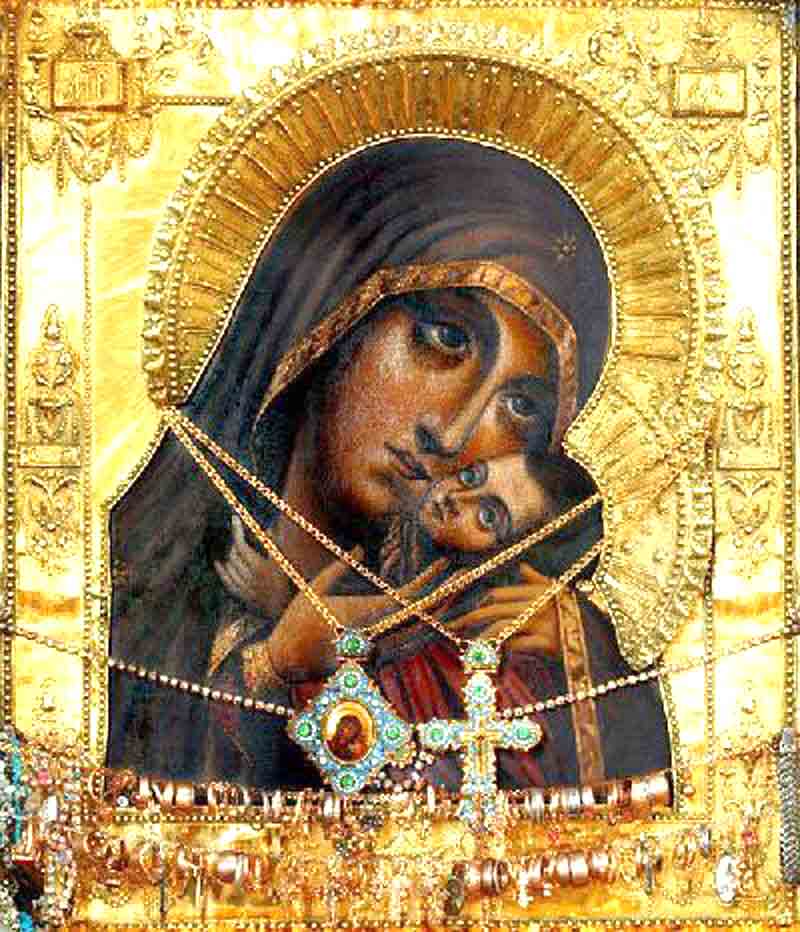
About Kasperov Icon of the Mother of God →

Saints commemorated
-
Prophet Jeremiah
Jeremiah is the second of the four Greater Prophets, the priest of Anathoth who was called as a boy in the thirteenth year of Josiah and prophesied for some forty years, through the reigns of five kings, until Jerusalem fell and the Temple burned. To him was given the bitterest of all prophetic commissions: to announce the ruin of his own city, to be hated for it by priests, princes and people, beaten, put in the stocks, imprisoned and let down into a miry cistern to die — and yet to promise, at the very bottom of the catastrophe, a new covenant written not on tablets but on the heart (Jeremiah 31:31–34), the text that gives the New Testament its name. Dragged into Egypt by the fleeing remnant against his own warning, he was stoned to death by his countrymen at Tahpanhes. The Church honours him on May 1 as prophet and martyr, reads him through Holy Week as the figure of the innocent Lamb led to slaughter, and ascribes to him the Book of Jeremiah and the Lamentations.
-
Ven. Paphnutius of Borovsk
Paphnutius (1394–1477) is one of the great abbots of the northern Russian revival that descended from Saint Sergius of Radonezh. Grandson of a baptised Tatar tax-collector, he was tonsured at twenty in the Protection monastery on the Vysokoye near Borovsk, served there some thirty years and became its abbot; then at fifty-one, after an illness he had thought mortal, he left his own house and began again in the forest at the mouth of the Isterma on the Protva, founding the monastery of the Nativity of the Theotokos that has borne his name ever since. He was a builder, a strict ascetic who ate nothing at all on Mondays and Fridays, and a spiritual father of the first rank: it was Paphnutius who tonsured the young John Sanin and gave him the name Joseph — Saint Joseph of Volokolamsk. He reposed on May 1, 1477, and was glorified in 1531.
-
Saint Tamara (Tamar), Queen of Georgia (1212)
Tamara (c. 1166–1213) is the queen under whom Georgia reached the height of its power and holiness, and whom her own people call not queen but king — mepe — because she ruled in her own right. Daughter of George III of the Bagratid house, crowned co-ruler at about twelve and sole sovereign at eighteen, she opened her reign by summoning a council that purged the Church of simony, and closed it having doubled her kingdom: the victories of Shamkor (1195) and Basiani (1203) broke the Muslim coalitions ranged against her, and Georgian arms reached from the Black Sea to the Caspian. She abolished capital punishment and torture, endowed churches and monasteries from Vardzia to Athos, Palestine, Cyprus, Sinai and Antioch, wove vestments with her own hands, and lived beneath the purple as an ascetic. To her court belongs the golden age of Georgian letters, and Shota Rustaveli's Knight in the Panther's Skin is dedicated to her. She reposed in 1213 and is honoured on May 1 and on the Sunday of the Myrrh-bearing Women.
-
Synaxis of the Three New Righteous Martyrs of the Holy Mountain, Euthymius, Ignatius, and Acacius (1814-1815)
Three young monks of the Holy Mountain, formed by the same elders and following one another deliberately to death, are commemorated together on May 1 as the new martyrs of Athos: Euthymius, a Peloponnesian who had denied Christ in Constantinople and returned to wash the apostasy away with his blood, beheaded — in the event, his throat cut — on Palm Sunday, 22 March 1814; Ignatius, a Bulgarian of Stara Zagora, hanged at the Daktyloporta in Constantinople in October 1814; and Acacius, a Bulgarian of Macedonia, beheaded at Parmak Kapi on 1 May 1816. All three were prepared for their contest at the Skete of Saint Anne and at Iveron under the elder Acacius and under Nicephorus of Chios, the "trainer of martyrs"; all three were accompanied to the city by the same monk Gregory, who afterwards ransomed their bodies and brought them home. Their relics were laid at Iveron in a church built for the first two, and their heads are venerated at the Russian monastery of Saint Panteleimon.
-
Batas of Nisibis
Batas was a monk of the Church of Persia in the fourth century who was put to death at Nisibis for confessing Christ, about the year 364, in the persecution of the Christians carried on under Shapur II. The synaxaria preserve almost nothing beyond the fact and the place, and this entry does not go beyond what they say; but the fact is eloquent enough, for Nisibis had just passed from Roman into Persian hands, and Batas belongs to the first generation of monks who paid for their faith under the new masters of the city that had been Saint Ephrem's.
-
Gerasimus of Boldino
Gerasimus (1490–1554) was the great monastic coloniser of the Smolensk lands. Born at Pereslavl-Zalessky, he attached himself at thirteen to Saint Daniel of Pereyaslavl and spent some twenty-six years under him, becoming known in Moscow as an ascetic of the strictest kind; then, seeking obscurity, he went west into the wild forest near Dorogobuzh, settled beside a great oak at Boldino, was beaten and driven off by robbers, and stayed. Out of that solitude grew four monasteries — the Trinity at Boldino (1530), the Forerunner at Vyazma, the Entry of the Theotokos on the Zhizdra in the Bryansk forest, and a fourth house at Bryansk — and a school of disciples that included Anthony, later bishop of Vologda. He dictated a testament to his brethren, and reposed on 1 May 1554.
-
Isidora of Tabenna
Isidora is the first fool-for-Christ whose story the Church records — a nun of the great Pachomian women's monastery at Tabennisi in the Egyptian Thebaid in the middle of the fourth century, who deliberately made herself despised. She wore a rag on her head instead of the monastic cowl, never sat at table but lived on the crumbs and the scourings of the pots, served four hundred sisters who mocked, struck and drenched her, and never in all those years spoke an idle or a resentful word. Her secret was disclosed by an angel to the hermit Piteroum, who was sent to the monastery to find "one wearing a crown upon her head" and holier than himself; and when the honour of the community turned upon her, she slipped away and was never found again. Her account, written by Palladius within living memory, is the foundation-text of the whole tradition of holy folly.
-
Macarius of Kiev
Macarius, Metropolitan of Kiev and All Rus (1495–1497), was killed by a Tatar raiding party at the altar, in the middle of the Divine Liturgy, in the village of Strigolovo on the river Vzhishcha, on 1 May 1497. Formerly archimandrite of the Holy Trinity monastery in Vilna, he was raised to the metropolitan throne of the western Russian lands at a moment when the Church there was pressed between the Grand Duchy of Lithuania, the Latin hierarchy and the Crimean Tatars, and he spent his short episcopate travelling his ruined diocese to rebuild what the raids had destroyed. He died vested and serving, having told the people to flee and refused to leave the holy table. His incorrupt relics rest in Kiev, and he is honoured as the hieromartyr of the Kievan see.
-
Nicephorus of Chios
Nicephorus of Chios (c. 1750–1821) was a monk, teacher, hymnographer and — the title by which the tradition knows him — a trainer of martyrs. Dedicated as a child to the monastery of Nea Moni on Chios after surviving a plague, educated in the schools of the island, he became the disciple and collaborator of two of the leading figures of the Greek spiritual revival, Macarius of Corinth and Athanasius Parios. Driven from the abbacy of Nea Moni by intrigue, he withdrew to the hermitage of Saint George at Resta, where he planted trees, wrote, and completed the great collection of saints' lives and services which Macarius had entrusted to him, the New Leimonarion. He composed services for a multitude of saints, and above all he prepared repentant apostates for martyrdom, among them the Athonite new martyrs Euthymius, Ignatius and Acacius, with whom he is commemorated on May 1. He reposed in 1821, and his relics were found in 1845.
-
Panaretus of Paphos
Panaretus (c. 1710–1790) was bishop of Paphos in Cyprus for twenty-three years, in the hardest decades of Ottoman rule on the island, and is honoured as one of the very few eighteenth-century Cypriot hierarchs glorified as a saint. Born at Peristeronopigi in the Famagusta district and formed as a monk at the monastery of Saint Anastasius, he was exarch of the archbishopric and abbot in Nicosia before his consecration to Paphos in January 1767. He rebuilt and restored churches across a devastated diocese, defended his flock against the extortions of the Ottoman governors, and paid for the printing of books; and beneath all of it he lived as an ascetic, eating once a day and wearing an iron chain next to the skin. He foretold his own repose, was granted the arrival of his confessor by what the tradition treats as a miracle, and died in the late spring of 1790. Patriarch Gerasimos III of Constantinople proclaimed his sanctity in 1794, only four years after his death.
British Isles and Ireland
- St. Brioc (510)
- St. Asaph, bishop of Llanelwy (7th C)
- St. Ceallach, bishop of Killala (6th C)
- St. Buriana (Beryan) (6th C)
Readings
Epistle
Acts 2.22-36
22Ye men of Israel, hear these words; Jesus of Nazareth, a man approved of God among you by miracles and wonders and signs, which God did by him in the midst of you, as ye yourselves also know: 23Him, being delivered by the determinate counsel and foreknowledge of God, ye have taken, and by wicked hands have crucified and slain: 24Whom God hath raised up, having loosed the pains of death: because it was not possible that he should be holden of it. 25For David speaketh concerning him, I foresaw the Lord always before my face, for he is on my right hand, that I should not be moved: 26Therefore did my heart rejoice, and my tongue was glad; moreover also my flesh shall rest in hope: 27Because thou wilt not leave my soul in hell, neither wilt thou suffer thine Holy One to see corruption. 28Thou hast made known to me the ways of life; thou shalt make me full of joy with thy countenance. 29Men and brethren, let me freely speak unto you of the patriarch David, that he is both dead and buried, and his sepulchre is with us unto this day. 30Therefore being a prophet, and knowing that God had sworn with an oath to him, that of the fruit of his loins, according to the flesh, he would raise up Christ to sit on his throne; 31He seeing this before spake of the resurrection of Christ, that his soul was not left in hell, neither his flesh did see corruption. 32This Jesus hath God raised up, whereof we all are witnesses. 33Therefore being by the right hand of God exalted, and having received of the Father the promise of the Holy Ghost, he hath shed forth this, which ye now see and hear. 34For David is not ascended into the heavens: but he saith himself, The LORD said unto my Lord, Sit thou on my right hand, 35Until I make thy foes thy footstool. 36Therefore let all the house of Israel know assuredly, that God hath made that same Jesus, whom ye have crucified, both Lord and Christ.
Gospel
John 1.35-51
35Again the next day after John stood, and two of his disciples; 36And looking upon Jesus as he walked, he saith, Behold the Lamb of God! 37And the two disciples heard him speak, and they followed Jesus. 38Then Jesus turned, and saw them following, and saith unto them, What seek ye? They said unto him, Rabbi, (which is to say, being interpreted, Master,) where dwellest thou? 39He saith unto them, Come and see. They came and saw where he dwelt, and abode with him that day: for it was about the tenth hour. 40One of the two which heard John speak, and followed him, was Andrew, Simon Peter’s brother. 41He first findeth his own brother Simon, and saith unto him, We have found the Messias, which is, being interpreted, the Christ. 42And he brought him to Jesus. And when Jesus beheld him, he said, Thou art Simon the son of Jona: thou shalt be called Cephas, which is by interpretation, A stone. 43The day following Jesus would go forth into Galilee, and findeth Philip, and saith unto him, Follow me. 44Now Philip was of Bethsaida, the city of Andrew and Peter. 45Philip findeth Nathanael, and saith unto him, We have found him, of whom Moses in the law, and the prophets, did write, Jesus of Nazareth, the son of Joseph. 46And Nathanael said unto him, Can there any good thing come out of Nazareth? Philip saith unto him, Come and see. 47Jesus saw Nathanael coming to him, and saith of him, Behold an Israelite indeed, in whom is no guile! 48Nathanael saith unto him, Whence knowest thou me? Jesus answered and said unto him, Before that Philip called thee, when thou wast under the fig tree, I saw thee. 49Nathanael answered and saith unto him, Rabbi, thou art the Son of God; thou art the King of Israel. 50Jesus answered and said unto him, Because I said unto thee, I saw thee under the fig tree, believest thou? thou shalt see greater things than these. 51And he saith unto him, Verily, verily, I say unto you, Hereafter ye shall see heaven open, and the angels of God ascending and descending upon the Son of man.
Troparia & kontakia
Apolytikion — Tone 4 (common of a hierarch)
O God of our fathers, who dealest with us ever according to thy gentleness, take not thy mercy from us, but by the prayers of thy hierarch Panaretus direct our life in peace.
Kontakion — Tone 6
Protection of Christians that cannot be put to shame, mediation unto the Creator unfailing: despise not the suppliant voices of sinners, but be quick to help us who cry to thee in faith; hasten to intercession and make speed to entreaty, O Theotokos, who dost ever protect them that honour thee.
Kontakion — Tone 4
Having washed away by your blood the denial into which you had fallen, O thrice-blessed ones, you returned to Christ by the way of the sword and the rope; wherefore the Holy Mountain that nurtured you rejoices, and we cry to you: Rejoice, Euthymius, Ignatius and Acacius, boast of the new martyrs.
Kontakion — Tone 3
Thy heart being cleansed by the Spirit, O glorious prophet and martyr Jeremiah, thou didst become a great vessel of prophecy, beholding things far off as though they were present. Therefore, being stoned by thy own people, thou dost never cease to intercede for the world, O adornment of the prophets.
Kontakion — Tone 8 (common of a venerable father)
Having from childhood offered thyself wholly to God, and despising the ease of the flesh, thou wast shown forth as a lamp of the desert and a father of monks; wherefore we cry to thee: Rejoice, O Paphnutius, unshaken pillar of the monastic life.
Kontakion
Having preserved thy soul unspotted in the midst of a kingdom, and having clothed the naked and comforted the afflicted, thou wast shown forth as a bright lamp of thy land, O most praised Tamara; wherefore we cry to thee: Rejoice, boast and protection of Georgia.
Troparion — Tone 4
To the Theotokos let us now run in haste, we sinners and lowly ones, and let us fall down in repentance, crying from the depth of our soul: O Lady, help us, having compassion upon us; make haste, for we perish from the multitude of our transgressions; turn not thy servants away empty, for thee alone have we as our hope.
Troparion — Tone 4 (common of a martyr)
Thy martyr Batas, O Lord, in his contest received an incorruptible crown from thee, our God; for possessing thy strength, he cast down the tyrants and shattered the feeble insolence of the demons. By his intercessions save our souls.
Troparion — Tone 4 (common of several martyrs)
Thy martyrs, O Lord, in their contest received incorruptible crowns from thee, our God; for possessing thy strength, they cast down the tyrants and shattered the feeble insolence of the demons. By their intercessions, O Christ our God, save our souls.
Troparion — Tone 8 (common of a venerable father)
In thee, O Father, was the divine image kept secure; for taking up thy cross thou didst follow Christ, and by thy deeds thou didst teach us to despise the flesh, for it passeth away, but to care for the soul, a thing immortal. Therefore doth thy spirit, O venerable Gerasimus, rejoice together with the angels.
Troparion — Tone 8 (common of a venerable woman)
In thee, O Mother, was the divine image kept secure; for taking up thy cross thou didst follow Christ, and by thy deeds thou didst teach us to despise the flesh, for it passeth away, but to care for the soul, a thing immortal. Therefore doth thy spirit, O venerable Isidora, rejoice together with the angels.
Troparion — Tone 2
As we celebrate the memory of thy prophet Jeremiah, O Lord, through him we entreat thee: save our souls.
Troparion — Tone 4 (common of a hieromartyr)
As a sharer in the ways and a successor to the thrones of the Apostles, O divinely-inspired one, thou didst find in contemplation the means to ascend to divine heights; rightly dividing the word of truth, thou didst struggle for the faith even unto blood, O hieromartyr Macarius: intercede with Christ God that our souls may be saved.
Troparion — Tone 8 (common of a venerable father)
In thee, O Father, was the divine image kept secure; for taking up thy cross thou didst follow Christ, and by thy deeds thou didst teach us to despise the flesh, for it passeth away, but to care for the soul, a thing immortal. Therefore doth thy spirit, O venerable Nicephorus, rejoice together with the angels.
Troparion — Tone 4
Having loved Christ from thy youth, O venerable one, and taken his yoke upon thee, thou didst make thy dwelling in the wilderness and there raise up a house to the Mother of God; and having gathered a flock of monks, thou wast to them a rule of fasting and a pattern of humility. O our father Paphnutius, entreat Christ God that our souls may be saved.
Troparion
Thou didst love Christ from thy youth, O blessed one, and having received the sceptre from God thou didst rule thy people in righteousness and in mercy; adorning thy royal state with fasting, almsgiving and prayer, thou didst finish thy course in peace. O right-believing Tamara, entreat Christ God that our souls may be saved.