
Synaxis of the Twelve Apostles
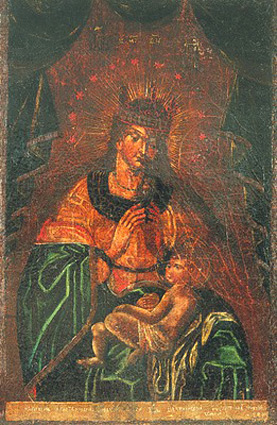
About Balykino Icon of the Mother of God → · About Gorbanevka Icon of the Mother of God →

Saints commemorated
-
Saint of the day
Synaxis of the Twelve Apostles
On June 30, the day after the great feast of the Chief Apostles, the Church keeps the Synaxis of the Holy, Glorious and All-praised Twelve Apostles — the common assembly of that company which the Lord "ordained twelve, that they should be with him, and that he might send them forth to preach" (Mark 3:14). Each of the Twelve has his own day somewhere in the year, and several have two or three; but the tradition, unwilling that any one of them should seem to be honoured above his brethren, gathered them all into a single festival and set it immediately after the feast of Peter and Paul, so that the day which crowns the Apostles' Fast opens at once upon the whole apostolic choir. The feast is ancient — the ordinances behind it are traced to the fourth century, and it is bound up with the great Church of the Holy Apostles raised by Constantine at his new capital and rebuilt by Justinian, where the emperors were buried among cenotaphs of the Twelve. The roll of this day is the roll of the Gospel lists: Peter and Andrew, the two sons of Zebedee, Philip and Bartholomew, Thomas and Matthew, James of Alphaeus, Jude Thaddaeus and Simon the Zealot — with Matthias, chosen by lot into the place "from which Judas by transgression fell" (Acts 1:25), and with Paul, who was not of the Twelve and is yet never separated from them.
-
Andrew the First-Called
Andrew the First-Called (first century) was a fisherman of Bethsaida, the brother of Simon Peter, and — as a disciple of John the Baptist who heard him name Christ "the Lamb of God" — the first of the apostles to follow the Lord, whence his ancient title Prōtoklētos, "the First-Called." Having found the Messiah, he at once brought his brother Peter to Christ. After Pentecost the tradition sends him to preach around the Black Sea — through Asia Minor, Thrace, Scythia, and the lands of the Rus', where he is said to have blessed the hills of Kiev — and above all to Byzantium, where he ordained Stachys its first bishop, so that the Church of Constantinople venerates him as its founder. He was crucified on an X-shaped cross at Patras in Achaia and is commemorated on November 30, and among the Twelve on June 30.
-
Bartholomew the Apostle
Bartholomew is one of the Twelve, named in every apostolic list of the New Testament and in every one of them beside Philip, and yet given no word and no deed in the Gospels — his whole scriptural biography is a patronymic, bar-Tolmai, "son of Tolmai." What the tradition supplies is one of the widest missions ascribed to any apostle: with Philip and his sister Mariamne in Asia Minor and at Hierapolis in Phrygia; then in India, where Eusebius and Jerome report that a copy of the Gospel of Matthew in Hebrew letters was found still surviving in the second century, left there by Bartholomew; and finally in Greater Armenia, where he and Jude Thaddaeus are honoured as the first enlighteners of the nation. At Albanopolis he was, by the Byzantine account, flayed alive, crucified head-downward and beheaded. His relics travelled further than he did — Dara in Mesopotamia, the island of Lipari, Benevento, and the church on the Tiber island at Rome — and his second feast on August 25 keeps their return. Whether he is the same man as Nathanael of the Fourth Gospel the liturgical books of the Orthodox Church do not agree, and this entry does not settle it.
-
Dinar of Hereti
Dinar (Dinara) was the tenth-century queen of Hereti, the principality of south-eastern Georgia on the Alazani between Kakheti and the Caucasian Albanian lands, who with her son Ishkhanik brought her people out of the Monophysite confession that had spread through the eastern Transcaucasus and into communion with the Chalcedonian Orthodox Church of Georgia. That is the substance of her sanctity, and it is recorded in the Georgian chronicle Kartlis Tskhovreba, "the Life of Kartli." Her name travelled far beyond Georgia: a Russian Tale of Queen Dinara, current from the fifteenth century, made her the heroine of a war against a Persian shah, and her figure — a queen on a white horse, victorious — was painted in the throne-hall of the Moscow Kremlin, where it may still be seen. Because the Russian tale is romance rather than chronicle, her identity was long disputed in the Russian Church, many taking her for Tamar the Great; the Georgian sources settle it on the queen of Hereti. She is commemorated on June 30.
-
Gelasius of Rimet
Gelasius of Rimet (Râmeț) is the fourteenth-century abbot and hierarch whose name is cut into the wall of a small stone church in the Trascău mountains of Transylvania — an inscription of 2 July 1377 which names "the archbishop Ghelasie" and the painter Mihul of the Alb Criş, and which is among the oldest dated records of an Orthodox hierarchy in Transylvania. Around him, in the gorge of the Rimet stream in what is now Alba county, lived a colony of hermits to whom he was spiritual father, visiting them in the Fasts; he ate only on Saturdays and Sundays, kept the nights in prayer, healed the sick and cast out demons, and, tradition says, a spring of water rose at his prayer. His skull is kept for veneration in the church of Rimet monastery. The Romanian Orthodox Church glorified him on 20 June 1992 and proclaimed his sanctity at Rimet on 30 June of that year, which is his feast.
-
James son of Alphaeus
James the son of Alphaeus is one of the Twelve Apostles, named in all four New Testament lists of the Twelve and otherwise nowhere singled out in the Gospels — a disciple whose whole biography is his apostleship. The tradition of the Church makes him a brother of the Evangelist Matthew, a preacher of the Gospel with Andrew the First-called in Judea and the cities of the southern coasts and of Syria, and a martyr — most accounts say by crucifixion, the Menologion of Basil II by beating. He is to be distinguished from James the son of Zebedee (April 30) and from James the Brother of the Lord (October 23), with both of whom the naming traditions of East and West have long entangled him. His feast is October 9.
-
James the Son of Zebedee
James the son of Zebedee is one of the Twelve, the elder brother of John the Theologian, and — with his brother and with Peter — one of the three disciples whom the Lord took apart with Him to the raising of the daughter of Jairus, to the Transfiguration on the mountain, and to the agony in Gethsemane. Christ named the two brothers Boanerges, "sons of thunder," and told them they would drink His cup; James drank it first. About the year 44, at Jerusalem, Herod Agrippa I "killed James the brother of John with the sword" (Acts 12:2) — the first of the apostles to be martyred, and the only one whose death the New Testament records. In the Latin West he became Santiago, patron of Spain, whose reputed relics at Compostela made the greatest pilgrimage of medieval Europe; the Eastern synaxaria keep his memory on April 30 on the plain ground of the Acts of the Apostles.
-
John the Theologian
John the Theologian (died at Ephesus early in the second century) is the apostle and evangelist whom the Gospel calls "the disciple whom Jesus loved": son of Zebedee and Salome, one of the Twelve and of the innermost three, the disciple who leaned on the Lord's breast at the Supper, stood alone among the apostles at the Cross, and received the Mother of God as his own mother. He wrote the fourth Gospel, three epistles, and — by the tradition of the Church — the Revelation, composed in exile on Patmos. Alone among the apostles he did not die a violent death; his grave outside Ephesus was found empty, and the Church keeps September 26 as the feast of his "metastasis" — his translation rather than his death. Of all the saints only he, Gregory of Nazianzus, and Symeon the New Theologian bear the title "the Theologian."
-
Jude the Apostle
Jude — called also Thaddaeus and Lebbaeus, and in the Gospel lists simply "Jude of James" — is one of the Twelve, and in the Eastern tradition one of the "brethren of the Lord," a son of Joseph the Betrothed. He speaks once in the Gospels, at the Mystical Supper, where the Evangelist takes care to identify him as "Judas, not Iscariot" (John 14:22); he is the author of the short catholic Epistle of Jude, in which he calls himself not the Lord's brother but "the servant of Jesus Christ and brother of James." After Pentecost he preached in Judea, Samaria, Idumea, Syria, Mesopotamia and Persia, and came at length to Armenia, where about the year 80 he was crucified and shot through with arrows near Mount Ararat. He is not to be confused with Thaddaeus of the Seventy (August 21), the apostle of Edessa, with whom the tradition has conflated him since antiquity.
-
Matthew the Evangelist
Matthew the Evangelist — called Levi in two of the Gospels — was the tax-collector of Capernaum whom Christ summoned from the toll-booth with the single word "Follow me," and who rose, left his money-table, and became one of the Twelve Apostles. He is the author of the first of the four Gospels, the "Jewish" Gospel written for Hebrew Christians, which opens with the genealogy of Christ "the son of David, the son of Abraham," threads the whole story on citations of the prophets fulfilled, and gathers the Lord's teaching into five great discourses beginning with the Sermon on the Mount. In the symbolism of the four living creatures he is the man — the winged man or angel — for his Gospel begins with Christ's human descent. The tradition sends him to preach in Syria, Persia, Parthia, and above all Ethiopia, where the legend of King Fulvian and the fire that would not burn him is told of his martyrdom; other strands record a peaceful repose. His relics rest at Salerno in Italy. His feast is November 16, and he is honoured again with his fellows in the Synaxis of the Twelve on June 30. He is not to be confused with Matthias, the apostle chosen by lot to replace Judas (August 9).
-
Matthias the Apostle
Matthias is the one member of the Twelve who was not called by the Lord in Galilee but chosen by lot in the ten days between the Ascension and Pentecost, when Peter stood up among the hundred and twenty and proposed that the place forfeited by Judas be filled (Acts 1:15–26). Already a disciple who had followed Christ "from the baptism of John" and numbered among the Seventy, he was set beside Joseph Barsabbas called Justus; the lot fell on him, "and he was numbered with the eleven apostles." The tradition sends him to preach in Judaea and then in Ethiopia — which the synaxaria locate on the eastern shore of the Black Sea, in Colchis — where he endured great hardship and was at last put to death, about the year 63. He is commemorated on August 9, and again with the whole college on the Synaxis of the Twelve, June 30.
-
Peter the Apostle
Peter — Simon bar Jonah, the fisherman of Bethsaida whom Christ renamed Cephas, "rock" — is the first-named of the Twelve, the prōtokoryphaios or "chief" of the apostolic choir, the confessor of Caesarea Philippi and the shepherd of the Lord's sheep. His life holds together the two poles of Christian experience with unusual frankness: the man who walked on water and sank, who confessed the Christ and was called Satan in the same chapter, who swore he would die with his Master and denied him three times before a servant girl, and who was restored beside the same charcoal fire by a threefold "Lovest thou me?" After Pentecost he preached the first Christian sermon, opened the door of the Church to the Gentiles in the house of Cornelius, was by ancient tradition the first to sit in the see of Antioch, and ended at Rome under Nero, crucified — at his own asking, so the tradition runs — with his head downward, about the year 67. The Church keeps his memory on June 29 together with Paul, and his witness is confessed daily in the Creed's "one holy, catholic and apostolic Church."
-
Peter, Tsarevich of the Horde
Peter of Rostov was a prince of the Golden Horde, nephew of Berke Khan (Bergai), who came to Christ through the preaching of Bishop Cyril of Rostov in the years when the Russian principalities lay under Tatar tribute, left the Horde for Rostov, was baptised there, and lived out a long life on the shore of Lake Nero as a landholder, a husband and father, and at the last a monk. The account of his conversion turns on two events: the healing of Berke's son at Bishop Cyril's prayers, and a vision of the Apostles Peter and Paul, who directed him to buy land beside the lake and build a church in their name — the monastery that bore his name for six centuries afterwards. He reposed in 1290, having received the monastic tonsure shortly before, and is a rare and pointed figure in the Russian calendar: a saint drawn out of the conquering horde itself, and venerated by the conquered.
-
Philip the Apostle
Philip, of the city of Bethsaida in Galilee, is one of the Twelve Apostles — the third called by Christ, who found him the day after Andrew and Peter and said to him simply, "Follow me" (John 1:43). It was Philip who then found Nathanael and answered his doubt with the words that have become the watchword of Christian enquiry, "Come and see." The Fourth Gospel gives him three further scenes found nowhere else: the feeding of the five thousand, where Christ tests him; the Greeks at the Passover who tell him, "Sir, we would see Jesus"; and the request at the Mystical Supper, "Lord, show us the Father," which drew from Christ the revelation, "He that hath seen me hath seen the Father." After Pentecost the tradition sends him to preach through Asia Minor — in Phrygia, at Hierapolis, with the Apostle Bartholomew and his own sister Mariamne — where he was martyred by crucifixion, hung head downward. He is commemorated on November 14, the eve of the Nativity Fast, and again with the Twelve on June 30. He is to be distinguished from Philip the Deacon, of the Seventy (October 11).
-
Simon the Zealot
Simon the Zealot is the eleventh name in every apostolic list of the New Testament and one of the Twelve of whom the Gospels record nothing but the name. Matthew and Mark call him Σίμων ὁ Καναναῖος, the Cananaean; Luke and Acts call him Σίμων ὁ ζηλωτής, the Zealot — the same epithet, once in Aramaic and once in Greek. Byzantine tradition, reading "Cananaean" as "of Cana in Galilee," made him the bridegroom of the wedding at Cana who, seeing the water made wine, left his own marriage-feast to follow Christ, and derived his surname from the burning zeal with which he afterwards preached. The Greek synaxaria send him through Egypt, Cyrene, Libya and Mauretania and at last to Britain, where idolaters crucified him; the Latin books martyr him in Persia with Jude, sawn asunder; and the Abkhazians keep his grave on the Black Sea coast at Nikopsia. His feast is May 10, and he is numbered again in the Synaxis of the Twelve on June 30.
-
Sophronius of Irkutsk
Sophronius, Bishop of Irkutsk and Nerchinsk — in the liturgical style "of Irkutsk and all Siberia" — was one of the great missionary hierarchs of the eighteenth-century Russian Church, a Ukrainian monk of the Poltava country who was sent in 1753 to a diocese the size of a continent and governed it for seventeen years, founding its seminary, ordaining and disciplining a scattered and half-trained clergy, and travelling to Nerchinsk, Kirensk and Yakutsk. He reposed on 30 March 1771, in Bright Week; and because the Holy Synod took six months to decide where he should be buried, his body lay unburied through a Siberian summer and was found undecayed — the beginning of a veneration that examinations in 1833, 1854, 1870 and 1909 did nothing to check. A fire in the Theophany Cathedral at Irkutsk on 18 April 1917 consumed the shrine and left only his bones; a year later the Local Council of the Russian Church glorified him, and the glorification was solemnly completed on 30 June 1918, which is the day this collection keeps as the second of his feasts.
-
Thomas the Apostle
Thomas the Apostle, called Didymus, "the Twin," is the apostle of the great doubt and the greater confession: absent when the risen Lord first appeared to the Twelve, he refused to believe without touching the wounds, and eight days later, invited to do so, uttered the highest confession of Christ in all the Gospels — "My Lord and my God." The tradition of the Church sends him east after Pentecost, to Parthia and India, where he preached, founded churches, and was slain with spears at Mylapore about the year 72; the Christians of the Malabar coast bear his name — "St Thomas Christians" — to this day. His chief feast is October 6, he is commemorated with his brethren on June 30, and the whole Church relives his doubt and confession each year on Thomas Sunday, the first Sunday after Pascha.
British Isles and Ireland
- St. Eurgain, foundress of Cor-Eurgain in Wales, later called Llantwit (6th C)
Troparia & kontakia
Apolytikion — Tone 3
Holy Apostles, intercede with the merciful God, that He grant unto our souls forgiveness of offences.
Apolytikion — Tone 3
O holy Apostle James, make intercession with the merciful God, that He grant unto our souls forgiveness of sins.
Apolytikion — Tone 1
Knowing thee to be a kinsman of Christ, O Jude, and a steadfast martyr, we praise thee with sacred hymns: for thou didst trample down error and keep the faith. Wherefore, as we celebrate today thy most holy memory, we receive by thy prayers the loosing of our sins.
Apolytikion — Tone 3
O holy Apostle Matthias, make entreaty to the merciful God, that He grant unto our souls forgiveness of transgressions.
Apolytikion — Tone 4
O first-enthroned among the Apostles and teachers of the inhabited world, intercede with the Master of all things to grant peace to the world and to our souls the great mercy.
Apolytikion — Tone 3
Holy Apostle Simon, intercede with the merciful God, that He grant unto our souls forgiveness of offences.
Apolytikion — Tone 3
Holy Apostles, intercede with the merciful God, that he may grant to our souls the forgiveness of transgressions.
Apolytikion — Tone 3 (Greek use)
O holy Apostle Thomas, intercede with the merciful God, that He grant unto our souls the forgiveness of offences.
Exaposteilarion
Having cast off the yoke of the toll-booth with a sound mind, thou didst follow after Christ, O godly-minded Matthew; and wondrously treading in his footsteps, thou becamest a partaker of his Kingdom and a sharer of his glory, an initiate of things ineffable.
Kontakion — Tone 6
Protection of Christians that cannot be put to shame, mediation unto the Creator unfailing: despise not the suppliant voices of sinners, but be quick to help us who cry to thee in faith; hasten to intercession and make speed to entreaty, O Theotokos, who dost ever protect them that honour thee.
Kontakion — Tone 6
Protection of Christians that cannot be put to shame, mediation unto the Creator unfailing: despise not the suppliant voices of sinners, but be quick to help us who cry to thee in faith; hasten to intercession and make speed to entreaty, O Theotokos, who dost ever protect them that honour thee.
Kontakion — Tone 2
Let us praise Andrew, the God-speaking namesake of courage and the First-called of the Savior's disciples, the own brother of Peter; for as of old he cried to his brother, so now he cries to us: "Come, we have found the One whom we have longed for!"
Kontakion — Tone 4
Thou wast shown forth as a great sun unto the Church, enlightening those who honour thee with the radiance of thy teachings and of thy fearful wonders, O Bartholomew, Apostle of the Lord.
Kontakion
As a morning star shining out upon the whole creation, let us with hymns acclaim James, the eyewitness of Christ and speaker of God, honouring his festival today; for he intercedes without ceasing for us all.
Kontakion
Let us all bless with praises, as a herald of God, James, who firmly planted the doctrines of wisdom in the souls of the godly; for standing before the throne of the Master's glory, he rejoices with all the angels, praying unceasingly for us all.
Kontakion — Tone 2
Having heard the divine voice that called thee, thou didst pass by the love of thy kindred, O James, and together with thy brother didst straightway follow after Christ; and with him wast thou counted worthy to behold His divine Transfiguration.
Kontakion — Tone 2
Who shall recount thy mighty deeds, O virgin one? For thou pourest forth wonders and art a wellspring of healings, and thou dost intercede for our souls, as the Theologian and the friend of Christ.
Kontakion — Tone 1
Out of a glorious root thou didst spring up for us, a branch given of God, O eyewitness of the Lord, apostle and brother of God, all-wise herald of Christ; thou dost feed the whole world with the fruits of thy words, teaching the Orthodox faith of the Lord, as one initiated into grace.
Kontakion — Tone 4
Having cast off the yoke of the tax-collector's booth, thou wast yoked instead to the yoke of righteousness, and wast shown to be a merchant most excellent, who gained as thy wealth the wisdom from on high. Therefore thou didst proclaim the word of truth, and didst rouse up the souls of the slothful, setting down in writing the hour of the Judgement.
Kontakion — Tone 4
Thy word went forth over the world like a sun of many rays, enlightening with its beams the whole creation, O Matthias worthy of all wonder, apostle of God.
Kontakion — Tone 2
The steadfast and God-inspired heralds, the chief of thy disciples, O Lord, thou hast taken to thyself for the enjoyment of thy good things and for rest; for their labours and their death thou hast received above every whole burnt offering, O thou who alone knowest the secrets of the heart.
Kontakion — Tone 8
Thy disciple and friend, and imitator of thy Passion, the God-proclaiming Philip, preached thee as God unto the whole world. By his supplications, and through the Theotokos, preserve thy Church and every city from lawless enemies, O most merciful One.
Kontakion — Tone 2
Let us praise in hymns the great Simon, who set the sure teachings of wisdom in the souls of the pious; for he stands now before the throne of glory and rejoices with all the bodiless hosts, unceasingly interceding for our souls.
Kontakion — Tone 2
The steadfast and God-uttering heralds, the chief of thy disciples, O Lord, hast thou taken to thyself unto the enjoyment of thy good things and unto rest; for their labours and their death hast thou received above every whole burnt-offering, thou who alone knowest the secrets of hearts.
Kontakion — Tone 4
Filled full of divine grace, the Apostle of Christ and His true servant cried out in repentance: Thou art my God and Lord.
Magnification
We magnify thee, O Thomas, Apostle of Christ, and we honour the pains and labours whereby thou didst labour in the good tidings of Christ.
Oikos
O disciple of the Word, thou wast initiated into the holy words, and them that of old were grievously held down in unreason thou didst make children of the light. Thou didst let down thy revered and holy nets into the depths of ignorance, and didst take the nations for thine obedient catch; the minds that deceit had left barren thou didst break open afresh with the divine plough. Thou didst dry up the scorching heat of the worship of many gods with the dew of thy radiant God-speaking, making sons of God of them that before were children of wrath, O Bartholomew, Apostle of the Lord.
Stichera
With faith we keep festival on the all-honoured day of thy memory, hymning thee, O glorious James — not as the son of Alphaeus, but as the Apostle of Christ and herald of his ineffable incarnation. Wherefore, standing ever with the Bodiless Hosts before the Master's throne, and with the choirs of Apostles and of Martyrs, entreat earnestly our Saviour and God, that we may be saved.
Stichera
By thy faithful unbelief thou didst confirm the faithful, beginning to speak as God of Him who is God and Lord of all creation, who for our sake on earth put on flesh, and endured the Cross and death, and the piercing of the nails, and the opening of His side by the lance, whence we draw life. Thomas the wonderful opened the fountain of doctrines to the godly minded, O Master; for feeling Thy side he was fittingly initiated into the twofold energy of the two natures, and cried: Thou art my God and Master, Thou the Lord of glory, who for my sake becamest flesh.
Synaxarion
Thy disciple also, O Christ — Bartholomew — imitating Thee, bears the passion of the Cross. On the eleventh they crucified stout-hearted Bartholomew.
Synaxarion
Well may Simon say this to Thee, O Christ: zealous for Thy Passion, I endure the passion of the Cross. On the tenth, great-souled Simon was stretched upon the tree.
Troparion — Tone 4
To the Theotokos let us now run in haste, we sinners and lowly ones, and let us fall down in repentance, crying from the depth of our soul: O Lady, help us, having compassion upon us; make haste, for we perish from the multitude of our transgressions; turn not thy servants away empty, for thee alone have we as our hope.
Troparion — Tone 4
To the Theotokos let us now run in haste, we sinners and lowly ones, and let us fall down in repentance, crying from the depth of our soul: O Lady, help us, having compassion upon us; make haste, for we perish from the multitude of our transgressions; turn not thy servants away empty, for thee alone have we as our hope.
Troparion — Tone 4
As the First-called of the Apostles and brother of their chief, O Andrew, entreat the Master of all to grant peace to the world and to our souls great mercy.
Troparion — Tone 8
In thee, O mother, was preserved undistorted that which is according to the image; for taking up the cross thou didst follow Christ, and by thy deeds thou didst teach us to overlook the flesh, for it passeth away, but to care for the soul, a thing immortal. Wherefore, O righteous Dinar, thy spirit rejoiceth with the angels.
Troparion — Tone 8
In thee, O father, was preserved undistorted that which is according to the image; for taking up the cross thou didst follow Christ, and by thy deeds thou didst teach us to overlook the flesh, for it passeth away, but to care for the soul, a thing immortal. Wherefore, O venerable hierarch Gelasius, thy spirit rejoiceth with the angels.
Troparion — Tone 3
O holy Apostle James, intercede with the merciful God, that he grant unto our souls forgiveness of offences.
Troparion — Tone 2
O Apostle beloved of Christ God, make haste to deliver a people without defence: He who received thee leaning upon His breast receiveth thee falling before Him in intercession. Entreat Him, O Theologian, to scatter the persistent cloud of the nations, asking for us peace and great mercy.
Troparion — Tone 3
O holy Apostle and Evangelist Matthew, intercede with the merciful God, that he may grant unto our souls forgiveness of offences.
Troparion — Tone 8
In thee, O father, was preserved undistorted that which is according to the image; for taking up the cross thou didst follow Christ, and by thy deeds thou didst teach us to overlook the flesh, for it passeth away, but to care for the soul, a thing immortal. Wherefore, O venerable Peter, thy spirit rejoiceth with the angels.
Troparion — Tone 3
O holy Apostle Philip, intercede with the merciful God, that He may grant unto our souls the forgiveness of offences.
Troparion — Tone 4
O God of our fathers, who dealest with us ever according to thy gentleness, take not thy mercy from us; but by the prayers of thy hierarch Sophronius, guide our life in peace.
Troparion — Tone 2
Thou wast a disciple of Christ and a member of the divine apostolic company; having through thine unbelief given proof of Christ's Resurrection, and verified His most pure Passion by thy touch, O all-praised Thomas, entreat now also for us peace and great mercy.
Readings
Epistle
Romans 4.13-25
13For the promise, that he should be the heir of the world, was not to Abraham, or to his seed, through the law, but through the righteousness of faith. 14For if they which are of the law be heirs, faith is made void, and the promise made of none effect: 15Because the law worketh wrath: for where no law is, there is no transgression. 16Therefore it is of faith, that it might be by grace; to the end the promise might be sure to all the seed; not to that only which is of the law, but to that also which is of the faith of Abraham; who is the father of us all, 17(As it is written, I have made thee a father of many nations,) before him whom he believed, even God, who quickeneth the dead, and calleth those things which be not as though they were. 18Who against hope believed in hope, that he might become the father of many nations; according to that which was spoken, So shall thy seed be. 19And being not weak in faith, he considered not his own body now dead, when he was about an hundred years old, neither yet the deadness of Sara’s womb: 20He staggered not at the promise of God through unbelief; but was strong in faith, giving glory to God; 21And being fully persuaded that, what he had promised, he was able also to perform. 22And therefore it was imputed to him for righteousness. 23Now it was not written for his sake alone, that it was imputed to him; 24But for us also, to whom it shall be imputed, if we believe on him that raised up Jesus our Lord from the dead; 25Who was delivered for our offences, and was raised again for our justification.
1 Corinthians 4.9-16 (Apostles)
9For I think that God hath set forth us the apostles last, as it were appointed to death: for we are made a spectacle unto the world, and to angels, and to men. 10We are fools for Christ’s sake, but ye are wise in Christ; we are weak, but ye are strong; ye are honourable, but we are despised. 11Even unto this present hour we both hunger, and thirst, and are naked, and are buffeted, and have no certain dwellingplace; 12And labour, working with our own hands: being reviled, we bless; being persecuted, we suffer it: 13Being defamed, we intreat: we are made as the filth of the world, and are the offscouring of all things unto this day. 14I write not these things to shame you, but as my beloved sons I warn you. 15For though ye have ten thousand instructers in Christ, yet have ye not many fathers: for in Christ Jesus I have begotten you through the gospel. 16Wherefore I beseech you, be ye followers of me.
Gospel
Matthew 7.21-23
21Not every one that saith unto me, Lord, Lord, shall enter into the kingdom of heaven; but he that doeth the will of my Father which is in heaven. 22Many will say to me in that day, Lord, Lord, have we not prophesied in thy name? and in thy name have cast out devils? and in thy name done many wonderful works? 23And then will I profess unto them, I never knew you: depart from me, ye that work iniquity.
Mark 3.13-19 (Apostles)
13And he goeth up into a mountain, and calleth unto him whom he would: and they came unto him. 14And he ordained twelve, that they should be with him, and that he might send them forth to preach, 15And to have power to heal sicknesses, and to cast out devils: 16And Simon he surnamed Peter; 17And James the son of Zebedee, and John the brother of James; and he surnamed them Boanerges, which is, The sons of thunder: 18And Andrew, and Philip, and Bartholomew, and Matthew, and Thomas, and James the son of Alphaeus, and Thaddaeus, and Simon the Canaanite, 19And Judas Iscariot, which also betrayed him: and they went into an house.